
Internal disputes have emerged within utility boards as legal counsel warns against the potential litigation risks of denying service to industrial developers. The San Marcos City Council has fundamentally shifted its approach to regional water management, choosing to prioritize long-term environmental health over the immediate financial windfalls associated with massive industrial projects. In the current landscape of 2026, the region is grappling with recurring droughts that have placed unprecedented stress on the Edwards Aquifer. While San Marcos holds significant surplus water rights, the city is no longer viewing this resource as a simple commodity to be traded. Instead, it has become a powerful tool for regional planning and environmental control. This legislative pivot was cemented when San Marcos became the first city in Texas to implement a full ban on data centers within its Land Use Matrix. This decision has created ripples across Central Texas, forcing neighbors to decide whether they will align with these strict conservation standards or risk being cut off from supplies.
Aligning Conservation Goals With Regional Partners
The City of Kyle is currently facing a logistical crisis regarding its water distribution, as existing transmission lines and water mains lack the diameter necessary to handle peak summer demands. This bottleneck has forced Kyle to seek assistance from San Marcos, which has the pumping capacity and surplus supply to stabilize the neighboring system. However, the San Marcos City Council recently voted to postpone a proposed inter-municipal contract, signaling that infrastructure support is no longer a given. The delay acts as a strategic leverage point, compelling Kyle to synchronize its drought contingency plans and conservation triggers with those of San Marcos. This ensures that during times of scarcity, both cities respond with a unified front rather than competing for the same receding aquifer levels. By withholding approval, San Marcos is insisting on a culture of preservation that transcends municipal borders, making it clear that regional cooperation requires a shared commitment to long-term resource sustainability and protection.
Central to the negotiations with Kyle is a specific “poison pill” clause that would automatically terminate the water supply agreement if Kyle decides to serve high-consumption industrial facilities. Specifically, if Kyle provides water to a data center, it must notify San Marcos 30 days in advance, at which point the partnership would be terminated. This strict requirement highlights a growing skepticism toward neighboring legislative bodies that have yet to codify their own industrial bans. San Marcos officials have expressed a lack of confidence in jurisdictions that prioritize short-term tax revenue over the protection of shared natural resources. This move effectively exports San Marcos’s local industrial restrictions to its neighbors through economic and resource-based pressure. It creates a new regional standard where access to water is directly tied to a municipality’s willingness to reject the expansion of the data center industry, forcing a choice between rapid technological growth and the basic environmental stability of the Central Texas region.
Confronting the Scale of Industrial Demands
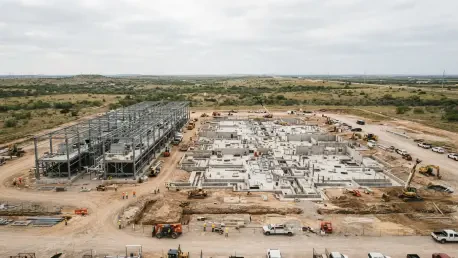
A more definitive line was drawn when the San Marcos City Council unanimously denied a contract extension and additional water requests for the County Line Special Utility District. This utility district serves areas in Caldwell County that are currently targeted for massive industrial developments, including the Prime Data Centers campus and the expansive Caldwell Valley project. The scale of these developments is staggering, with Prime Data Centers alone proposing an eight-building, 384-megawatt facility, while Caldwell Valley envisions a 4,000-megawatt community featuring AI hubs and thousands of homes. These projects would require thousands of Living Unit Equivalents in water consumption, a volume that threatens to exceed the sustainable limits of the regional supply. Public testimony from groups like the San Marcos River Foundation reinforced the council’s resolve, emphasizing that the long-term health of the river is far more valuable than the millions in development fees being offered by industrial giants seeking a foothold.
Despite developers offering upwards of $12 million in impact fees to secure the necessary water allocations, the San Marcos council remained unmoved by the potential fiscal gains. The technical metric used to measure this demand—the Living Unit Equivalent—reveals the intensity of these projects, with the Caldwell Valley development alone requesting 2,000 LUEs. This refusal to sell surplus water marks a transition from a passive supplier role to that of an active regional regulator. The city’s decision underscores a fundamental shift in regional logic, where the immediate benefits of expanded tax bases and infrastructure fees are no longer sufficient to offset the ecological risks. By denying County Line SUD, San Marcos is taking a stand against the industrialization of water, asserting that certain types of high-consumption growth are fundamentally incompatible with the hydrogeological reality. This stance has effectively blocked multibillion-dollar projects, proving that water scarcity is now the ultimate arbiter of modern economic development.
Navigating the Legal and Economic Stalemate
The rise of “resource protectionism” has introduced a volatile legal dynamic between utility boards and municipal governments across the region. Within organizations like the County Line SUD, internal friction has intensified as some board members advocate for industrial moratoriums while legal counsel warns of significant litigation risks. Utility districts often operate under a legal “duty to serve,” which complicates their ability to deny water to developers who meet existing technical requirements. This creates a precarious situation where a utility may be legally compelled to provide service even if the surrounding community and neighboring water suppliers are vehemently opposed. The threat of lawsuits from powerful development groups adds a layer of complexity to regional water planning, as utility boards must balance their statutory obligations against the reality of a shrinking resource. This tension highlights a gap in Texas water law, where the authority to regulate land use and the obligation to provide utility service are frequently at odds.
This situation has also exposed a glaring disconnect between economic development goals and physical infrastructure reality. While counties like Caldwell continue to approve lucrative tax abatements to attract massive AI and data center campuses, the actual water required to operate these facilities remains inaccessible due to municipal-level blocking. This creates a functional stalemate where projects are authorized on paper but lack the basic resources required to break ground. The disconnect illustrates a lack of synchronized regional planning, where one entity incentivizes growth that another entity is actively trying to prevent. As this stalemate persists, the regional economy is forced to reconcile its desire for high-tech expansion with the finite capacity of the Edwards Aquifer. The outcome of these disputes will likely set a national precedent for how water-stressed regions manage the competing demands of the global digital economy and local environmental preservation, signaling that natural limits will dictate the pace of industrial progress.
Strategic Implications for Regional Growth
The San Marcos City Council successfully transitioned from being a passive participant in the regional utility market to serving as a decisive arbiter of environmental policy. By leveraging its surplus water rights, the city established a framework that demanded regional alignment with its own conservation goals. This shift prioritized the long-term integrity of the Edwards Aquifer over the temporary financial incentives offered by global data center developers. It was demonstrated that municipal water control could be used as an effective tool for land-use regulation, forcing neighboring jurisdictions to reconsider their approach to industrial growth. This period of legislative activity proved that the regional narrative had moved beyond simple growth metrics to a focus on sustainable capacity. Stakeholders recognized that the ecological health of the San Marcos River was inextricably linked to the economic future of the entire corridor. This realization prompted a broader dialogue about the necessity of integrated water management systems in Texas.
Leaders recognized that they needed to focus on developing standardized water-use efficiency benchmarks for all industrial developments to avoid a patchwork of municipal bans. Implementing recycled water systems for cooling data centers became a discussed strategy to mitigate pressure on the aquifer, allowing for high-tech growth without compromising the local water supply. Collaborative regional water authorities were advised to establish unified drought contingency protocols that applied across all utility districts, reducing the potential for legal conflict over service denials. Legislative updates at the state level were also pursued to clarify the duty to serve for utility districts in regions facing chronic water shortages. By creating a more predictable regulatory environment that balanced economic incentives with strict conservation mandates, Central Texas aimed to avoid the stalemates that had recently stalled development. Investing in advanced transmission infrastructure that prioritized residential needs ensured that growth remained compatible with natural limits.