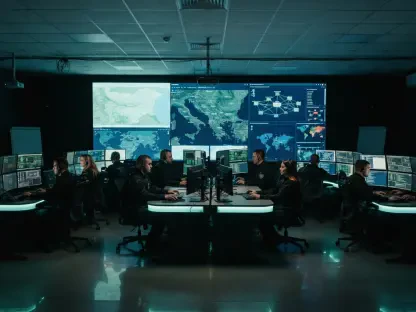

Technical Director Sim Swee Horng emphasizes that the evolution of cyber warfare necessitates a shift from technical drills to sophisticated simulations of multi-vector campaigns. The 2026 Critical Infrastructure Defense Exercise marks a defining moment in Singapore’s national security framework, moving toward a unified model powered by artificial intelligence. By integrating efforts across the Digital and Intelligence Service and the Cyber Security Agency of Singapore, the nation has refined its whole-of-nation defensive strategy. This exercise is no longer just a technical assessment; it has become the primary testing ground for the country’s resilience against complex digital aggression. As cyber threats become more persistent, the focus has shifted toward creating a seamless environment where the public and private sectors act as one. The iteration demonstrates a high-level maturity in identifying vulnerabilities before they are exploited. It establishes a benchmark for how modern states protect essential services in an era of constant friction.
Strategic Integration: Eliminating Organizational Silos
A central tenet of the current defensive strategy is the total elimination of organizational silos, summarized by the tactical guideline that there are no handovers in a crisis. Traditionally, cybersecurity involved a baton-pass approach where one agency would detect a threat and subsequently hand the responsibility to another for mitigation. This outdated methodology often led to dangerous delays and communication gaps that sophisticated attackers could easily exploit. Under the leadership of Brigadier General Clarence Cai of the Defense Cyber Command, Singapore has transitioned to an Advanced Persistent Defense posture. This requires defenders to be as tireless and adaptive as the adversaries they face, ensuring that the response to a campaign is fluid and continuous. By removing the boundaries between different bureaucratic entities, the exercise proves that a collective response is significantly more potent than isolated efforts. This cultural shift ensures that every participant remains engaged throughout the entire process.
This integrated defensive stance is tested through rigorous simulations where military and civilian defenders operate as a singular unit to neutralize multi-sector threats. The effectiveness of this collaborative framework was recently validated during Operation CYBER GUARDIAN, which stands as the largest real-world coordinated response in the nation’s history. By applying the lessons learned from CIDeX, responders were able to navigate the complexities of a real attack with precision and speed. The exercise forces diverse groups to coordinate in real time, focusing on the transition from initial detection to forensic investigation and final containment. This level of synchronization is essential for protecting the 11 critical infrastructure sectors that keep the nation functioning during times of instability. The goal is to create muscle memory within the national defense infrastructure, ensuring that when a legitimate crisis occurs, the response is automatic. Building this level of trust between agencies is a long-term investment.
Technological Advancement: Deploying Autonomous AI Agents
The 2026 iteration of the national exercise introduced a groundbreaking technological shift with the large-scale deployment of fully agentic AI Blue Teams. These autonomous systems are designed to operate alongside human defenders, identifying and neutralizing threats without the need for constant manual intervention. This innovation is a direct response to the rise of AI-driven swarm attacks, which can overwhelm traditional human-centric defenses through sheer speed and volume. By leveraging agentic AI, the defense forces can automate the technical maneuvers required to block rapid-fire exploits, allowing human personnel to focus on higher-level strategic decision-making and long-term planning. The integration of these intelligent agents marks a transition toward a more proactive defensive model where the machine handles the data-heavy workloads while humans interpret the broader intent of the adversary. This synergy between human intuition and machine efficiency creates a formidable barrier against incursions.
Beyond AI integration, the current exercise has significantly expanded its digital testbeds to reflect the increasing interconnectedness of modern infrastructure. While previous years focused primarily on core sectors such as energy and water, the 2026 scenarios now include healthcare, aviation, maritime, and telecommunications. These simulations take place within a complex multi-cloud environment, mirroring the actual architecture used by both government and private entities. By simulating coordinated attacks across all 11 critical infrastructure sectors, the exercise prepares defenders for the cascading effects of a breach. For instance, an attack on the energy grid could have immediate and devastating impacts on transportation systems or medical facilities. Testing these cross-sector vulnerabilities allows the Digital and Intelligence Service to identify hidden dependencies that might otherwise go unnoticed. This comprehensive approach ensures that the nation is prepared for a holistic assault rather than just a technical failure.
Human Capital: Strengthening Collective National Resilience
A vital component of Singapore’s defensive strength lies in the strategic involvement of National Servicemen who lead many of the Blue Teams during the exercise. These individuals are highly skilled professionals who bring specialized expertise from their careers in the private sector, often working for global technology leaders such as Amazon Web Services or Google Cloud. In recent years, the scale of this exercise has more than doubled, now including over 250 participants from 44 different organizations. This partnership extends to companies like Check Point Software Technologies, which provide planetary-level intelligence and advanced defensive tools to the simulation. The creation of Sectoral Cyber Defense Teams ensures that these specialists are aligned with the specific infrastructure sectors where their professional knowledge is most applicable. This arrangement allows the Singapore Armed Forces to benefit from the latest industry practices while providing experts with a deep understanding of national defense protocols.
The completion of the 2026 exercise established that cyber resilience was an ongoing journey rather than a destination. The participants demonstrated that while autonomous AI and advanced digital testbeds were essential tools, the true strength of the defense resided in the collaborative culture developed between military and civilian units. By training together, these groups reached a level of operational readiness that allowed them to confront sophisticated, multi-sector campaigns with high efficiency. Moving forward, the focus should shift toward institutionalizing these protocols across all levels of government and industry. Agencies must continue to invest in agentic AI technologies while simultaneously expanding the recruitment of specialized talent from the private sector. The integration of planetary-level intelligence from global partners proved to be a decisive advantage, suggesting that future efforts should prioritize even deeper international cooperation. Singapore’s model showed that a persistent and adaptive defense served as the only viable way to stay ahead.