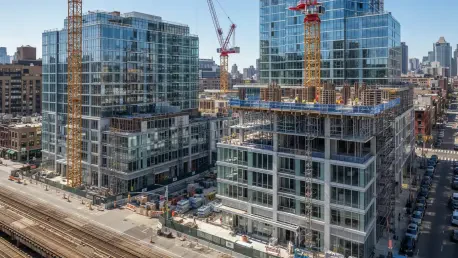

The persistent shortage of affordable living spaces across the Empire State has forced lawmakers to reconsider the decades-old State Environmental Quality Review Act as a primary obstacle to rapid residential construction. For years, the lengthy and often unpredictable review process has allowed vocal opposition to stall essential projects under the guise of ecological protection. However, the recent shift toward creating Type II exemptions for transit-oriented developments signals a significant departure from previous bureaucratic entanglements. This administrative overhaul seeks to prioritize the immediate need for shelter by acknowledging that urban density is a sustainable environmental strategy. By reducing the time required for impact assessments, the state aims to attract private investment that previously fled to more permissive jurisdictions. The challenge remains whether these adjustments can truly dismantle the systemic delays that have historically driven up the cost of every new unit.
Modernizing the Framework for Housing Expedience
Building on this foundation, the new rules categorize specific residential developments as having no significant adverse impact, thereby bypassing the most grueling phases of environmental litigation. Developers now find that projects adhering to strict zoning and green building standards can move from proposal to permit in a fraction of the time it took just a few years ago. This efficiency is particularly evident in the Hudson Valley and Long Island, where local boards often used environmental mandates to block multi-family units indefinitely. By setting clear statewide benchmarks, the reform limits the ability of local municipalities to weaponize the review process for exclusionary purposes. The goal is to create a predictable pathway that treats housing as a public necessity rather than a luxury. Consequently, the reduction in legal fees is expected to trickle down to the final consumer price, making it feasible for middle-income families to secure housing in high-opportunity areas.
Moreover, the integration of digital mapping and pre-vetted site assessments has transformed the way environmental risks are identified and mitigated before a project even breaks ground. Instead of requiring a bespoke Environmental Impact Statement for every building, the state is encouraging area-wide reviews that cover entire neighborhoods or transit corridors. This proactive approach allows for a more holistic understanding of cumulative impacts, such as traffic congestion or sewage capacity, without burdening single-lot developers with the full cost. This transition toward regional planning ensures that infrastructure growth keeps pace with residential expansion, preventing the localized bottlenecks that often spark community backlash. Furthermore, the use of advanced data modeling provides more accurate predictions of energy consumption, allowing for smarter design. This technological shift represents a fundamental pivot from a reactive regulatory stance to a policy that values both the ecosystem and the residents.
Navigating Future Challenges in Sustainable Infrastructure
In contrast to the previous era of stagnation, the current focus is shifting toward ensuring that the newly accelerated construction cycle does not compromise the long-term resiliency of urban centers. While the speed of approval has increased, the pressure on existing power grids and public water systems remains a point of contention for many environmental advocacy groups. To address these concerns, the reform package includes incentives for all-electric buildings and decentralized stormwater management systems that mitigate the strain on municipal resources. This strategy effectively turns new housing into a tool for environmental improvement rather than a source of degradation. By embedding sustainability requirements directly into the exempt criteria, the state ensures that the quality of the built environment remains high even as the quantity of units increases. This dual focus prevents a race to the bottom in construction standards, maintaining the integrity of the community while finally addressing the housing supply-demand imbalance.
Ultimately, the implementation of these SEQRA revisions established a new precedent for how high-cost states could tackle chronic shortages without abandoning ecological principles. Stakeholders moved beyond the adversarial relationships that defined the past, focusing instead on the practical application of smart growth data. The state recognized that the most effective way to protect rural landscapes was to foster dense, efficient living in established urban cores through streamlined permitting. Moving forward, it became clear that the next phase of this evolution required even deeper investments in public transit and grid modernization to support the increased density. Policymakers discovered that by refining the legal definitions of environmental impact, they could unlock billions in untapped economic potential while providing stable homes for the workforce. This shift served as a blueprint for other regions, demonstrating that regulatory flexibility was the key to progress. Outcomes were monitored to ensure that affordability was consistently met.