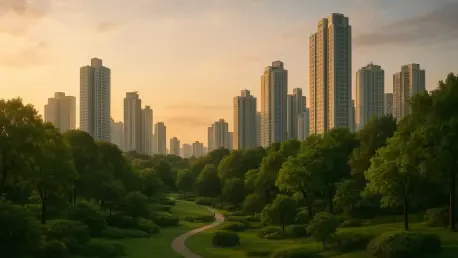

The massive sprawl of the former U.S. military base in the heart of Seoul has transformed from a restricted fortress into a symbol of urban reclamation and a focal point for the city’s complex future. Spanning approximately 3 million square meters, the site represents one of the most significant pieces of undeveloped real estate in any major global metropolis, yet it remains a battleground for competing visions. On one side, the central government identifies the land as a prime opportunity to inject housing supply into an overheated market, proposing units for young adults and newlyweds within the park’s periphery. Conversely, the Seoul Metropolitan Government views any encroachment on this green space as a betrayal of the public trust and the ecological integrity of the city. This tension highlights a critical juncture in urban planning, where the immediate needs of a population clash with the historical imperatives of a capital city seeking to breathe.
Administrative Friction: The Vision for Urban Renewal
Preservationist Principles: Seoul’s Ecological Lung
Mayor Oh Se-hoon and the municipal administration have maintained a steadfast commitment to the “Total Park” principle, arguing that Yongsan Park should serve as a continuous green corridor. This stance is rooted in the belief that the land, which was held by foreign forces for over a century, belongs to the citizens in its entirety as a place of healing and historical reflection. The city government emphasizes that once public land is converted into residential high-rises, the opportunity to create a massive ecological sanctuary in the urban core is lost forever. They point to the “Green Lung” concept, suggesting that the park is essential for mitigating the urban heat island effect and improving the overall air quality for millions of residents. From this perspective, the park is not just a recreational facility but a vital piece of environmental infrastructure that provides a necessary counterbalance to the concrete jungle surrounding the district.
Historical Restoration: Reclaiming the National Heritage
Beyond the environmental benefits, the preservationist movement underscores the historical weight of the site, which has been occupied by foreign troops since the late 19th century. Reclaiming this space represents a profound moment of national sovereignty and cultural restoration for South Korea. Proponents argue that the current Children’s Garden and the surrounding zones should remain untouched by private development to ensure that the site’s history remains accessible to all. They worry that introducing luxury apartments would fragment the landscape and dilute the site’s symbolic power. Instead of building houses on the park land, the city suggests that the central government should focus on developing the adjacent derelict industrial zones and underutilized hubs to meet residential quotas. By keeping the park boundaries intact, Seoul aims to create a legacy project that ensures future generations inherit a space defined by its natural beauty.
Economic Realities: The Residential Mandate
Urban Supply: Addressing the Critical Housing Shortage
The Ministry of Land, Infrastructure and Transport views the situation through a lens of urgent pragmatism, noting that the central districts of Seoul suffer from a chronic lack of affordable housing for the younger generation. By allocating a small fraction of the massive Yongsan site for residential projects, the government believes it can stabilize housing prices and provide high-quality living environments near major business hubs. They argue that the sheer scale of the park allows for a hybrid model where residential towers and green spaces coexist harmoniously. This strategy involves building a world-class district where high-density vertical living is integrated with sprawling natural landscapes. Proponents suggest that the housing shortage is a more immediate threat to the city’s social fabric than the loss of a few hectares of parkland. They advocate for a flexible interpretation of existing acts, suggesting that policies must evolve to reflect contemporary realities.
Financial Sustainability: Infrastructure and Maintenance
Supporters of integrated development also point out that the financial burden of maintaining such a massive park can be partially offset by the revenue generated from residential and commercial leases. A project of this magnitude requires enormous capital for landscaping and security, and some argue that a purely public park might become a drain on municipal resources without a diversified income stream. By incorporating housing for newlyweds and young professionals, the government aims to create a vibrant community that keeps the park area active and safe around the clock. This model draws inspiration from successful international examples where high-end residential projects fund the upkeep of world-class public gardens. Furthermore, the development could act as a catalyst for upgrading the local transportation network, including the expansion of subway lines and the integration of new transit services, transforming the area into a dynamic engine for growth.
A Unified Blueprint: Moving Toward a Social Consensus
The resolution of the Yongsan debate shifted from a binary choice between green space and housing toward a more sophisticated, integrated urban strategy. It was discovered that a transparent public forum was the most effective tool for bridging the gap between municipal ideals and national economic needs. Planners determined that the best way forward involved establishing a unified master plan that linked the park with the International Business District, ensuring that any residential development was strictly confined to the periphery. This approach allowed for the preservation of the central ecological core while still addressing the housing needs of the city’s workforce. To ensure long-term success, authorities prioritized the construction of educational facilities and expanded transit links before the first residents moved in. By setting a firm groundbreaking target for 2032, the administration moved beyond political rhetoric and focused on technical execution.