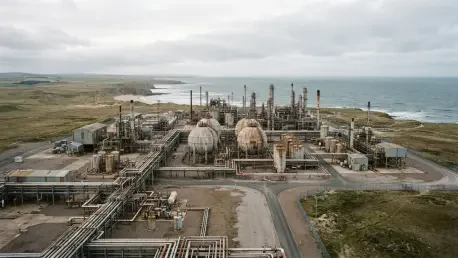

The North Sea is being repositioned as a premier destination for European carbon waste through the development of sophisticated offshore injection infrastructure. EnEarth Holdings has recently transformed the regional energy outlook by securing a thirty percent stake and lead developer status in the Acorn carbon capture and storage project. Centered at the St. Fergus terminal in Aberdeenshire, this initiative is no longer merely a domestic endeavor but the primary engine of an integrated carbon management network. By absorbing Acorn into its growing portfolio, EnEarth is bridging industrial sectors across the United Kingdom with emerging sites in Greece and Bulgaria. This strategic acquisition, involving the takeover of Storegga’s interest, signals a shift toward a maritime-led logistics chain capable of handling massive CO2 volumes. The project establishes a blueprint for cross-border cooperation that turns historical energy hubs into critical assets for a low-carbon future.
Technical Foundation and Strategic Ownership
The Acorn project serves as a cornerstone for the UK’s broader environmental goals, having been formally designated as a Track-2 priority by the government. This status is critical because it prioritizes the project for infrastructure development and regulatory fast-tracking, ensuring it can meet national net-zero targets. The technical foundation of the initiative involves two expansive offshore storage licenses located beneath the North Sea. These geological formations are estimated to hold a combined capacity exceeding 140 million metric tons of carbon dioxide. Engineers have designed the subsea infrastructure to facilitate the injection of between five million and ten million metric tons of CO2 annually, providing a massive permanent sink for industrial emissions. By utilizing existing pipeline corridors and repurposing legacy oil and gas assets, the project minimizes environmental disruption while maximizing efficiency. This repurposing of infrastructure is seen as a vital bridge for the energy transition.
While EnEarth has assumed the role of lead developer, the project continues to function as a major collaborative partnership involving industry giants such as Shell and Harbour Energy. This consortium brings together a wealth of technical expertise, financial backing, and operational experience necessary for a venture of this magnitude. Financial analysts have noted that EnEarth might seek to expand its ownership stake as the project enters more mature stages of development. To ensure a seamless transition and maintain operational momentum, the existing management team and specialized personnel from Storegga are being integrated into EnEarth’s organizational structure. This move preserves the institutional memory and technical knowledge cultivated during the initial planning years. Such continuity is essential for navigating the complex regulatory landscape of the North Sea, ensuring that engineering milestones are reached without the delays often associated with major leadership changes in large-scale energy projects.
Cross-Border Integration and Future Outlook
The acquisition of the Acorn project is a central component of EnEarth’s vision to create a diversified, pan-European carbon management platform. Following its emergence as an independent entity, EnEarth has focused on linking diverse storage hubs into a single operational ecosystem. This strategy effectively connects the Acorn development in Scotland with the Prinos project in Greece and the Devnya initiative in Bulgaria. To overcome the geographical distances between these sites, the company is utilizing the maritime logistics expertise of Prime Marine. This maritime connection is revolutionary because it allows industrial emitters who are not connected to a pipeline network to access high-capacity geological storage. By providing a combination of specialized shipping and subsea injection sites, EnEarth is offering a holistic solution that transcends national borders. This integrated approach ensures that heavy industry across both Northern and Southern Europe can find reliable outlets for their unavoidable carbon waste.
The evolution of Aberdeen into a global Capital of Energy Excellence reached a significant milestone as the Acorn project secured the region’s economic future. By transitioning skilled workers from oil and gas into carbon management, the initiative safeguarded thousands of specialized jobs and attracted billions in private investment. This shift was particularly vital for hard-to-abate sectors like cement and steel production, where carbon capture remained the only viable solution for managing chemical byproducts. As the transaction reached its final stages, it became clear that political certainty and expedited regulatory frameworks were the primary catalysts for success. For the next phase of decarbonization, stakeholders must focus on expanding this maritime network to include smaller industrial clusters that lack direct access to major hubs. Continued investment in subsea monitoring and next-generation injection technology will be essential to maintain public trust and ensure the long-term integrity of these offshore storage reservoirs.