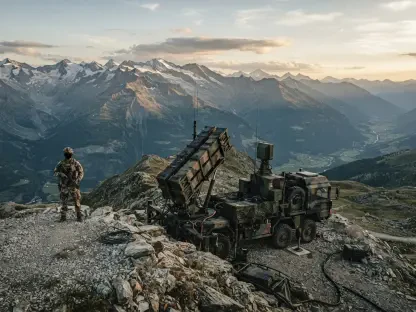

Bogotá Mayor Carlos Fernando Galán has expressed significant political friction regarding the proposed military control over the rural district of Sumapaz. This tension marks a defining moment in the administration of President Abelardo de la Espriella, whose recent shifts in domestic policy have fundamentally altered the role of the Colombian Military Forces. Historically, the army remained tethered to the defense of national sovereignty and the containment of rural insurgencies. However, the current strategy actively integrates the Army, Navy, and Air Force into major urban corridors to address a spiraling security crisis that has outpaced traditional law enforcement. This hybrid model operates on the principle of “exceptional support,” where military units assist the National Police in high-stakes operations without replacing civilian governance. By transitioning soldiers from combat environments to city streets, the government aims to project overwhelming force against organized crime while maintaining the essential conditions for peaceful coexistence in urban centers.
Strategic Triggers: The Escalation in Cúcuta and Bogotá
The immediate catalyst for this policy shift is the deteriorating security landscape in the Norte de Santander department, particularly near the volatile border with Venezuela. Following a series of violent disruptions in late October, including the targeted assassination of a former government secretary and a devastating bombing at the national tax agency facilities, President De la Espriella authorized the militarization of Cúcuta. To execute this mandate, the government launched the “Esparta” campaign and established the Urban Security Operations Bloc, commonly referred to as BOSUR. These initiatives are designed to function as results-oriented mechanisms that move beyond performative patrolling. Their primary objectives involve dismantling the sophisticated financial networks of criminal organizations and reclaiming urban neighborhoods that have fallen under the influence of groups like the National Liberation Army and the Gulf Clan, ensuring that state authority is felt in previously neglected areas.
The expansion of these military protocols to the capital city has introduced a complex layer of political debate regarding the limits of executive power. The presidency has specifically targeted the rural district of Sumapaz and the southern locality of Usme for increased military presence, viewing these areas as strategic corridors for criminal expansion. However, local leaders have questioned whether such a move undermines the administrative autonomy of the city’s municipal government. Mayor Galán’s resistance highlights a fundamental concern that the integration of combat-trained troops into civilian spaces might erode the authority of the National Police and blur the constitutional lines between domestic safety and national defense. This internal friction reflects a broader national struggle to balance a centralized security agenda with the specific needs of local communities. The outcome of this standoff will likely determine the future of urban governance and the extent to which military force becomes a permanent fixture in Colombian metropolitan life.
Historical Precedents: Evaluating Tactical Effectiveness
To evaluate the long-term potential of the current strategy, one must look at past interventions like Operation Orion, which took place in Medellín in 2002. While that operation succeeded in the short term by using overwhelming military force to clear guerrilla militias from Comuna 13, the subsequent investigations by the National Center for Historical Memory painted a far more complicated picture. The mission, which involved over 1,500 personnel and heavy aerial support, left a legacy of civilian disappearances and alleged human rights violations. Furthermore, the vacuum created by the removal of insurgent groups was rapidly filled by paramilitary organizations rather than legitimate state institutions. This historical example serves as a potent reminder that while military force can effectively displace violent actors, it does not inherently establish a lasting or just peace. The challenge for the current administration is to avoid repeating these mistakes by ensuring that military presence is followed by robust social and judicial interventions.
Recent empirical data from Plan Fortaleza in Cali, implemented during 2019, provides a modern perspective on the limitations of high-intensity patrolling. A collaborative study by Brown University and Universidad de los Andes found that the presence of soldiers in high-crime neighborhoods did not result in a statistically significant long-term reduction in criminal activity. Instead, researchers observed a “rebound effect,” where crime rates often surged once military units were withdrawn and the original, under-resourced police forces returned to their posts. This suggests that militarization often acts as a temporary “band-aid” rather than a cure for the structural causes of urban violence. Without significant improvements to the judicial system and the implementation of comprehensive community development programs, the deployment of troops may simply push criminal behavior into adjacent neighborhoods, creating a cycle of displacement rather than a genuine solution for the safety of the citizens living in these high-risk areas.
The Policy Debate: Perspectives on Urban Militarization
The De la Espriella administration remains firm in its stance that the security of Colombians is a non-negotiable priority that justifies the use of every legitimate state tool. Proponents of this hardline approach argue that the current threat posed by transnational criminal syndicates and terrorist factions is too great for the National Police to manage in isolation. From this perspective, the military provides a necessary layer of protection that can neutralize high-level threats and reclaim “no-go” zones where the state has lost control. Supporters emphasize that the BOSUR and “Esparta” campaigns are not meant to replace civilian laws but to provide the tactical muscle needed to enforce them. They view the military’s role as an essential temporary measure to stabilize volatile regions and create the breathing room necessary for other state institutions to function properly. For many residents living in high-crime sectors, the sight of soldiers represents a long-awaited return of government authority and a deterrent against extortion.
Conversely, a growing chorus of critics and academics warns against the normalization of military intervention in domestic life. They argue that using soldiers for urban policing tasks is a clear indicator of institutional failure within the police and the judiciary. There is a deep concern that troops, who are primarily trained for combat and the neutralization of enemies, lack the specific training required for urban de-escalation, community-oriented policing, and the preservation of civil liberties. This lack of specialized training could lead to unintended escalations of violence and potential human rights abuses during search and seizure operations. Furthermore, critics suggest that the focus on military force distracts from the urgent need to address the root causes of crime, such as economic inequality and the lack of educational opportunities. They contend that a truly effective security policy must prioritize the strengthening of civilian institutions and the judicial process rather than relying on the temporary and often problematic presence of the army.
Future Considerations: Building Sustainable Urban Order
The administration’s shift toward urban military integration functioned as a high-stakes experiment in public order throughout the middle of the decade. While the immediate deployment provided a visual deterrent against insurgent groups, the ultimate measure of success relied on the long-term stabilization of civilian institutions. Policymakers discovered that military strength could not replace the nuanced work of community policing or the necessity of a robust judicial presence. Consequently, the strategy necessitated a transition toward multifaceted social investments to ensure that security gains remained permanent. Moving forward, the focus turned to empowering local law enforcement through technological upgrades and specialized training programs designed to mirror the efficiency of the military without compromising civil liberties. This period marked a transformative phase in Colombian governance where the boundaries between national defense and domestic safety were redrawn to meet the unprecedented challenges of the mid-twenties.
Ultimately, the successful resolution of urban violence required a departure from purely kinetic solutions toward a more integrated governance model. Authorities learned that the tactical victories achieved by BOSUR and the “Esparta” campaign were only sustainable when accompanied by deep-rooted judicial reforms and the expansion of social services in vulnerable districts. By 2026, the emphasis shifted toward ensuring that the state’s presence was defined by the accessibility of the court system and the availability of economic programs rather than just the presence of uniforms on the street. This historical pivot demonstrated that while the military could provide an essential shield in times of crisis, the foundation of a safe society was built on the strength of its civilian infrastructure. The lessons learned during this expansion of military roles provided a roadmap for future administrations to balance the immediate need for security with the enduring requirement for a democratic and rights-oriented approach to public safety and national development.