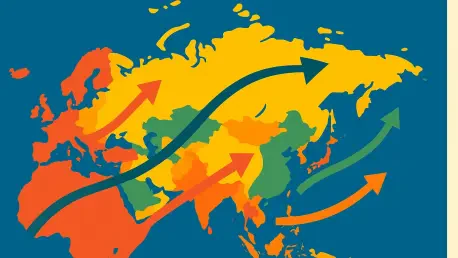

The militarization of Russian society serves as a key driver for the various potential outcomes analyzed by the Ministry of Defence and its partners. As the global geopolitical landscape shifts toward 2045, the Finnish government has collaborated with the Ministry of the Interior and the Ministry for Foreign Affairs to release a comprehensive strategic report titled Russia’s Futures. This document emphasizes that European security planning must move away from singular assumptions and instead prepare for a spectrum of potential outcomes regarding the neighbor’s trajectory. By analyzing 22 specific drivers of change—including demographic shifts, economic dependencies, and climate-induced migrations—the project establishes a vital framework for long-term resilience and proactive policy-making. This move signals a departure from reactive defense postures, favoring a structured approach that anticipates volatility rather than merely responding to it as it occurs from 2026 to 2045.
Divergent Pathways for Russian State Development
The heart of the report explores four distinct models, starting with the Renewing Russia scenario, which envisions a pragmatic regional power utilizing a blend of competition and cooperation to regain international standing. In this version of the future, the state manages to stabilize its internal governance and seeks to re-integrate into global markets, albeit on its own terms. Conversely, the Fading Russia model describes a state that remains outwardly defiant but ultimately suffers from structural decay, becoming increasingly subservient to Chinese strategic interests. This outcome suggests a scenario where economic stagnation and a lack of technological innovation force a reliance on external partners, fundamentally altering the balance of power in Eurasia. Such a shift would require European nations to navigate a complex dynamic where the neighboring state acts as a junior partner to a global superpower, complicating traditional diplomatic channels through 2045.
Beyond these possibilities, the study presents more alarming trajectories labeled as Imperialist Russia and Chaotic Russia. The imperialist model portrays an authoritarian power that successfully leverages expansionist power politics and aggressive militarization to achieve regional dominance. In this scenario, the state maintains a high level of social cohesion through nationalist rhetoric, posing a direct and persistent threat to its neighbors. In sharp contrast, the Chaotic Russia scenario warns of a nuclear-armed state facing a deep, unsolvable internal crisis. Here, deteriorating institutional capabilities lead to heightened risk-taking and violent militaristic policies as factions struggle for control within a crumbling state apparatus. This scenario represents the highest level of unpredictability for the West, as the collapse of centralized command could lead to the proliferation of unconventional threats and regional instability that spills across borders in the years ahead.
Fortifying Resilience Against Geopolitical Volatility
Regardless of which specific path the neighboring state takes, the Finnish report identifies several no-regret priorities that remain essential for maintaining regional stability. A central consensus among policy analysts is the absolute necessity of containing potential aggression while providing steadfast, long-term support for Ukraine’s sovereignty. Furthermore, the report stresses that the broader European community must enhance its internal resilience by safeguarding its freedom of decision-making and bolstering technological independence. This involves securing critical supply chains and investing in domestic industries that can withstand sudden shifts in the global trade environment. By strengthening the European Union’s collective capacity to act, member states can create a buffer against any form of volatility originating from the East. These efforts are designed to ensure that democratic institutions remain robust even if external pressures intensify over the next few decades.
Ultimately, the findings served as a definitive call to action for a more sophisticated level of foresight and strategic expertise. The Finnish government successfully integrated complex impact assessments with national preparedness goals, providing a logical structure for international cooperation through 2045. By moving toward a more dynamic security posture, officials prioritized anticipation and adaptability as the primary tools for navigating the mid-21st century. The study recommended that European leaders immediately began diversifying their energy dependencies and investing in advanced cybersecurity infrastructures to mitigate risks. It also highlighted the importance of maintaining open intelligence channels to monitor the 22 identified drivers of change as they evolved. These strategic considerations established a roadmap for ensuring that the continent remained secure and autonomous, regardless of the internal transformations occurring in the future.