
The High-Stakes Gamble: Balancing Security and Personal Sovereignty
The geopolitical landscape of modern Europe remains dangerously tethered to the shifting whims of American presidential social media accounts and the unpredictable nature of transatlantic personal diplomacy. This dynamic creates a scenario where the stability of the entire Western world often seems to hinge on a single provocative post or a behind-the-scenes joke shared at an international summit. European leaders find themselves in a precarious position, forced to maintain a vital military alliance with a U.S. administration that frequently targets their most prominent figures with personal provocations.
This tension between strategic necessity and national dignity is no longer a peripheral concern; it is the central challenge for a continent that is still struggling to stand on its own two feet. While diplomats work to shield their leaders from public slights, the underlying reality remains that the defense of the West depends on a functional relationship between Washington and Brussels. Reconciling the need for American protection with the preservation of national sovereignty requires a level of diplomatic agility that has rarely been seen since the end of the Cold War.
The Reality of a Continent Under Protective Custody
Europe’s reliance on the American military umbrella is a structural reality that cannot be ignored or wished away by idealistic rhetoric. Despite decades of talk regarding “strategic autonomy,” the continent remains approximately five to ten years away from possessing the conventional capabilities required to defend itself without help from Washington. This vulnerability is compounded by shifting geopolitical priorities and the rising cost of modern warfare, leaving European capitals in a race against time to modernize their forces before the transatlantic security guarantee potentially shifts or weakens.
The reliance extends beyond simple troop numbers to encompass critical infrastructure such as satellite intelligence, heavy-lift transport, and advanced refueling capabilities. Without these American assets, the ability of European nations to project power or sustain a long-term defense operation remains severely limited. Consequently, the pursuit of independence is currently more of a long-term aspiration than a current capability, forcing a pragmatic acknowledgment of the continent’s continued status under protective custody.
Reconciling Personal Volatility With the Hard Logic of Defense
The friction between Donald Trump and Italian Prime Minister Giorgia Meloni serves as a primary case study for the new era of “alpha” diplomacy. While Meloni represents the influential center-right core of Europe, she has become a target for Trump’s brand of public pressure, including dismissive jokes and claims of political desperation. This creates a paradox for European strategists: they must defend their leaders from personal attacks to maintain domestic credibility, yet they must remain gentle and diplomatic enough to ensure the U.S. does not withdraw military support.
Maintaining this balance involves a sophisticated game of public stoicism and private pragmatism. Leaders are finding that the most effective way to manage personal volatility is to focus the conversation on shared economic interests and tangible defense contributions. By speaking the language of burden-sharing and industrial cooperation, European officials hope to insulate the broader security alliance from the fallout of individual political skirmishes.
Expert Perspectives on the Widening Capability Gap
Belgian Defense Minister Theo Francken offers a sobering assessment of the current state of European readiness, describing his own nation as a defense laggard in a period of global instability. The data paints a stark picture: while NATO has set an aspirational spending target of 3.5 percent of GDP by 2035, countries like Belgium are projected to reach only 1.93 percent by 2029. Francken’s warnings highlight a consensus among defense experts that current investment trajectories are insufficient to meet the looming threats on Europe’s borders, especially as the U.S. demands more equitable burden-sharing.
The gap is not only financial but also technological, as European nations struggle to keep pace with the rapid advancements in drone warfare and cyber capabilities. Experts argue that the fragmentation of European defense industries leads to wasted resources and a lack of standardization across different national militaries. This inefficiencies make it harder for the continent to present a united front, further entrenching the dependency on American logistics and command structures.
A Practical Roadmap: Dismantling Internal Barriers and Building Self-Reliance
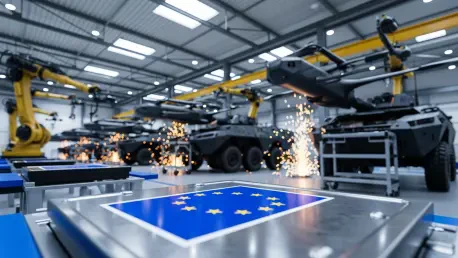
To bridge the gap between dependency and autonomy, Europe moved toward dismantling national protectionism in favor of a unified defense market. This shift required moving away from favoring domestic “national champions” to implementing cross-border procurement strategies that prioritized efficiency and scale. Leaders eventually recognized that using legal loopholes to protect local industries hindered the creation of a streamlined, continent-wide military-industrial complex capable of deterring external aggression.
This transition fostered a new level of military integration that simplified supply chains and reduced the unit cost of essential hardware. Future considerations focused on the establishment of a centralized European defense fund that incentivized innovation over traditional manufacturing. These actions provided a definitive blueprint for a more resilient and self-sufficient union, ensuring that the partnership with Washington remained a choice rather than a desperate necessity. Through these reforms, the continent finally began to secure its own borders while maintaining the dignity of its sovereign institutions.