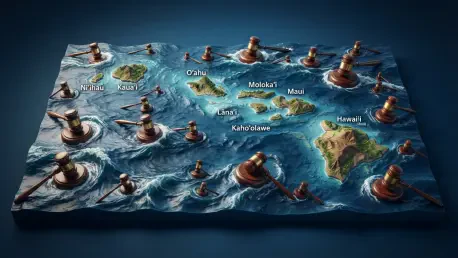

Effective ocean management in the Pacific depends on the ability of legal frameworks to keep pace with rapid advancements in climate and biodiversity research. The University of Hawaiʻi at Mānoa has responded to this need by establishing the Center for Ocean Policy, an initiative that unites disparate fields to protect marine ecosystems. This move addresses the dual crises of rising sea levels and dwindling aquatic resources by merging the data of the School of Ocean and Earth Science and Technology with the advocacy expertise of the William S. Richardson School of Law. By formalizing this relationship, the university seeks to convert theoretical findings into enforceable public policies that provide tangible protections for the islands. The initiative serves as a model for how higher education can solve real-world problems through strategic cooperation. This structure ensures that science does not remain siloed but instead informs the very laws that govern human interaction with the sea.
Bridging the Gap: Integrating Oceanography and Jurisprudence
The core philosophy of the center rests on the idea that scientific discovery alone cannot mitigate the impacts of a changing climate without a clear pathway to implementation. While oceanographers track temperature shifts and acidification rates with accuracy, these metrics often fail to influence local governance unless translated into a legal dialect. To bridge this divide, the center established a methodology for interdisciplinary communication, where legal practitioners work alongside marine biologists to draft model ordinances. This collaborative environment ensures that when new data regarding coral bleaching or migratory fish patterns emerges, the legal response is swift and grounded in evidence. Furthermore, the center aims to eliminate the delays traditionally seen between academic publication and legislative action. By creating a direct pipeline for information, the university provides state officials with tools to make informed decisions that balance economic interests with environmental stability.
A standout feature of this initiative is the Law-Ocean Clinic, an experiential learning program that places students at the forefront of environmental advocacy. In this setting, pairs consisting of one law student and one oceanography student collaborate with local nonprofit organizations to tackle legal challenges facing Hawaiʻi’s waters. These teams do not merely study past cases but actively participate in the legislative session, conducting policy research and providing expert testimony on proposed bills. This hands-on approach equips the next generation of leaders with the practical skills required to navigate the complexities of marine stewardship. Starting in the current cycle, the center will also expand its reach through annual symposia and specialized seminars, creating a forum where practitioners and researchers can share findings. This educational model recognizes that the future of conservation requires professionals who are comfortable operating at the intersection of diverse disciplines.
Community Stewardship: Fostering Resilient Marine Governance
Beyond technical data and legal statues, the center is deeply committed to the concept of kuleana, a Hawaiian principle of reciprocal responsibility. This focus is especially relevant when working with Native Hawaiian and Indigenous Pacific communities, whose traditional knowledge systems have managed island resources for centuries. The center seeks to synthesize this ancestral wisdom with modern scientific methods to develop place-based solutions that are culturally responsive. By doing so, the university avoids the pitfalls of top-down policy-making that often ignores the specific needs of local populations most affected by environmental shifts. This approach involves meaningful engagement with community elders to ensure that legal frameworks reflect the values of the people they serve. The goal is to create a model of marine management that is not only effective in a biological sense but also socially just. This strategy strengthens the legitimacy of regulations and fosters a sense of collective ownership.
The establishment of the center provided a necessary blueprint for addressing the multifaceted challenges of coastal management in an era of rapid environmental change. Stakeholders realized that the integration of rigorous scientific monitoring with adaptive legal structures offered the best defense against biodiversity loss and rising sea levels. To move forward, it was recommended that the program expand its scope to include regional partnerships across the wider Pacific, ensuring that small island nations could benefit from shared technical and legal resources. Furthermore, practitioners emphasized the need for real-time data integration into state regulatory processes to ensure that fishing quotas remained responsive to fluctuating oceanic conditions. These efforts demonstrated that when academic institutions prioritized interdisciplinary collaboration, they created a powerful mechanism for societal resilience. Ultimately, the successful alignment of oceanography and law served as a reminder that protecting the sea required a unified commitment.