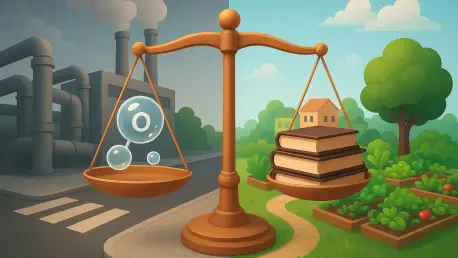

Integrating social justice concerns into the core legal curriculum ensures that the next generation of lawyers understands the human impact of environmental policy decisions. For decades, environmental law education has been dominated by a focus on statutory minutiae, prioritizing the memorization of acronyms and complex regulatory frameworks over the lived realities of the communities these laws are intended to protect. This traditional “statute-first” approach often reduces students to passive consumers of technical data, distancing them from the ethical imperatives that sparked environmental advocacy in the first place. By concentrating exclusively on compliance thresholds and permit specifications, the legal academy has inadvertently sterilized a field that is fundamentally about the preservation of life and the equitable distribution of health. As the current climate crisis intensifies, there is an urgent need to pivot toward a curriculum that recognizes the law as a dynamic tool for social equity instead of just a collection of administrative hurdles.
Reframing the Clean Air Act: Breathing as a Basic Human Right
A radical departure from traditional legal teaching involves starting with the fundamental human act of breathing rather than technical emission standards. In most classrooms, the Clean Air Act is introduced through the lens of National Ambient Air Quality Standards and the minutiae of micrograms per cubic meter. However, by beginning with state constitutional provisions—such as the right to clean air and pure water—the law is reframed as a matter of basic human rights. This approach forces students to confront the physical reality of their own bodies and the universal necessity of oxygen, making the subsequent study of regulatory standards feel urgent rather than abstract. When the core of a statute is linked to biological survival, the dense language of the Federal Register becomes a narrative about protection. This pedagogical shift ensures that students do not lose sight of the people behind the permits, grounding their future practice in the lived experiences of those residing in industrial corridors.
This shift in framing naturally leads to vibrant classroom discussions regarding the allocation of environmental resources. When clean air is viewed as a limited resource rather than a mere technical target, students must grapple with difficult questions about who decides who gets to breathe clean air and who is forced to live in polluted corridors. This lens highlights the intersections of economic development, public health, and environmental protection in a way that traditional lectures often miss. By establishing the “why” of the Clean Air Act first, the “how” of its technical implementation becomes a tool for justice rather than a barrier to entry for aspiring advocates. Students begin to analyze atmospheric data not as sterile numbers, but as evidence of systemic neglect or successful intervention. This contextualization transforms the permit process into a public forum where competing values are debated, allowing future lawyers to envision more equitable ways to manage the air sheds that sustain every segment of society.
Humanizing Chemical Regulation: The Power of Narrative in Toxic Torts
The Toxic Substances Control Act is another area of law often bogged down by the clinical distinction between risk assessment and risk management. To cut through this abstraction, educators can use narrative storytelling and documentaries to illustrate the human cost of chemical exposure. By following the stories of real workers who suffered from occupational illnesses due to corporate deception, students gain a visceral understanding of the stakes involved in chemical regulation. These stories provide the necessary emotional and ethical context for understanding why robust management laws are vital to a functioning society. Seeing the face of a factory worker or a resident of a fenceline community helps to demystify the scientific jargon that frequently obscures corporate liability. This method bridges the gap between scientific uncertainty and the legal standard of proof, encouraging a deeper investigation into how toxicological data is collected, interpreted, and sometimes manipulated to the detriment of health.
Grounding the law in human stories makes legal milestones, such as legislative amendments and landmark court decisions, feel like significant victories in a larger struggle for justice. When students see the faces of those affected by regulatory failure, they are more motivated to engage with difficult legal texts and administrative hurdles. This narrative groundwork ensures that the study of toxic substances is never divorced from the reality of those who live and work in high-risk environments, fostering a sense of professional responsibility and ethical awareness. This emotional connection serves as an intellectual anchor, preventing the complexities of chemical nomenclature and risk-benefit analysis from overwhelming the core mission of harm prevention. By humanizing the plaintiff and the victim, law schools can cultivate an environment where students feel empowered to use their technical knowledge to challenge the status quo. This ensures that the next generation of attorneys views chemical regulation as a safeguard for the most vulnerable.
Personalizing Waste Management: From Landfill Liners to Consumption Cycles
The Resource Conservation and Recovery Act is frequently viewed as a dull chore, focusing on the technicalities of landfill liners and groundwater monitoring. To bridge the gap between abstract regulations and daily life, students can be tasked with personal projects like a “waste diary” to track their own consumption patterns. This exercise transforms a distant regulatory framework into a personal reflection on consumer culture, product design, and the “circular economy.” It forces students to confront their own role within a systemic waste problem, making the statute feel personally relevant. By analyzing the life cycle of every plastic bottle or electronic device they discard, students realize that waste is not just a disposal issue but a design failure. This exercise highlights the disconnect between industrial production and ecological limits, prompting a reevaluation of how legal systems handle the externalities of a high-consumption society. It encourages a shift in focus from the end of the pipe to the start of the manufacturing process.
By connecting the law to the students’ own lives, educators can facilitate deeper discussions on individual versus systemic responsibility. This pedagogical shift allows the classroom to move beyond “end-of-pipe” solutions and toward more proactive strategies like the “right to repair” and extended producer responsibility. When students realize that waste management is a direct reflection of societal values and economic structures, they are better equipped to advocate for upstream solutions that address the root causes of environmental degradation. This perspective encourages the legal community to think critically about how the law can incentivize sustainable innovation rather than merely managing the debris of an extraction-based economy. Understanding the logistical and legal barriers to waste reduction empowers future lawyers to craft policy that promotes resource recovery and minimizes the environmental footprint of urban centers. This approach ultimately prepares students to handle the complex negotiations required to transition toward a circular economic model.
Transforming Modern Legal Education: A New Standard for Equity
The ultimate goal of these creative pedagogical approaches is the full integration of social justice into environmental law. Justice is not an “add-on” to the curriculum; it is woven into every aspect of how pollution is regulated and how resources are distributed. By centering the curriculum on the people most affected by environmental harm and the systems that produce it, educators can meet the growing demand for a legal education that is both intellectually rigorous and socially conscious. This human-centric model promises to produce legal professionals who see the law as a vital tool for equity. By moving away from a purely technocratic approach, the legal profession can foster a new generation of lawyers who are inspired and ethically grounded. These students will enter the workforce not just as experts in statutory interpretation, but as advocates for a more just world. The contextualization of environmental law ensures that the human experience remains at the heart of legal practice, reminding the entire legal community of its duty.
The shift in legal education provided a blueprint for dismantling the technocratic barriers that long separated environmental policy from social equity. Law schools adopted context-first methodologies that prioritized the historical and social dimensions of industrial pollution. This transition allowed practitioners to utilize statutory interpretation as a mechanism for civil rights rather than a shield for corporate interests. Future strategies relied on the establishment of interdisciplinary partnerships between legal clinics and community organizers to identify pollution hotspots. These partnerships ensured that legal professionals maintained a direct connection to the communities they served. By focusing on the structural roots of environmental harm, the academic community established a resilient framework that prioritized health outcomes over administrative convenience. These advancements redefined the role of the attorney, moving toward a model where every regulation was evaluated by its ability to protect the most vulnerable populations.