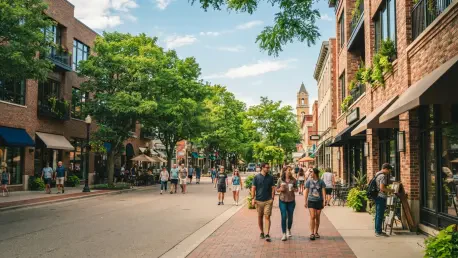

The city is moving toward a more rigorous oversight model for auto-centric developments by requiring Special Land Use Permits for all new drive-thrus and car washes. This regulatory shift marks a definitive moment in Traverse City’s progression toward its 2027 development objectives, where the focus has moved from conceptualizing the 2024 Master Plan to enforcing its specific mandates. By demanding more discretionary oversight for projects that historically operated with minimal local review, the Planning Commission is actively reclaiming control over the city’s aesthetic and functional evolution. This strategic transition is not merely about bureaucratic hurdles but represents a fundamental reimagining of how urban spaces should serve both local residents and seasonal visitors. As the commission navigates the final months of its current cycle, the priority is increasingly centered on balancing rapid economic growth with the preservation of the community’s unique character, ensuring that new infrastructure supports a walkable, resilient, and accessible environment for everyone.
Modernizing Infrastructure and Economic Vitality
The transition from “use by right” to discretionary oversight allows city officials to exert greater influence over the design and placement of commercial facilities that once dominated the landscape without much pushback. For instance, recent projects like the Nicolet National Bank headquarters have served as test cases for this more rigorous Special Land Use Permit process, demonstrating that developers can successfully navigate stricter requirements if the city provides clear expectations. This approach ensures that gas stations and other auto-centric businesses no longer disrupt the visual harmony of neighborhoods or create traffic bottlenecks. Furthermore, by tightening the rules surrounding these developments, the city is signaling to the market that future growth must prioritize density and pedestrian safety over car-based convenience. This policy refinement is a critical component of the 2027 agenda, as it sets the stage for a more cohesive urban fabric that can withstand the logistical pressures of a growing year-round population.
Beyond commercial zoning, the Planning Commission has recognized that a thriving local economy depends on robust social infrastructure, leading to the designation of childcare centers as a “use by right” in all zoning districts. This change removes significant administrative barriers that previously stifled the development of essential services for working families, directly addressing a critical bottleneck in the city’s economic vitality. By simplifying the approval process, the city encourages local entrepreneurs and established organizations to expand childcare capacity without facing lengthy public hearings. In parallel, the “Charging Smart Program” is being prepared for full implementation in 2027, which will codify requirements for new multi-family and commercial buildings to be electric vehicle ready. These initiatives collectively ensure that the city’s physical framework remains adaptable to technological shifts while supporting the human elements—families and workers—that provide the backbone of the community’s long-term sustainability.
Streamlining the Zoning Code and Residential Design
A central pillar of the 2027 strategy involves a massive overhaul of the city’s legislative language through a comprehensive zoning rewrite aimed at increasing transparency and accessibility. The current ordinance has often been criticized for its density and technical complexity, making it difficult for average property owners to understand their rights or for small-scale developers to propose innovative projects. To combat this, the Planning Commission is working to consolidate rules and shorten the text while introducing visual aids like tables and diagrams that clarify complex requirements at a glance. This modernization effort is designed to democratize the development process, reducing the need for expensive legal consultants and making the code more user-friendly for all stakeholders. By transforming the zoning ordinance into a clear, visual document, the city hopes to foster a more collaborative environment where the community’s vision, as outlined in the 2024 Master Plan, is clearly translated into physical reality.
Innovations in residential design are also at the forefront of the upcoming year’s planning efforts, specifically through the introduction of “pattern book homes” to address the housing shortage. These preapproved architectural plan sets allow homeowners and builders to select from a variety of traditional styles that have already been vetted for compliance with local setback and design standards, significantly shortening the approval timeline. This proactive measure not only encourages the construction of diverse housing types but also ensures that new infill projects maintain the historic aesthetic of the city’s established neighborhoods. Additionally, targeted rezoning efforts for corridors like West Front Street and the potential development of a new zone along Fourteenth Street are expected to unlock fresh opportunities for mixed-use projects. These changes are intended to create a more dynamic residential market that offers a range of price points and living styles, ensuring that the city remains an inclusive place for residents of all income levels as it matures into the next decade.
Enhancing Governance and Public Engagement
The governance model for 2027 emphasizes a closer alignment between the Planning Commission and the City Commission, particularly on sensitive issues like the regulation of short-term rentals. These two bodies have scheduled joint sessions to reconcile their priorities and ensure that housing remains available for long-term residents rather than being entirely absorbed by the tourism industry. Recommendations for capping the number of rental permits in specific districts have already been proposed, reflecting a growing consensus that the residential character of neighborhoods must be protected to maintain social cohesion. This inter-governmental collaboration is essential for creating a unified front on policy matters that impact the city’s long-term identity. By establishing a shared vision for growth, city leaders can more effectively manage the trade-offs between economic expansion and community preservation, ensuring that legislative decisions are both balanced and enforceable across different departments and administrative cycles.
The development of a new public dashboard represented a significant leap toward digital transparency, allowing residents to track the lifecycle of urban projects through a data-driven interface. By moving away from traditional, low-attendance community meetings and toward accessible digital platforms, the city successfully modernized its approach to civic engagement. This transition enabled the Planning Commission to provide real-time updates on environmental protections, such as the expanded riparian buffer setbacks that shielded local waterways from the negative impacts of urban runoff. Looking forward, the city established a clear roadmap for 2027 that prioritized systemic reform over incremental changes, setting a precedent for other coastal communities. Stakeholders focused on the immediate implementation of EV-ready infrastructure and the finalization of the simplified zoning code to ensure that the city remained agile. These actions provided the necessary tools for future administrators to maintain a balance between environmental stewardship and modern urban expansion.