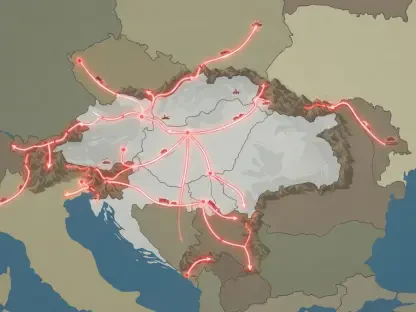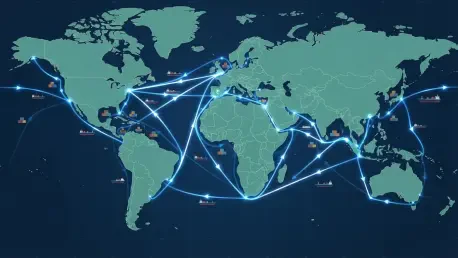

The emergence of the Northern Sea Route as an Ice Silk Road represents a strategic attempt by major powers to bypass traditional maritime bottlenecks in the Middle East. This ambitious shift highlights a broader reality where the global economy rests on a foundation of maritime logistics, with more than 80 percent of all international trade traveling across the world’s oceans. During periods of geopolitical calm, this vast network operates as a silent and efficient engine for wealth creation, ensuring that products are available to consumers worldwide with minimal friction. However, this reliance on the sea creates a significant and persistent vulnerability for every nation involved in the global market. The trade structure is not a decentralized web that can easily adapt to localized failures; rather, it is a series of interconnected corridors that depend heavily on a handful of strategic waterways. These narrow passages, often only a few miles wide, serve as the gatekeepers of international commerce and the ultimate arbiters of economic stability. When these chokepoints are obstructed by conflict or environmental factors, it triggers an immediate and damaging snowball effect that impacts energy supplies, shipping costs, and global inflation. Ultimately, these disruptions reduce the purchasing power of the average person and reshape the financial landscape of entire continents.
Energy Hubs and Financial Shocks
The Critical Role of the Strait of Hormuz
The Strait of Hormuz remains the most significant energy and financial chokepoint in the modern world, acting as a vital artery for the global energy market. Historically, it has carried approximately 20 percent of the world’s total oil consumption through a passage that is just over 20 miles wide at its narrowest point. In the current landscape, the prolonged conflict involving major powers has turned the theoretical threat of a total closure into a stark reality, causing a massive shock to the U.S. economy and international markets alike. This disruption has driven gasoline and diesel prices to historic highs, proving that even a global superpower is not immune to the effects of a localized maritime blockade. The instability in this region has essentially decoupled energy prices from traditional supply and demand metrics, replacing them with a risk-based pricing model that fluctuates with every diplomatic or military development.
Beyond the immediate halt in crude oil exports, the closure of the Strait of Hormuz has fundamentally changed the economics of shipping and logistics. Analysts report that freight rates have surged to a point where they add more than $30 to the cost of every barrel of oil, representing a ten-fold increase from pre-conflict levels. This astronomical rise in transportation costs is not merely a logistical headache for oil companies; it is a direct tax on global productivity. As these costs are passed down the supply chain, they manifest as higher prices for everything from industrial plastics to consumer heating. The volatility has forced a complete reassessment of energy security, as nations that once relied on “just-in-time” deliveries are now scrambling to build massive strategic reserves to buffer against the unpredictability of this narrow waterway.
Global Financial Stability and Interest Rate Volatility
The ripple effects of maritime instability extend deep into the world’s financial systems, where the Bank for International Settlements has designated the Strait of Hormuz as a critical variable for global financial health. This instability has forced central banks, including the U.S. Federal Reserve and the European Central Bank, to maintain higher interest rates to combat the persistent inflationary pressures caused by rising energy costs. This demonstrates that maritime security is no longer just a niche concern for shipowners or naval strategists; it has become a primary driver of global credit conditions and bond yields. When a chokepoint is threatened, the resulting spike in the Consumer Price Index often mandates a hawkish monetary response, which in turn slows down domestic investment and increases the cost of borrowing for businesses and homeowners alike.
Furthermore, the financial sector has had to account for the increased risk of default among shipping firms and logistics providers who are struggling under the weight of ballooning operational expenses. The sudden shift in trade routes and the cessation of movement through key straits have created a level of market volatility that traditional monetary policies are struggling to manage. Investors have begun to demand higher risk premiums for assets linked to international trade, leading to a tightening of liquidity in markets that were previously considered stable. This financial contagion proves that the physical movement of goods through narrow channels is the true backbone of the global banking system. As long as these corridors remain vulnerable, the stability of international currencies and the growth of global equity markets will remain tethered to the security of a few miles of water.
Geographic Vulnerabilities Across the Globe
Regional Conflict and Environmental Threats
While the Middle East remains a primary focus, other sensitive passages also dictate the flow of goods and the security of global supply chains. The Bab el-Mandeb Strait, serving as the southern gateway to the Suez Canal, has seen persistent instability due to regional rebel attacks and maritime skirmishes. This insecurity has prevented traffic from returning to normal levels, forcing many shipping companies to choose between high-risk transits or expensive, time-consuming detours around the southern tip of Africa. This disruption effectively weakens the utility of the Suez Canal, which was designed to be the primary shortcut between Asia and Europe. The resulting delays have created a ripple effect throughout European supply chains, leading to manufacturing pauses and inventory shortages that have persisted despite efforts to find alternative land-based routes.
The Panama Canal faces a different kind of threat that is rooted in environmental changes rather than military conflict, yet the economic impact is no less severe. Severe and prolonged drought conditions have depleted the water levels necessary for the canal’s complex lock system to function at full capacity. This has forced the Panama Canal Authority to implement strict restrictions on ship weight and the number of daily transits allowed through the waterway. This environmental bottleneck has created a significant hurdle for trade between the Atlantic and Pacific oceans, affecting everything from grain shipments from the American Midwest to liquefied natural gas exports. It highlights a burgeoning reality where biological and climate factors are just as disruptive to the global economy as geopolitical tensions, requiring a different set of engineering and logistical solutions to maintain the flow of commerce.
The Impact of Climate and Toll-Based Navigation
The Strait of Malacca is arguably the most vital commercial corridor in the world, handling approximately one-third of global trade and more oil volume than even the Strait of Hormuz. It serves as the indispensable lifeblood for East Asian economies like China, Japan, and South Korea, which rely on the passage for both energy imports and the export of finished goods. Recent geopolitical tensions have led regional powers to reconsider the “freedom of navigation” status of this waterway, with some nations floating the idea of implementing transit tolls or stricter environmental regulations as a form of economic leverage. This shift suggests that even traditionally friendly or neutral chokepoints can be weaponized in a broader economic conflict, turning the world’s busiest shipping lane into a political bargaining chip that could further escalate global trade costs.
Other vital passages, such as the Strait of Gibraltar, the Bosporus, and the Taiwan Strait, remain under constant surveillance by the global insurance and shipping industries. Any sign of instability or increased military presence in these areas sends immediate signals to the market, resulting in higher insurance premiums and altered shipping routes almost instantly. The constant threat of disruption in these areas keeps the global trade network in a state of perpetual readiness for a potential crisis, which adds an invisible “risk tax” to every product moved by sea. This environment of heightened awareness has led to the development of sophisticated predictive models used by logistics firms to anticipate closures, yet the physical reality of a narrow passage remains a hurdle that technology alone cannot overcome. The vulnerability of these arteries ensures that the global economy is never more than one incident away from a significant slowdown.
The Economic and Geopolitical Fallout
Financial Costs and Supply Chain Redesign
Disruptions at these vital maritime arteries do more than just delay the arrival of goods; they fundamentally alter the cost structure of nearly every product in the global market. Studies conducted by international economic organizations suggest that these bottlenecks cost the global economy nearly $192 billion annually when accounting for delivery delays, the massive expense of rerouting, and the surge in insurance hikes. The insurance market acts as a real-time barometer for maritime risk, providing a clear window into the perceived safety of any given route. In high-conflict zones like the Red Sea or the Persian Gulf, war-risk premiums have jumped from a negligible 0.25 percent to as high as 10 percent of a vessel’s total value. For a modern tanker or container ship worth hundreds of millions of dollars, these costs are unsustainable without significant price increases for the end consumer.
The logistical impact is equally severe because rerouting ships significantly reduces the “effective supply” of the global fleet. When vessels are forced to take longer routes, such as traveling around the Cape of Good Hope instead of through the Suez Canal, they spend considerably more days at sea for every single journey they undertake. This reduces the number of available ships at any given time, creating an artificial shortage that drives daily charter rates to astronomical levels. For instance, some large crude carriers have seen their daily earnings reach 17 times their ten-year average during peak periods of disruption. This shortage of tonnage doesn’t just affect the specific routes that are closed; it pulls ships away from other trade lanes, causing shipping costs to rise globally. The redesign of supply chains is no longer about efficiency alone, but about surviving a landscape where the primary routes can disappear overnight.
Strategic Shifts and Trade Realities
Ongoing maritime crises have prompted major powers to fundamentally change how they approach trade security and national defense. China, recognizing its extreme vulnerability in the Strait of Malacca, has spent the last several years aggressively developing the “String of Pearls,” a network of commercial ports with potential military utility across the Indian Ocean. Additionally, Beijing is heavily promoting the “Ice Silk Road” through the Arctic as a way to diversify its options. While this route remains seasonal and technically challenging, it offers a path to European markets that bypasses the traditional chokepoints of the Middle East and Southeast Asia, potentially cutting travel time by nearly half. These strategic investments are a clear sign that major economies are no longer willing to leave their trade security to chance or the protection of other naval powers.
The United States has also shifted its posture significantly, moving away from its traditional role as the disinterested defender of universal “freedom of navigation” toward seeking more direct control over specific strategic points. This is evidenced by an increased military presence in key areas like the Greenland-Iceland-UK gap and the Persian Gulf, as well as proposals for protection fees to escort commercial tankers through high-risk zones. This move toward a more protectionist and transactional maritime strategy marks a major departure from the liberal trade order that defined the late 20th century. National governments are now treating shipping lanes as sovereign extensions of their economic territory, leading to a more fragmented and militarized ocean. This realignment suggests that the era of open, unencumbered seas may be giving way to a more contested and expensive maritime environment.
The Permanent Realignment of Global Supply Networks
The global shipping industry finally transitioned away from a model of optimistic liberalism toward one of hardened strategic realism. Authorities recognized that the old systems of unfettered access were no longer sustainable in a fragmented geopolitical landscape, and they acted accordingly by diversifying their logistical footprints. Major corporations successfully implemented blockchain-based tracking systems to optimize real-time rerouting, while governments invested heavily in deep-water ports located outside traditional conflict zones. This proactive shift ensured that subsequent disruptions did not result in the same level of economic paralysis witnessed during the previous years of upheaval. By prioritizing resilience over the lowest possible cost, the international community built a more robust, albeit more expensive, framework for the movement of essential goods and energy resources.
Stakeholders eventually accepted that the fragility of maritime straits necessitated a permanent change in how national security intersected with commercial prosperity. They established new multilateral agreements that focused on regional stability and shared protection of key waterways, moving away from a reliance on a single global guarantor. Shipping firms also shifted their fleet compositions, favoring vessels that could handle the harsher conditions of alternative routes like the Arctic or the long transits around Africa. These collective actions effectively mitigated the “snowball effect” of localized crises, providing a more stable foundation for global trade in an era of constant change. The lessons learned during this period of transition served as the blueprint for a modern economic order that valued predictability and security above all else, ensuring that the global shopping experience remained intact despite the volatility of the seas.