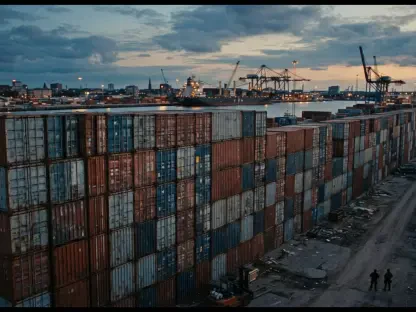

Reclaiming the capacity for high-volume munitions and shipbuilding is a primary objective of the new initiative to fortify the domestic industrial base. The United States military’s capacity to deploy advanced technology and maintain its global standing is rooted in a complex ecosystem of specialized production that often goes unnoticed by the general public. While massive defense contractors like Lockheed Martin and Boeing often receive the most public attention, the Small Business Administration and the Pentagon have recently identified that the true backbone of the defense industrial base consists of small-scale manufacturers. To address systemic vulnerabilities in this sector, these two agencies have formed a landmark partnership centered on the newly established Smaller War Plants Commission. This collaboration aims to provide the financial and technical infrastructure necessary to ensure that the small businesses responsible for critical military components can sustain the nation’s security requirements. This strategic shift acknowledges that national security is no longer just about the final assembly of ships or aircraft, but about the resilience of the thousands of machine shops and tech startups that provide the essential building blocks for modern warfare. By focusing on the health of the American manufacturers that qualify as small businesses, the initiative protects the entire production chain from disruption, ensuring that the United States remains prepared for any contingency.
Historical Context: A Return to Institutional Roots
The establishment of the Smaller War Plants Commission represents a deliberate return to the Small Business Administration’s historical foundations, reflecting a time when industrial mobilization was the cornerstone of national survival. During World War II, the federal government created the Smaller War Plants Corporation to prevent small manufacturers from being sidelined during the massive industrial ramp-up required for the war effort. This predecessor organization recognized that the diverse capabilities of smaller shops were essential for the rapid innovation and high-volume production needed to achieve victory. Today, SBA leadership argues that a similar mobilization is required to counter decades of offshoring and the erosion of domestic capacity that has left the nation vulnerable to supply chain shocks. By reviving these institutional roots, the government seeks to bridge the gap between historical industrial success and the modern needs of the “Arsenal of Democracy,” focusing on rebuilding weakened supply chains that have been hollowed out by global economic shifts and a lack of targeted domestic investment. This approach signifies a move away from purely market-driven outcomes toward a more strategic industrial policy that values domestic capability over short-term cost savings.
Moving forward, the SBA and the Pentagon are looking to apply these historical lessons to a landscape dominated by software-defined hardware and rapid prototyping. The Smaller War Plants Commission is not merely a nostalgic exercise but a forward-thinking response to the complexities of 21st-century conflict. In 2026, the necessity of maintaining “warm” production lines—facilities that are actively producing goods and can quickly scale up—has become a top priority for defense planners. This requirement necessitates a deeper level of integration between federal agencies and the private sector. The commission serves as a central hub for this integration, providing a venue where the unique needs of small manufacturers are prioritized in the procurement process. By learning from the past, the SBA is better positioned to navigate the challenges of the current era, such as the need for specialized materials and advanced machining that are often found in smaller, more agile firms. This historical perspective provides the framework needed to justify significant federal intervention in the manufacturing sector, ensuring that the country’s industrial foundation remains robust enough to support long-term strategic objectives and maintain technological superiority.
Strengthening the Interconnected Industrial Web
A primary driver of this partnership is the recognition of the extreme interdependence within the defense sector, where the failure of a single component can stall the production of an entire weapon system. Major prime contractors do not operate in isolation; they rely on a sprawling network of thousands of sub-tier suppliers that provide everything from precision-machined parts to specialized composite materials. For instance, a single major firearms manufacturer like SIG Sauer may manage over a thousand small suppliers to complete its production lines, highlighting the immense complexity of the modern defense supply chain. Because the failure or financial instability of even one “minor” supplier can cause a catastrophic ripple effect throughout a weapon system’s production, strengthening these smaller nodes is now viewed as a mission-critical objective for national deterrence. This realization has shifted the focus of the Pentagon from simply managing “prime” relationships to a more granular understanding of the entire industrial ecosystem. By mapping these dependencies, the government can identify where the most significant risks lie and deploy resources to ensure that small manufacturers remain productive under pressure.
Building on this foundation of interconnectedness, the SBA acts as a force multiplier by ensuring that small firms have the financial stability and technical support required to meet the rigorous demands of the warfighter. The initiative protects the entire production chain from disruption by focusing on the health of the 98% of American manufacturers that qualify as small businesses. This is particularly important as the military moves toward more distributed and modular systems that require a wider variety of specialized components produced in smaller batches. Smaller manufacturers are often more adept at this type of precision work, but they also face greater risks from market volatility and procurement delays. The partnership aims to provide a safety net for these firms, allowing them to invest in the future without the constant fear of contract cancellations or cash flow shortages. By stabilizing the sub-tier supply base, the Pentagon ensures that the final assembly lines of the major defense contractors continue to move efficiently. This comprehensive approach to industrial health reflects a shift in thinking that treats small businesses not just as secondary participants, but as essential pillars of the national security apparatus.
Overcoming Capital Barriers and Financial Gaps
Manufacturing is a capital-intensive industry that requires significant upfront investment in high-tech facilities, specialized machinery, and expensive raw materials. For many small businesses, the cost of scaling up to meet sudden increases in Department of Defense demand is often financially prohibitive, leading to a “valley of death” where companies cannot secure the funding needed to move from prototype to production. To mitigate this, the SBA and the Pentagon have synchronized their financial resources through formal agreements signed in the current year. This includes leveraging the SBA’s multibillion-dollar investment portfolio to fund businesses that align with the military’s strategic priorities, ensuring that capital is directed toward the most critical industrial choke points. By utilizing programs like the Small Business Investment Company, the government can provide equity and debt financing to firms that might otherwise be overlooked by traditional venture capital or commercial lenders. This strategic deployment of capital is designed to create a more resilient industrial base that can pivot quickly to meet new threats without being hindered by a lack of liquidity or high-interest debt that stifles growth.
A key component of this financial strategy is the Made in America Loan Guarantee, which offers a 90% federal guarantee on loans intended for domestic production expansion and equipment upgrades. This program is specifically designed to de-risk investments for commercial banks, encouraging them to provide favorable terms to small manufacturers operating in the defense sector. By reducing the risk for lenders and providing clearer pathways to funding, the government enables small manufacturers to modernize their operations with advanced robotics and additive manufacturing. This alignment of financial expertise and military necessity allows the United States to maintain the production capacity essential for the rapid surge needed during times of international conflict. Furthermore, the partnership facilitates direct communication between the Pentagon’s acquisition experts and the SBA’s financial advisors, ensuring that the businesses receiving funding are those that provide the most strategic value. This targeted approach prevents the wasteful allocation of resources and ensures that every dollar spent contributes directly to the fortification of the national defense industrial base and the preservation of domestic jobs.
Mapping Capabilities and Supply Chain Resilience
Beyond financial support, the Smaller War Plants Commission is focused on developing industrial intelligence through the newly established Civil Reserve Manufacturing Network. This program is designed to map out existing industrial capabilities across the country to identify manufacturing gaps before they evolve into national security crises. By creating a comprehensive database of what can be produced, where, and at what volume, the government can proactively address weaknesses in the production of emerging technologies such as unmanned systems and hypersonics. This level of visibility is crucial for reducing the nation’s reliance on foreign-made chips and materials, which has been a significant vulnerability in recent years. Mapping the supply chain also allows for better coordination between different branches of the military, ensuring that specialized manufacturers are not overwhelmed by competing demands. This data-driven approach to industrial planning represents a significant upgrade from previous models that relied on incomplete information and reactive measures to address shortages, allowing the Pentagon to anticipate logistical bottlenecks before they impact operational readiness.
Resilience in the modern era also involves reclaiming high-volume production capacity in traditional sectors like shipbuilding and munitions. The initiative ensures that the United States does not just possess the blueprints for advanced weaponry but also the physical means to produce them at scale during a sustained conflict. By maintaining a constant state of readiness within the small business sector, the Pentagon can ensure a more agile response to evolving threats, moving away from a model of stockpiling finished goods toward a model of sustained industrial flexibility. This is particularly vital for the production of precision-guided munitions, which can be expended rapidly in modern warfare. Small manufacturers are often the sole providers of the specialized sensors and actuators that make these weapons effective. Ensuring these firms have the capacity to surge production is a core goal of the mapping initiative. Moreover, the Civil Reserve Manufacturing Network identifies “dual-use” facilities that can pivot from commercial production to military production during an emergency, providing a latent layer of industrial strength that can be activated when needed most.
Investing in Skilled Labor and Regulatory Reform
The success of domestic manufacturing depends heavily on the availability of a highly skilled workforce capable of operating sophisticated machinery and adhering to stringent quality standards. Federal leaders have identified the labor shortage as a primary obstacle to growth in the defense sector, leading to a new focus on recruiting military veterans into the defense industrial base. Veterans are considered an ideal fit for these roles because they combine technical aptitude with a firsthand understanding of the equipment’s importance in the field. The SBA and the Pentagon are working to expand technical education and skilled trades programs through community colleges and vocational schools, ensuring a steady pipeline of workers who can translate complex military requirements into precision reality. By providing incentives for small businesses to hire and train veterans, the government is addressing two problems at once: supporting the transition of service members to civilian life and filling the talent gap in the manufacturing sector. This focus on human capital is essential for maintaining the qualitative edge that American-made equipment provides on the global stage.
Finally, the partnership addresses the bureaucratic hurdles and regulatory complexities that often discourage innovative small businesses from entering the defense market. Complex regulations, such as the Cybersecurity Maturity Model Certification, can be prohibitively expensive and time-consuming for smaller firms to implement, potentially driving them toward commercial markets instead. The Commission is currently reviewing these processes to streamline requirements and reduce the administrative burden without compromising the security of sensitive military data. By making the procurement process more accessible and transparent, the government fosters a more competitive environment where new ideas can thrive. This includes providing small businesses with technical assistance to navigate the various federal agencies and compliance standards. Reducing these barriers is not just about convenience; it is a strategic necessity to ensure that the most advanced technologies, often developed by startups and small firms, find their way into the hands of the warfighter. By creating a more welcoming environment for small manufacturers, the SBA and the Pentagon are ensuring that the American manufacturing ecosystem remains the most adaptive in the world.
Actionable Strategies for Industrial Deterrence
The partnership between the SBA and the Pentagon shifted the national focus toward a more resilient and distributed manufacturing model that prioritized local capability over global convenience. Analysts observed that the Small Business Administration’s role evolved from a traditional lending agency into a strategic partner capable of identifying and nurturing the technological “choke points” within the defense supply chain. By the end of this current cycle, the government successfully integrated financial incentives with military requirements, creating a streamlined pipeline for small businesses to contribute to high-priority defense projects. This collaboration demonstrated that the health of the broader economy was inextricably linked to national security, as small machine shops and precision engineers proved to be as vital to deterrence as the carriers and fighter jets they helped build. The focus on veteran employment and workforce development provided a stable foundation for this industrial resurgence, ensuring that technical knowledge was preserved and expanded across the country, creating a more cohesive and robust defense manufacturing landscape.
To sustain these gains, small manufacturers and defense stakeholders should prioritize the adoption of modular production techniques and invest heavily in cybersecurity resilience. Future considerations must include the expansion of the Civil Reserve Manufacturing Network to include regional innovation hubs that can rapidly prototype and manufacture specialized components closer to the point of need. Companies looking to succeed in this new environment should engage early with the SBA’s technical assistance programs to ensure compliance with emerging standards without overextending their internal resources. Furthermore, the Pentagon is expected to continue emphasizing the “warm” production model, which means small firms should focus on maintaining flexible assembly lines that can switch between commercial and defense contracts as demand fluctuates. By embracing these actionable strategies, the American industrial base will remain agile enough to face the challenges of the coming years and beyond, ensuring that the technology used by the military is always backed by the most robust and technologically advanced manufacturing ecosystem on the planet.