
As the skeletal remains of the new West Seattle Link extension begin to pierce the skyline, local legislators are facing a pivotal juncture that will determine the financial viability of Washington’s most ambitious infrastructure projects for the next decade. The grand promise of a transit-connected Emerald City, once a distant vision during the initial passage of expansion measures, is now grappling with the harsh reality of escalating construction costs and shifting post-pandemic ridership patterns. Policymakers are currently examining a comprehensive roadmap that spans from 2026 to 2035, aiming to bridge the gap between regional environmental commitments and the practical constraints of a tightening municipal budget. While public support for carbon-neutral transportation remains robust, the debate has shifted from whether to build to how to pay for it without compromising essential city services. This ongoing deliberation serves as a litmus test for urban planning in a rapidly evolving economic landscape, where every dollar must be justified against the backdrop of housing shortages and social equity initiatives.
Fiscal Realities: Navigation of Budget Gaps and Funding Models
The core of the current legislative dispute centers on the Ballard Link extension, a project that has seen its estimated price tag swell due to unforeseen geological challenges and the rising cost of industrial materials. Council members are scrutinizing the effectiveness of traditional property tax levies, which have historically served as the backbone for Sound Transit’s funding, but are now reaching their statutory limits in many districts. To address this, there is a growing interest in diversified revenue streams, such as value-capture financing, where the city leverages the increased property values around new transit stations to fund the infrastructure itself. This approach requires a delicate balance, as it necessitates higher density zoning that often meets resistance from established neighborhood groups. Moreover, the integration of federal grants has become more competitive, forcing the city to demonstrate not just the utility of new lines, but also their long-term operational sustainability in an era where remote work has permanently altered the traditional morning and evening rush hour cycles.
Beyond the immediate concerns of the Ballard corridor, the council is also evaluating the maintenance backlog for the existing bus fleet and the aging King County Metro infrastructure. Building on the foundation of recent environmental mandates, the city has committed to a full electrification of its transit fleet by 2030, a goal that requires significant upfront investment in charging depots and battery technology. This transition is complicated by the need to maintain service frequency on existing routes while diverting funds toward these high-tech upgrades. Some officials argue that a temporary pivot toward enhanced Bus Rapid Transit, or BRT, could provide a more cost-effective solution than underground rail for less densely populated areas. By utilizing dedicated lanes and signal priority technology, BRT offers a middle ground that can be implemented faster than light rail. However, critics point out that such measures often lack the permanence and high-capacity benefits of fixed-rail systems, leading to a philosophical divide over the best way to utilize the city’s limited right-of-way space.
Technological Advancement: Integration of Smart Solutions and Density
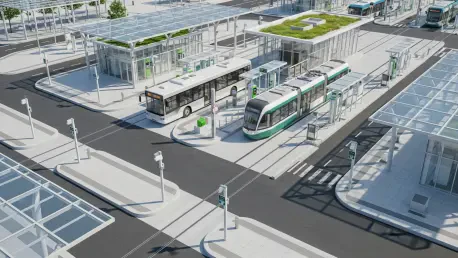
In response to these logistical hurdles, the Seattle Department of Transportation is exploring the deployment of advanced automated signaling systems designed to increase the frequency of light rail trains without expanding physical trackage. These digital solutions, often categorized under Communications-Based Train Control, allow for shorter intervals between vehicles, effectively boosting the capacity of the entire network by up to thirty percent during peak demand. This technological leap is seen as a vital component of the 2026 to 2032 strategy, as it maximizes the utility of existing tunnels and bridges. Furthermore, the discussion has expanded to include the implementation of smart transit hubs that utilize real-time data analytics to coordinate transfers between rail, bus, and micro-mobility options like electric scooters and bikes. By creating a seamless digital interface for commuters, the city hopes to reduce the friction of multi-modal travel, making public transit a more attractive alternative to single-occupancy vehicles. Such innovations are not merely aesthetic upgrades but are essential tools for managing the increasing urban density.
The council ultimately prioritized a multifaceted approach that integrated transit-oriented development with rigorous fiscal oversight to ensure the longevity of the expansion. Legislators enacted a series of reforms that streamlined the permitting process for affordable housing projects located within a half-mile radius of new stations, thereby guaranteeing a built-in ridership base for the burgeoning network. They also established a permanent oversight committee tasked with conducting quarterly audits of construction progress to prevent the kind of cost overruns that hampered previous phases of the project. These actions signaled a shift toward a more pragmatic governance model, where the success of transit was measured not just by miles of track laid, but by the overall accessibility and reliability of the system for all residents. By the end of the session, the governing body secured a framework for public-private partnerships that incentivized corporate entities to invest in station amenities and last-mile connectivity solutions. These steps successfully laid the groundwork for a resilient urban corridor that balanced growth with fiscal responsibility while upholding the city’s environmental values.