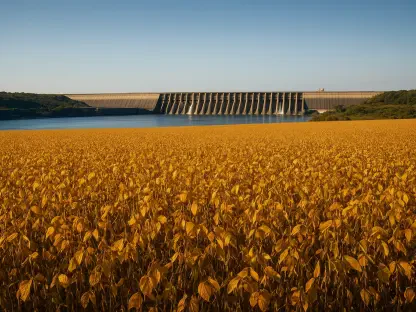

Nebraska has evolved into a primary theater where the digital ambitions of multi-trillion-dollar corporations collide with the foundational agricultural needs of the American heartland. As massive data centers migrate into the state, attracted by aggressive tax incentives and robust electrical infrastructure, they introduce a significant but often concealed environmental footprint. The cooling systems required to keep thousands of high-density servers operational demand millions of gallons of water daily, a resource that serves as the lifeblood of the state’s agricultural identity. This analysis explores the burgeoning movement to mandate water usage transparency, examining whether the public’s right to resource security outweighs a corporation’s desire for operational secrecy. By evaluating current legislative pushes and the needs of local communities, the study uncovers why this debate is critical for the long-term economic health of the region.
Navigating the Intersection of Digital Growth and Resource Transparency
The rapid expansion of the digital economy in Nebraska represents a paradigm shift in the state’s industrial composition. While the influx of high-tech investment provides a welcome diversification of the tax base, it also places unprecedented pressure on utility providers. Transparency has become the central theme of this evolution, as stakeholders seek to understand the trade-offs between hosting global server farms and preserving local ecosystems. This tension necessitates a closer look at how resource management is reported and regulated.
Current market trends indicate that the era of hidden consumption is coming to an end. Communities are no longer satisfied with vague promises of economic prosperity; they demand specific data to ensure that their water tables remain viable for future generations. This shift in public sentiment is forcing a recalculation of how data centers are integrated into the regional landscape, turning resource disclosure into a pivotal point of negotiation for all future developments.
The Evolution of Industrial Water Rights: From Trade Secrets to Public Scrutiny
Historically, the relationship between Big Tech and local municipalities was defined by non-disclosure agreements and a “blind-faith” model of resource management. Tech companies long classified their water and energy consumption as proprietary trade secrets, arguing that such granular data could reveal sensitive information about server density or operational efficiency to global competitors. In previous years, this secrecy was tolerated in exchange for high-tech jobs and substantial property tax revenue that bolstered local schools and roads.
However, as Nebraska grapples with recurring droughts and the long-term health of the Ogallala Aquifer, the regulatory landscape is shifting toward accountability. This background highlights a fundamental change in governance: the transition from prioritizing immediate economic development to ensuring long-term environmental sustainability. Understanding this shift is essential because it marks the end of an era where industrial growth was permitted to occur in a statistical vacuum.
The Core Conflict: Balancing Corporate Interests with Ecological Survival
The Public’s Right to Know: Proprietary Protections vs. Transparency
A central tension in this discourse is the clash between corporate privacy and the public’s right to understand how shared resources are utilized. Proponents of mandatory disclosure argue that water is a public good, particularly in a state where domestic and agricultural security are paramount. While tech companies claim that revealing specific usage figures could jeopardize their competitive edge, environmental advocates and lawmakers are pushing back against the use of legal shields that hide industrial-scale consumption from public view. The challenge lies in creating a framework where companies protect technological innovations without obscuring the volume of water diverted from local utilities.
Infrastructure Management: Balancing Agricultural and Domestic Needs
The demand for transparency is a practical necessity for long-term infrastructure planning within the state. Nebraska’s local governments must balance the competing needs of residents, farmers, and tech operators, especially during peak summer months when water demand is at its highest point. Without granular, publicized data on data center consumption, city planners are essentially operating without a clear map of future utility requirements. Providing comparative analysis of how these facilities impact local water tables allows for better-informed decisions regarding utility expansions and drought contingency plans. This ensures that digital growth does not inadvertently lead to shortages for the primary economic engine.
Regional Risks: The Sustainability of the Ogallala Aquifer
Nebraska’s reliance on the Ogallala Aquifer introduces a layer of complexity that sets it apart from other tech hubs in coastal regions. Misconceptions often exist regarding the “limitless” nature of groundwater, but regional experts emphasize that the aquifer is a finite resource facing unprecedented pressure from both climate shifts and industrial growth. Legislative efforts are increasingly focused on these regional specifics, aiming to move away from secretive operational frameworks toward a unified understanding of regional impact. By addressing these overlooked aspects of resource management, Nebraska has the opportunity to set a national precedent for how states manage water-intensive industries during times of climatic uncertainty.
The Shift Toward a Dual-Responsibility Model in Regulatory Policy
Looking ahead, the trend suggests that “coming clean” about resource usage will likely become a prerequisite for doing business in the Midwest. There is an emergence of a “dual-responsibility” model, where economic contributions are weighed equally against ecological accountability. Regulatory changes will likely streamline reporting requirements, making it harder for companies to hide behind legal loopholes or vague utility contracts.
This shift may also drive innovation within the tech sector itself, as the threat of public scrutiny incentivizes corporations to invest in more efficient “closed-loop” cooling technologies or air-cooled systems that significantly reduce water dependency. The future of the industry will be defined by this move toward total transparency and resource efficiency, transforming water management from a hidden cost into a public benchmark of corporate responsibility.
Strategic Recommendations for Sustainable Industrial Expansion
To navigate this transition effectively, Nebraska should adopt several best practices that balance business interests with public safety. First, the state should implement a standardized reporting framework that focuses on objective usage data while protecting specific proprietary server configurations. Second, local municipalities should move away from the use of non-disclosure agreements in utility agreements to foster public trust and enable better urban planning.
For professionals in the tech and utility sectors, the recommendation is to proactively adopt transparent reporting habits now, rather than waiting for mandatory legislation. Establishing these benchmarks allows for smoother integration of new facilities and reduces the risk of public opposition. By prioritizing these strategies, Nebraska can continue to attract high-tech investment while ensuring that its most vital natural resources remain protected for the next generation of residents and producers.
Securing Nebraska’s Vital Resources for the Digital Age
The debate over whether Nebraska should force Big Tech to disclose water usage marked a defining moment for the state’s environmental and economic policy. As explored, the previous model of secrecy was no longer compatible with the realities of drought and the essential needs of the agricultural sector. Ensuring transparency was not an anti-business move; rather, it represented a necessary evolution in governance that secured the long-term viability of the region. By prioritizing ecological accountability alongside digital growth, Nebraska protected the Ogallala Aquifer and provided a sustainable blueprint for the rest of the country. The transition successfully aligned industrial expansion with natural resource preservation, proving that technological progress required community trust. Actionable insights emerged that prioritized standardized metrics and open utility communication as the standard for future Midwestern industrial growth.