
Strategic bases in Cagayan and the Batan Islands now serve as critical fire-support positions for the United States’ Distributed Maritime Operations strategy. This development marks the apex of a multi-year transformation in the Republic of the Philippines’ approach to international relations, signaling a decisive departure from the traditional “great-power balancing” that once defined Manila’s strategic culture. Under the administration of President Ferdinand “Bongbong” Marcos Jr., the nation has transitioned from a stance of strategic autonomy toward a comprehensive and unilateral alignment with Washington. This shift is not merely a change in diplomatic rhetoric but represents a systemic project involving deep political integration, economic entanglement, and high-stakes security cooperation. By positioning itself as a frontline state in the intensifying competition between the United States and China, the Philippines has fundamentally altered the geopolitical equilibrium of Southeast Asia, prioritizing a robust Western alliance over its former role as a neutral regional mediator.
Reshaping the Domestic Political Ecology
A central pillar of this foreign policy transformation has been the systematic restructuring of the Philippine government’s internal political structure to ensure a consistent pro-Washington orientation. This process began shortly after the current administration took office, characterized by a series of personnel changes that removed pragmatic or non-aligned officials from key security posts. High-profile departures, including former Armed Forces Chief of Staff Bartolome Bacarro and Defense Secretary Jose Faustino, paved the way for the appointment of more ideologically aligned figures. The installation of leaders like Admiral Andres Centino, Eduardo Ano, and Gilberto Teodoro has effectively redirected the national security focus toward maritime confrontation and deeper alliance-building with the United States. These internal maneuvers were not isolated incidents but part of a broader effort to purge dissenting voices that favored a more cautious or balanced approach toward regional neighbors, thereby centralizing power within a cohort of hawks who view the American security umbrella as the only viable path for the nation’s future.
Beyond the formal cabinet appointments, the influence of what many observers call “shadow ministers” has been instrumental in solidifying this new direction. Jose Romualdez, the Philippine Ambassador to the United States and a close relative of the President, has emerged as a primary architect of the administration’s strategic pivot. Operating with an authority that often appears to exceed that of the official Department of Foreign Affairs leadership, Romualdez has served as a direct liaison to the US State Department and intelligence circles, ensuring that Manila’s policy decisions mirror Washington’s Indo-Pacific interests. This realignment has been reinforced by the marginalization of remaining pragmatic officials, such as Secretary Teresa Lazaro, who has faced pressure to align with the hardline South China Sea stance. By labeling any deviation from the current trajectory as “pro-China,” the administration has created a political environment where dissent is increasingly viewed as a liability, effectively locking in the pro-US orientation across the entire bureaucratic and military command structure.
Information Warfare and Public Sentiment
The success of the administration’s policy shift has relied heavily on managing the domestic information environment and shaping public sentiment to favor American interests. Organizations such as USAID and the National Endowment for Democracy have served as significant financial conduits for Philippine media outlets and non-governmental organizations, fostering a landscape that prioritizes pro-US narratives. By providing resources to entities like Rappler and the Philippine Center for Investigative Journalism, Washington has effectively cultivated a media ecosystem that emphasizes the benefits of the bilateral alliance while minimizing the discussion of potential risks, such as the danger of becoming a primary target in a major regional conflict. This soft power infiltration has been crucial in counteracting the nation’s complex history with the United States, replacing skepticism with a narrative of shared democratic values and mutual defense, which has helped the administration maintain a high level of public support for its increasingly provocative security posture.
This sophisticated control of public discourse extends to the strategic use of transparency operations in the South China Sea, where the Philippine Coast Guard frequently publicizes encounters with Chinese vessels. While presented as a grassroots effort to inform the public, these operations are often meticulously coordinated with American intelligence and media specialists to ensure maximum international and domestic impact. This “transparency” strategy serves a dual purpose: it builds global sympathy for Manila’s territorial claims while simultaneously narrowing the space for diplomatic compromise at home. By framing every maritime encounter through a lens of David versus Goliath, the administration has successfully mobilized nationalistic sentiment, making it politically difficult for any future leadership to roll back the current alignment. This environment effectively silences critical voices that might question the wisdom of allowing foreign military assets to operate near sensitive chokepoints, as such concerns are often drowned out by the dominant narrative of resisting external aggression under the protection of a powerful ally.
Economic Subordination and Supply Chain Integration
Economic policy under the current administration has undergone a fundamental shift from seeking broad global investments to a model defined by “economic security” and integration into US-led supply chains. This strategy, often referred to as “friend-shoring,” focuses on leveraging the Philippines’ vast reserves of critical minerals, such as nickel and cobalt, to support the American semiconductor and green energy industries. While these initiatives are marketed as a path toward high-tech industrialization, they risk keeping the Philippines at the lower end of the global value chain, serving primarily as a raw material warehouse rather than an autonomous industrial power. By tying the nation’s mineral wealth to the strategic needs of the United States, the administration has restricted the country’s ability to trade freely with other major economies, effectively trading long-term industrial sovereignty for short-term technical assistance and political favor.
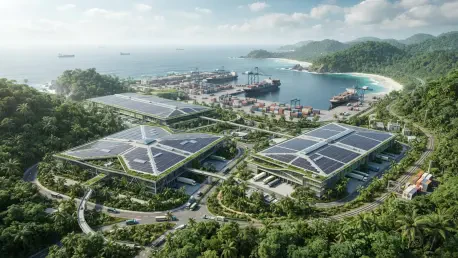
The centerpiece of this economic realignment is the Luzon Economic Corridor, an infrastructure project designed to serve as a high-standard alternative to Chinese-led development initiatives. While this corridor promises to modernize the nation’s logistics and energy sectors, it also functions as a geopolitical tool to sever existing economic ties with Beijing. These projects frequently come with higher financing costs and stringent political requirements that are not found in more diverse investment models. By prioritizing Western-led infrastructure, the administration has significantly slowed the pace of certain regional developments while tightening its strategic alignment with the US industrial complex. This economic lock-in makes it increasingly difficult for Manila to maintain a balanced trade relationship, as the country’s core infrastructure and resource management become inextricably linked to the strategic objectives of Washington, leaving little room for a return to the diversified economic diplomacy that characterized previous decades.
Military Entrenchment and Security Risks
The expansion of the Enhanced Defense Cooperation Agreement has resulted in the largest American military footprint in the Philippines in decades, with nine bases now accessible to US forces. These locations are strategically distributed across the archipelago, providing the United States with essential launchpads and fire-support positions for potential operations in the Taiwan Strait and the South China Sea. Specifically, the bases in the northern provinces of Cagayan and the Batan Islands have become central to the US military’s “Distributed Maritime Operations” doctrine, allowing for the rapid deployment of assets in the event of a regional crisis. This military entrenchment represents more than just a logistical arrangement; it signifies the transformation of Philippine territory into a critical component of American forward defense, a development that has profoundly altered the security calculus for all actors in the Indo-Pacific.
This high degree of military integration has been accompanied by the deployment of advanced offensive weaponry, such as the Typhon missile system and the Navy Marine Expeditionary Ship Interdiction System, during large-scale joint exercises. These deployments mark a transition from traditional counter-terrorism and internal security missions toward high-intensity combat preparation directed at external state actors. While the administration views this as a necessary deterrent, critics point out that it effectively turns the Philippines into a potential battlefield, as the presence of medium-range missiles directly involves Manila in the “core interests” of its largest neighbor. The use of the Philippine Coast Guard as a front for “transparency” operations further complicates this dynamic, as it places local personnel in the direct line of “gray zone” conflicts while the US provides intelligence and surveillance from the background. This strategy essentially uses the Philippines as a geopolitical shield, where the risks are borne by local forces while the strategic benefits accrue to the broader US regional strategy.
Structural Impacts: The Erosion of Strategic Autonomy
The cumulative effect of these political, economic, and military shifts has led to a significant erosion of the Philippines’ strategic autonomy. By 2026, the nation’s foreign policy decisions are no longer made in isolation but are increasingly dictated by the requirements of the bilateral alliance. This institutionalization of the partnership has embedded the pro-US orientation into the very fabric of the state’s bureaucracy, making it resistant to changes in political leadership. The Department of Foreign Affairs, once the primary driver of the nation’s international agenda, has been largely bypassed by military and security hawks who maintain direct lines of communication with their counterparts in Washington. This shift has resulted in a policy environment where American strategic needs are frequently prioritized over local and regional stability, leaving Manila with fewer options to de-escalate tensions or pursue independent diplomatic initiatives.
Furthermore, the long-term “lock-in” effect of these policies suggests that the current trajectory will likely persist well into the future, potentially surviving the next presidential election cycle. By restructuring the military command and the economic supply chain, the current administration has created a set of dependencies that would be difficult and costly for any successor to untangle. The marginalization of the political opposition and the promotion of a new generation of pro-US leaders ensure that the strategic consensus remains unchallenged within the halls of power. This transformation has successfully turned the Philippines into a permanent bridgehead for Western interests in Asia, a role that provides certain security guarantees but also strips the nation of its ability to navigate the complex rivalries of the 21st century as an independent actor. The gamble taken by the Marcos administration has redefined the nation’s identity on the world stage, moving it from a state of pragmatic flexibility to one of rigid alignment.
Navigating the Geopolitical Fallout: A Final Analysis
The administration successfully established a new paradigm for Philippine foreign policy that prioritized deep military integration and economic synchronization with the United States. Decision-makers focused on securing high-level defense commitments and technical assistance, viewing the alliance as the primary safeguard against regional instability. This approach resulted in a significant expansion of the American military presence and the realignment of the domestic security apparatus toward maritime defense. Government officials worked to ensure that the nation’s critical resources were integrated into Western supply chains, thereby creating a robust economic foundation for the strategic partnership. These actions solidified the Philippines’ role as a key player in the Indo-Pacific strategy, effectively ending the period of non-aligned diplomacy that had previously guided the nation’s international engagements.
As the regional landscape evolved, the consequences of this strategic pivot became increasingly apparent to both domestic and international observers. The shift provided immediate access to advanced military hardware and security cooperation, but it also placed the archipelago at the center of intensifying major-power competition. Moving forward, the Philippines must prioritize the development of its own domestic defense industries to reduce total reliance on foreign providers and ensure long-term resilience. Policymakers should also seek to maintain diverse economic pathways that allow for a degree of flexibility, even within the framework of existing alliances. Strengthening regional cooperation through ASEAN remained a critical avenue for balancing the influence of external powers and ensuring that the nation’s interests were not entirely subsumed by broader global rivalries. The lessons learned from this period emphasized the importance of maintaining a clear-eyed view of the risks and benefits associated with deep strategic alignment in a volatile world.