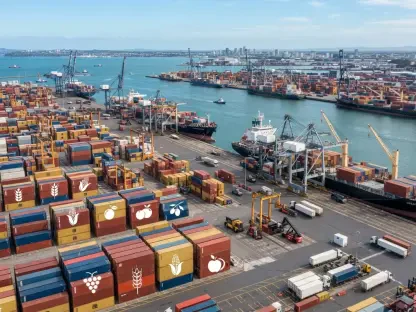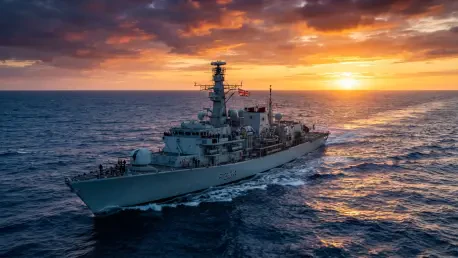

The establishment of the International Joint Strategic Command in August 2026 marks a pivotal institutionalization of Ankara’s ability to manage expeditionary units globally. This move signifies a departure from traditional defensive postures, signaling a transition toward a proactive military presence that spans continents. By moving beyond localized border security, the Turkish Republic is actively seeking to secure vital international corridors across Africa and Asia. This expansion is governed by a fresh National Defense Ministry concept, which treats the Turkish Armed Forces as a tool for ensuring global stability and protecting national interests through an expansive footprint. The strategy is not merely about bilateral agreements but represents a holistic approach to large-scale warfare and logistical sustainability. By placing land, naval, and air units in strategic locations, Ankara aims to mirror the global reach of major powers, integrating military presence with long-term political durability and economic influence.
Evolution of Modern Turkish Military Doctrine
Historians and defense analysts now categorize the development of the Turkish military into three distinct eras, each reflecting the geopolitical pressures of its time. The first period was defined by the Cold War, where the focus remained strictly on conventional warfare and maintaining the territorial integrity of NATO’s southern flank. This transitioned into a second phase characterized by nearly four decades of counterterrorism operations, which spurred the development of advanced special forces and the pioneering use of unmanned aerial vehicles to combat regional threats. Today, the nation has entered the “third era,” which prioritizes global deployment and a strategy of deterrence through presence. This phase is shaped by the shifting nature of international conflict and the intensification of great-power rivalries. The current objective is to ensure the military can adapt to a landscape where the distinctions between regional and global security are no longer clearly defined in the modern era.
To facilitate this ambitious global expansion, the General Staff has centralized its foreign operations under the International Joint Strategic Command, known as UMSK. This structural innovation was designed to streamline the command and control of all Turkish military units serving in diverse theaters such as Cyprus, Qatar, Somalia, and Libya. Under the leadership of experienced commanders like Lieutenant General Sebahattin Kilinc, the command professionalizes the nation’s expeditionary capabilities, moving them away from ad hoc deployments toward a permanent strategic framework. While specific personnel counts and headquarters locations often remain classified for security reasons, the establishment of UMSK allows for better coordination of diverse tasks including training, advisory support, and combat deterrence. This institutionalization ensures that every international mission is supported by a unified leadership structure, which is essential for maintaining operational efficiency and logistical reliability across borders.
Strategic Alliances and Geopolitical Balancing
A vital pillar of the current regional strategy is the Mecca Joint Defense Agreement, a trilateral pact involving Türkiye, Saudi Arabia, and Pakistan. This partnership focuses on collective deterrence and mutual defense capacity building, aimed at creating a stable environment in a volatile region. One of the most significant developments within this framework is the potential for a dedicated Turkish military base on Saudi territory. This facility is expected to operate independently of the central command headquarters of the pact and will likely follow the successful “Qatar model,” emphasizing training and advisory support for Saudi personnel. Turkish officials have been careful to signal that this alliance is not directed against any specific neighbor but serves as a stabilizing force to prevent regional escalation. By fostering these deep defense ties, Ankara is positioning itself as an indispensable partner for major Gulf states, utilizing its advanced industry to solidify diplomatic influence.
This shift toward regional cooperation aligns with broader changes in global dynamics, particularly as the United States adjusts its own direct military footprint in the Middle East. Observers in Washington have reportedly viewed the trilateral cooperation between Ankara, Riyadh, and Islamabad as a favorable development that could help maintain the balance of power. As the American military seeks to reduce its direct burden between 2026 and 2028, local alliances like the Mecca pact are seen as essential for preventing direct conflict between regional powers. Consequently, Türkiye is preparing to assume more responsibility for regional security, acting as a primary stabilizer that can bridge gaps between different interests. This role allows the nation to protect its economic corridors and energy interests while ensuring that security vacuums are not filled by adversarial actors. The strategy demonstrates a sophisticated understanding of geopolitical balancing, where presence serves as a lever.
Diplomatic Reconciliation Through Military Unification
In North Africa, the military strategy has evolved into a sophisticated two-stage reconciliation process aimed at stabilizing Libya. Moving away from a policy of supporting only one faction, Ankara has fostered relationships with both the administration in Tripoli and the eastern-based forces. The current priority is the unification of Libya’s divided military entities into a single, cohesive national army. Recent high-level meetings in the capital with various military representatives suggest that a joint command structure is being finalized. By focusing on military unification first, the strategy seeks to eliminate the risk of renewed armed conflict between domestic rivals, which is a prerequisite for any lasting political solution. This “military-first” approach is designed to create a secure foundation that allows for the eventual reintegration of state institutions. By acting as a mediator with muscle, the Turkish Republic is helping to create the conditions necessary for internal stability and regional peace.
Once a unified military command is firmly established, the vision shifts toward a comprehensive political reconciliation and power-sharing agreement. The proposed model suggests a structure where different regional leaders assume key roles within a unified government, aimed at preparing the country for democratic elections and tribal reconciliation. This approach reflects a broader trend in Turkish foreign policy where military presence is used to facilitate diplomatic breakthroughs rather than simply to project force. By engaging with all significant local actors, the nation avoids the pitfalls of being seen as a partisan interloper, instead positioning itself as a guarantor of sovereignty and peace. This strategy is also heavily dependent on the sustainability of supply lines and the depth of political ties established during the military integration process. Success in Libya would serve as a template for other regional interventions, proving that a combination of strength and diplomacy can resolve conflicts.
Strengthening Global Reach Through Logistical Sustainability
The overarching trend in this new defense concept emphasizes that simply deploying troops is insufficient without the support of sustainable political ties and robust logistics. Therefore, the nation has shifted toward a holistic model where defense exports, military training programs, and diplomatic backchannels work in tandem. By providing partner nations with advanced technology, such as tactical drones and armored vehicles, Ankara creates a long-term dependency and a shared operational language. This approach ensures that military presence is not just a temporary fix but part of a deeper institutional relationship. Training foreign officers in Turkish academies further solidifies these bonds, creating a network of professionals who share a common doctrine and strategic outlook. This comprehensive integration of hard and soft power allows the nation to project influence efficiently across the African and Asian continents, ensuring that the costs of global deployment are balanced by strategic gains.
Ultimately, the transition from a regional player to a global military actor was achieved through a calculated response to the intensification of international power rivalries. The successful establishment of the UMSK and the signing of the Mecca pact provided the necessary framework for this evolution. Moving forward, the focus shifted toward refining these expeditionary capabilities to ensure they remained agile enough to respond to emerging threats in real-time. Analysts observed that the true measure of success lay in the ability to maintain these long-range supply lines while fostering deep political cooperation with host nations. The next logical steps involved expanding these maritime and air corridors to ensure that national interests remained protected in an increasingly fragmented global order. By utilizing military expansion as a diplomatic tool, the country managed to enhance its bargaining power significantly. The focus remained on building a perimeter of deterrence that proved a medium power could shape security.