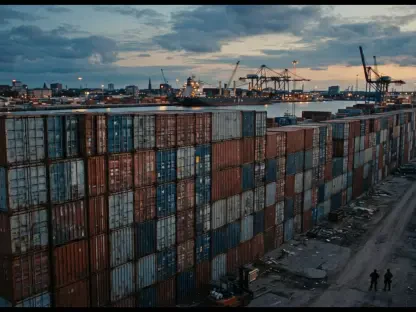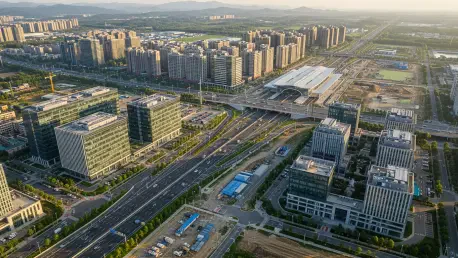

The crushing density of Delhi is no longer just a logistical nuisance but a critical bottleneck threatening the economic vitality of northern India, necessitating a radical shift toward decentralized urban planning. To address this mounting pressure, the Regional Plan 2041 introduces a sophisticated strategy centered on the development of four semi-greenfield magnet cities known as Namo Cities. These specialized urban nodes are strategically positioned to intercept the massive waves of migration and commercial concentration that currently saturate the national capital. By creating self-sustaining economic centers, the government intends to redistribute the projected population surge away from the overcrowded urban core. This transformation is not merely about building new housing; it represents a fundamental move toward high-capacity regional hubs that can operate independently while remaining interconnected. The initiative seeks to balance the scales of regional development from 2026 to 2041, ensuring that peripheral areas are no longer just suburbs but vibrant destinations for global business and modern living.
Strategic Funding: Competitive Development Models
The transition from conceptual blueprints to tangible urban landscapes requires more than just political will; it demands a robust financial architecture capable of de-risking massive infrastructure projects. To jumpstart this construction and attract skeptical private stakeholders, the National Capital Region Planning Board has sanctioned a performance-linked incentive package totaling approximately ₹5,000 crore. This substantial allocation is designed to function as essential seed capital, covering early-stage infrastructure costs that often deter long-term investment. By providing direct grants and low-interest loans, the board aims to establish the groundwork for utilities, roads, and digital connectivity before the first commercial buildings rise. This financial framework is intended to make these nodes bankable, creating a level of fiscal security that allows institutional investors to commit to these satellite economies with greater confidence in their eventual success.
Early-Stage Growth: Catalyzing Investment through Seed Capital
Securing the participation of large-scale developers is vital because the success of the Namo Cities depends on a synergy between public utility provision and private-sector innovation. When the state provides the foundational infrastructure, it effectively lowers the barrier to entry for businesses that might otherwise find peripheral development too costly or risky. This strategy is expected to catalyze a multiplier effect, where every rupee of government seed capital attracts several times that amount in private equity and debt. The objective is to foster a self-reinforcing cycle of growth where initial state support leads to high-quality residential and commercial density. As these cities gain momentum, the reliance on federal funding will naturally diminish, replaced by a sustainable tax base and local revenue streams. This approach ensures that the cities are not just transient projects but enduring pillars of regional economic stability for decades to come.
Meritocratic Selection: Incentivizing Efficiency via Challenge Mode
Rather than allocating projects based on traditional bureaucratic quotas, the government has adopted a competitive challenge mode to select the specific sites for these new urban centers. This process involves Delhi, Haryana, Uttar Pradesh, and Rajasthan, requiring each participating state to present the most viable and investor-friendly development plans to secure federal backing. By forcing states to compete, the initiative ensures that only the most prepared and logistically sound locations receive the necessary resources for rapid expansion. This competitive landscape encourages state governments to streamline their own approval processes and provide clear incentives for land acquisition. The goal is to identify zones where the regulatory environment is already conducive to growth, thereby minimizing the lag time between planning and execution. This meritocratic selection process marks a significant departure from previous urban development models.
Site Viability: Maximizing Logistical Readiness in State Bids
The meritocratic selection process ensures that chosen locations possess the highest probability of succeeding as vibrant economic centers rather than becoming stagnant satellite towns. States are encouraged to leverage their existing strengths, whether in industrial capacity, technological services, or logistical connectivity, to differentiate their proposals from their neighbors. This competition forces local administrations to take greater ownership of the projects, ensuring long-term accountability and performance tracking. Furthermore, the challenge mode fosters a spirit of innovation as states look for ways to integrate green technologies and smart-city features into their urban bids. By rewarding those who offer the best logistical readiness, the federal government is effectively de-risking the entire regional plan. This collaborative yet competitive framework creates a powerful incentive for state governments to streamline their own approval processes and provide clear incentives.
Regional Governance: Overcoming Structural and Regulatory Barriers
Managing an urban expansion project that encompasses over 55,000 square kilometers and thousands of local jurisdictions presents a coordination challenge of unprecedented proportions. Historical execution gaps and bureaucratic inertia have often plagued large-scale regional initiatives, as differing state priorities frequently clash with federal objectives. For the Namo Cities to achieve their full potential, there must be a synchronized effort between the four constituent states to ensure that infrastructure does not stop at political borders. Analysts remain cautious because past attempts at decentralization have often stalled due to a lack of a unified administrative vision across state lines. Without a cohesive framework that bridges the gap between different provincial governments, there is a risk that development will become fragmented and uneven. Success depends on creating a shared roadmap where every stakeholder recognizes that the collective prosperity of the region is at stake.
Policy Alignment: Harmonizing Regulatory Standards and Building Codes
A significant technical obstacle to the success of these urban hubs is the current lack of standardized Floor Area Ratio benchmarks across different states in the region. This regulatory asymmetry often leads to lopsided development, where one side of a border allows for high-density vertical growth while the other remains restricted by outdated codes. For the Namo Cities to function as a cohesive economic corridor, state governments must work together to harmonize building regulations and zoning laws. Standardizing these metrics would provide a level of predictability that is highly valued by international investors and large-scale developers alike. Without such alignment, the region risks creating a patchwork of urban environments that fail to leverage the advantages of scale and density. Uniformity in regulatory standards is the bedrock upon which efficient, transit-oriented development is built, ensuring that every square foot of land is utilized to its maximum economic potential.
Sustainable Connectivity: Prioritizing Transit Integration and Future Mobility
Looking forward, the ultimate success of these hubs rested on the timely completion of the Namo Bharat Regional Rapid Transit System corridors that connected them to the core. Regional authorities prioritized the synchronization of transit infrastructure with commercial zoning to ensure that labor mobility was maximized from the very beginning. Planners adopted a strict enforcement policy regarding Transit-Oriented Development zones, preventing the urban sprawl that had previously characterized the region’s peripheral growth. By establishing clear milestones for both private developers and state utility providers, the initiative created a sense of urgency that moved these projects beyond the realm of theoretical proposals. Future urban strategies emerged from this experience, emphasizing that physical connectivity must always be matched by regulatory consistency. The focus shifted toward building adaptive, high-density environments that responded to economic needs.