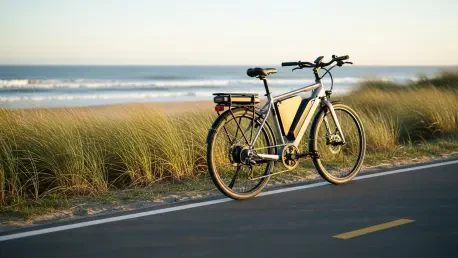

The sun-drenched multiuse paths of the Outer Banks have recently become the center of a heated debate as the traditional serenity of seaside cycling clashes with the mechanical speed of the electric bicycle revolution. North Carolina is responding to this tension by implementing House Bill 1094, a significant piece of legislation designed to establish a standardized legal framework for e-bikes across the entire state. Taking effect on December 1, the law addresses a long-standing regulatory gap that left local officials struggling to maintain safety on crowded coastal trails. By clarifying exactly what constitutes an e-bike, the state is providing coastal communities with the tools necessary to balance modern mobility trends with the fundamental rights of pedestrians to occupy public spaces safely. This shift marks the end of a period characterized by confusion and near-misses, replacing it with a data-driven approach to traffic management that recognizes the unique geographic constraints of the barrier islands.
State Regulatory Standards: Defining Framework and Local Authority
Classification Systems: Three Tiers of Technology
The core of the newly established legal structure is a standardized three-class system that categorizes electric bicycles based on their motor output and operational mechanics. Class 1 electric bicycles are defined as vehicles equipped with a motor that provides assistance only when the rider is actively pedaling, ceasing to provide power once the bicycle reaches a speed of 20 miles per hour. Similarly, Class 2 e-bikes are restricted to the same 20-mile-per-hour limit but include a throttle that allows the motor to propel the bike without any pedaling input from the operator. By grouping these lower-speed models together, the state acknowledges that they function much like traditional bicycles in most environments. This distinction is crucial for park rangers and local police who previously had no clear metric to distinguish between a low-power assisted cycle and a motorized vehicle that might pose a greater risk to the slow-moving pedestrians and families on the paths.
Class 3 electric bicycles represent the highest tier of regulated e-mobility, featuring motors that provide assistance up to 28 miles per hour and requiring a more stringent set of safety protocols for operators. Due to the significant kinetic energy generated at these higher speeds, the state has mandated that all riders under the age of 18 must wear an approved helmet when operating a Class 3 vehicle on any public path or roadway. Furthermore, these bikes must be equipped with a speedometer to ensure that riders are aware of their velocity, especially when navigating narrow boardwalks or shared pedestrian spaces where speed differentials can lead to serious accidents. The legislation also clarifies that while these machines are fast, they are not to be confused with electric motorcycles or mopeds, which are governed by separate motor vehicle laws and registration requirements. This clear demarcation helps consumers make informed purchasing decisions while ensuring that the fastest e-bikes are used responsibly by all.
Municipal Authority: Tailoring Local Infrastructure
Beyond establishing technical definitions, the new law grants explicit authority to local governments to manage their own sidewalks, trails, and multiuse paths based on specific community needs. This provision is particularly vital for the diverse landscape of the Outer Banks, where a narrow concrete sidewalk in a commercial district requires a different management strategy than a wide asphalt trail through a nature preserve. Local municipalities now have the legal standing to prohibit certain classes of e-bikes on specific routes while allowing them on others, providing a level of flexibility that a rigid state-wide mandate would lack. For town managers, this means they can finally respond to resident complaints with enforceable ordinances that are backed by state statute. This decentralized approach ensures that the unique character of each coastal town is preserved, allowing for a customized balance between promoting eco-friendly transportation and protecting the tranquil experience visitors expect.
Several towns have already begun to exercise this newfound authority by implementing site-specific restrictions that reflect their particular geography and traffic patterns. For instance, the town of Nags Head has adopted a policy that bans e-bikes on any sidewalk narrower than eight feet, recognizing that high-speed motorized passing is dangerous in confined spaces. In contrast, the village of Duck has chosen to allow e-bikes on its extensive asphalt multiuse trails but maintains a strict prohibition on concrete sidewalks within its bustling commercial core to protect shoppers and diners. Meanwhile, Manteo has focused its regulatory efforts on protecting historical and recreational infrastructure by keeping all e-bikes off town boardwalks and docks. These varied approaches demonstrate how the state framework allows for tailored governance, ensuring that the rules in a quiet residential neighborhood differ appropriately from those in a high-traffic tourist hub where the risk of user conflict is higher.
Institutional Protections: Safety and Public Education
In addition to municipal ordinances, larger local institutions have taken proactive steps to ensure safety within their jurisdictions, specifically targeting areas where children and vulnerable groups congregate. Dare County Parks and Recreation has implemented a total ban on electric bicycles within all county-managed parks, citing the unpredictable nature of high-speed vehicles near athletic fields and playgrounds where small children often run across paths without warning. Similarly, Dare County Schools has established a new policy for the current academic year that prohibits the operation of e-bikes on school grounds during hours of peak student activity. While students are still permitted to commute to school using electric bicycles, they are required to dismount and walk their vehicles onto the property before parking them in designated areas. These institutional policies prioritize the physical safety of students and park visitors over the convenience of motorized travel, setting a clear standard for behavior in sensitive environments.
The successful integration of these new regulations relied heavily on a robust public education campaign led by towns like Kill Devil Hills and Kitty Hawk. Local law enforcement officers worked diligently to help the public distinguish between legal e-bikes and high-powered electric motorcycles, which often bypassed the safety limits of the three-class system. By providing clear signage and informative pamphlets at rental shops and trailheads, authorities reduced the frequency of reckless behavior and improved overall compliance with the state mandate. These efforts transformed the Outer Banks into a model for how coastal communities could adapt to rapidly evolving transportation technologies without sacrificing public safety. Stakeholders recognized that consistent enforcement and clear communication were the most effective tools for managing shared spaces. Ultimately, the transition toward a more structured regulatory environment ensured that the region’s iconic multiuse paths remained a safe and inviting resource for every visitor.