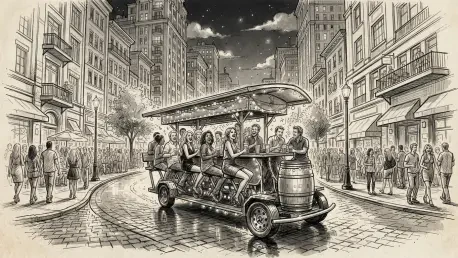

Current regulations limit pedal taverns to a maximum speed of fifteen miles per hour, yet they provide no protection for passengers who might be ejected from their seats during impact. This glaring safety gap has come to the forefront of municipal discourse in Nashville, a city that has long embraced these mobile bars as a cornerstone of its downtown experience. While the local government has implemented a complex web of administrative requirements ranging from vehicle permit fees to specific operational boundaries, the actual physical security of the riders remains largely unaddressed. The tension between the economic vitality of the tourism sector and the basic duty of care for visitors has reached a tipping point, as residents and officials question the adequacy of existing laws. As the city navigates the complexities of urban transit in 2026, the call for more rigorous safety standards has grown louder, demanding a shift from logistical management to real protection for all road users.
The Human Cost: Regulatory Oversight and Passenger Risks
Analyzing the Catalyst: High-Profile Collisions and Safety Reform
The urgency for reform was triggered by a significant collision on a Thursday evening in the heart of the downtown district. According to investigative reports from the Metro Nashville Police Department, a driver operating a Toyota RAV4 became momentarily distracted by his radio and rear-ended a Nashville Pedal Tavern vehicle. The force of the impact was sufficient to hospitalize nearly a dozen passengers, many of whom were thrown from their seating positions due to the lack of restraints. This event served as a stark demonstration of how even a low-speed collision with a standard passenger vehicle can lead to severe injuries when riders are effectively unsecured in an open-air environment. While the SUV driver’s distraction was the immediate cause, the severity of the passenger injuries has focused public scrutiny on the vehicle design itself, which offers almost no structural protection or containment for those on board during a sudden jolt or heavy impact.
The Vulnerability Factor: Open-Air Transport and Impact Risks
This recent incident was not an isolated concern but rather the latest in a series of events that have highlighted the inherent risks of pedal taverns. Historical data and video evidence captured within the last five years have shown multiple instances where riders lost their balance and fell from these moving platforms, narrowly avoiding being struck by oncoming traffic on busy thoroughfares. The lack of fall-prevention barriers or seatbelts turns every ride into a high-risk activity, particularly when alcohol consumption is involved. Experts in urban transportation safety have noted that the open-seating configuration, while popular for social interaction and sightseeing, provides no defense against the physics of a traffic accident. The cumulative evidence of these near-misses and actual injuries has fueled a growing consensus that the current “wait and see” approach is no longer tenable given the high density of vehicular traffic in the city’s entertainment zones.
Balancing Control: Administrative Frameworks and Security
Evaluating the Framework: Permit Fees and Logistical Constraints
The Nashville Transportation Licensing Commission serves as the primary regulatory body for these vehicles, maintaining an extensive rulebook that exceeds fifty pages in length. Despite the volume of this documentation, the specific attention paid to the physical safety requirements of pedal taverns is remarkably sparse, often relegated to a single page of text. Currently, the regulatory focus remains heavily weighted toward administrative and fiscal compliance. There are seven licensed companies operating approximately thirty vehicles across Nashville, and each must navigate a rigorous process involving vehicle permit fees and comprehensive background checks for all drivers. While these measures ensure that the businesses are legitimate and the operators are properly vetted, they do nothing to address the structural vulnerabilities of the vehicles themselves. The emphasis is clearly on the business of tourism rather than the mechanical safety standards required for public transit.
Political Hurdles: Jurisdictional Tension and Legal Stalemate
Beyond the paperwork, existing municipal codes dictate the “where and when” of operations to minimize impact on local infrastructure. These vehicles are strictly confined to the downtown and Midtown areas, prohibited from using sidewalks, and restricted to the right-hand lane of traffic. To manage urban congestion, they are banned during morning rush hours and must strictly adhere to city-approved routes in the evenings. While these operational constraints successfully mitigate traffic flow issues, they fail to provide any tangible safety benefits to the passengers. Mayor O’Connell faces the challenge of updating these standards in a complex political environment. While the city has demonstrated an interest in reviewing safety protocols, there is an ongoing jurisdictional struggle between Nashville and the state. Recent state legislation regarding tourism development zones has essentially forced the city to pause several local safety initiatives until a resolution is reached.
Future Outlook: Strategic Pathways for Tourism Safety
Addressing the safety gap in Nashville’s pedal tavern industry required a transition from passive oversight to active engineering solutions. One potential path forward involved leveraging the annual permit review process conducted by the Transportation Licensing Commission to introduce new equipment mandates. By making the renewal of operating licenses contingent upon the installation of basic safety features such as seatbelts or reinforced passenger enclosures, the city effectively bypassed some of the broader legislative stalemates. Additionally, collaboration with vehicle manufacturers to redesign these platforms with integrated roll cages and improved stability controls significantly reduced the risk of ejection during a collision. These technical upgrades provided a physical layer of protection that administrative rules lacked, ensuring that passengers were not just complying with local laws, but were actually safe from the physical impact of any potential traffic incidents.