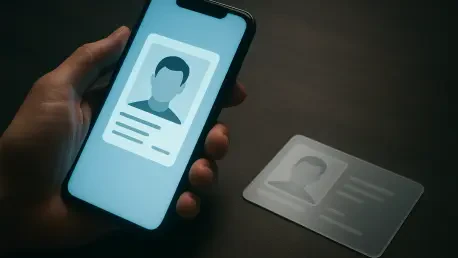

The transition from traditional physical identification cards to cryptographically secured digital credentials represents one of the most significant shifts in public infrastructure since the federal government first mandated standardized driving permits across the various states of the union. For decades, the plastic driver’s license has served as the default identity document by necessity rather than by design. It was originally intended solely to verify a person’s ability to operate a motor vehicle, but it eventually morphed into a universal credential for everything from opening a bank account to boarding a flight or purchasing age-restricted goods. In the current landscape of 2026, this analog system is facing an existential crisis. The rise of generative artificial intelligence and high-resolution printing has made the visual inspection of a physical card a liability rather than a security measure. Consequently, states like California and Georgia have accelerated the deployment of Mobile Driver’s Licenses (mDLs) to create a high-assurance alternative that functions natively in a digital economy. This evolution is not merely about moving a card into a smartphone wallet; it is about rebuilding the foundation of trust in a world where synthetic identity fraud is becoming the norm.
The Evolution of Personal Identification Systems
The journey toward a digital identity standard has been a collaborative effort involving state agencies, federal departments, and the world’s largest technology providers. At the center of this transformation is the California DMV and the Georgia Department of Driver Services, both of which have been instrumental in piloting and scaling the mDL. These states recognized early on that the traditional plastic card, while durable, is static and difficult to verify in a remote environment. To solve this, they worked alongside the American Association of Motor Vehicle Administrators (AAMVA) to establish a set of international standards, specifically ISO 18013-5, which ensures that a digital license issued in one state can be recognized and verified by another. This standardization is what allows tech giants like Apple, Google, and Samsung to integrate these credentials into their respective digital wallets, providing a seamless user experience that mirrors how people already handle payments and transit passes.
While the hardware has changed, the underlying purpose of the driver’s license as essential infrastructure remains the same. It is the primary tool used to verify identity for critical economic activities. In the mid-20th century, the driver’s license became the de facto national ID because nearly every adult carried one for transportation purposes. However, as commerce moved online, the physical card became a bottleneck. Businesses began requiring users to take photos of their licenses and upload them for manual or automated review—a process that is slow, prone to error, and increasingly easy to spoof. The mDL represents a shift from a “driving permit used for ID” to a “purpose-built digital credential” that happens to include driving privileges. This distinction is vital because it moves the focus away from the visual appearance of the document and toward the digital verification of the data held by the state.
Core Features and Performance Metrics
Verification Methods: Visual Inspection vs. Cryptographic Signing
The most profound difference between physical and mobile IDs lies in how they are authenticated. A physical ID relies on visual security features—such as holograms, microprinting, and UV-sensitive ink—that are designed to be inspected by a human or a specialized scanner. However, in 2026, these features are no longer foolproof. Generative AI can now create synthetic forgeries that are indistinguishable from genuine cards to the naked eye. When a person presents a plastic license at a security checkpoint or uploads a photo of it for a bank, the verifier is essentially making an educated guess based on the physical appearance of the card. This “plastic photo” model is a relic of an age where high-quality forgery required expensive machinery; today, it only requires a sophisticated algorithm and a high-resolution printer.
In contrast, the mDL utilizes state-issued cryptographic keys to provide a level of security that is virtually impossible to replicate. When a user presents an mDL, the device does not just show a picture of the license; it transmits a packet of data that has been digitally signed by the state’s DMV. The verifier’s device uses a public key to confirm that the data is authentic, has not been tampered with, and was issued by a legitimate authority. This cryptographic handshake happens in milliseconds and provides 100% certainty regarding the validity of the credential. This method eliminates the risk of synthetic forgeries because an attacker cannot forge the DMV’s unique digital signature, regardless of how realistic they make the license look on a screen.
Privacy and Data Disclosure: Full Visibility vs. Selective Sharing
Privacy is another area where the two formats diverge sharply. When an individual presents a physical driver’s license to a bartender or a security officer, they are forced to disclose every piece of information printed on the card. This includes their home address, exact date of birth, height, weight, and organ donor status. For a transaction that only requires proof of age, this is a massive over-sharing of personal data. The static nature of plastic makes it impossible to hide specific fields during a transaction, leaving the individual’s personal information vulnerable to being recorded or skimmed by third parties.
Mobile Driver’s Licenses introduce a concept known as data minimization or selective sharing. Because the mDL is a dynamic digital credential, it allows the user to share only the specific data points required for a given transaction. For example, at venues like Camden Yards or Wrigley Field, a fan can “tap” their phone to prove they are over 21 years old. The bartender’s reader receives a simple “Yes/No” confirmation or just the user’s age, without ever seeing their home address or full name. This capability protects the user from identity theft and unwanted data collection, providing a level of privacy that physical cards simply cannot match. The user remains in control of their information, consenting to share specific fields through their phone’s interface before any data is transmitted.
Accessibility and Adoption: The 50% Catalyst
As of 2026, the adoption of mDL technology has reached a pivotal moment in American history. Currently, 21 states and Puerto Rico are actively issuing digital credentials, which has resulted in over 8 million active mDLs in circulation. This means that approximately 45% of the U.S. population now has access to a state-issued mobile license. While this is a significant achievement, the market is currently in a state of transition. Physical IDs remain the universal standard because they do not require a smartphone or a battery, ensuring that they remain accessible to every segment of the population, including those in lower-income brackets or the elderly.
Industry experts and the AAMVA suggest that the “flywheel effect” for digital IDs will truly begin once adoption crosses the 50% threshold. Once more than half of the population has access to an mDL, the technology moves from a niche convenience to a mainstream expectation. This tipping point encourages more businesses, such as national banks and retail chains, to invest in the hardware and software needed to accept digital IDs. As the utility of the mDL increases, more citizens are motivated to adopt it, creating a self-reinforcing cycle of growth. However, until this threshold is surpassed, many users will continue to carry their physical cards as a necessary backup, as the acceptance of mDLs is not yet 100% guaranteed at every local establishment.
Practical Challenges and Implementation Barriers
Despite the clear technological advantages of mDLs, several significant barriers prevent them from completely replacing physical cards. One of the most prominent issues is the geographic void created by large states like Texas and Florida, which have yet to fully implement a widely accessible mDL system. Because these states represent a massive portion of the U.S. population and workforce, their absence makes it difficult for national platforms to move away from legacy verification methods. A bank that operates in all 50 states cannot fully automate its onboarding process around mDLs if millions of potential customers in the South and Northeast are still tethered to plastic cards. This fragmentation forces companies to maintain expensive, fraud-prone OCR systems to accommodate users from non-participating states.
Another technical bottleneck is the lack of remote integration. While many states have successfully enabled “in-person taps” for aviation security at TSA checkpoints or for purchasing beverages at stadiums, they have not yet enabled the online verification needed for high-stakes digital transactions. California has taken a lead in this area by demonstrating how a Grubhub delivery driver could onboard by consenting to share DMV-attested data remotely. However, many other states still treat the mDL as a digital version of an “in-person” card rather than a tool for the digital economy. Without the ability to use the mDL for remote banking, gig-economy onboarding, or government benefits applications, the credential loses its most transformative value proposition.
There is also a growing concern regarding the gatekeeping role of wallet providers. Because Apple, Google, and Samsung control the interface between the state-issued credential and the end-user, they hold significant power over the ecosystem. If these providers impose restrictive rules on how third-party apps can request mDL data, it could stifle innovation and limit the utility of the license. The authority of the credential should always reside with the state DMV, and it is essential that the ecosystem remains open so that any legitimate business can integrate with the DMV’s data without being throttled by a tech giant. Furthermore, the necessity of maintaining physical alternatives cannot be overstated. Equity in identification is a civil rights issue; therefore, the plastic card must remain a valid and supported option for the foreseeable future to ensure that those without the latest smartphone technology are not excluded from society.
Summary of Findings and Strategic Recommendations
The comparative analysis of physical IDs and mDLs highlighted a clear technological shift toward cryptographic security as the only viable defense against a surging identity theft crisis. The IRS reported that in 2023, identity-theft filters flagged 1.1 million tax returns involving $6.3 billion in fraudulent refunds, a statistic that underscored the vulnerability of our existing identification infrastructure. In 2026, the reliance on manual OCR photo uploads for online verification is increasingly viewed as an unacceptable risk. The mDL, with its state-signed digital keys, offers a definitive solution to this problem, yet its success depended on states moving beyond experimental phases and into full-scale, interoperable implementation.
Strategic recommendations for state governments involved prioritizing remote verification capabilities and fostering open ecosystems. It was suggested that states should not limit their digital credentials to a single wallet provider but should instead allow for a diverse range of verifiers to interact with DMV data securely. For businesses, the transition from manual visual checks to high-assurance digital verification was identified as a critical move for reducing fraud and streamlining customer onboarding. Banks and retailers were encouraged to begin integrating mDL reading capabilities into their mobile apps to take advantage of the 45% of the population already carrying these credentials.
Ultimately, the findings suggested that the era of the physical card as the primary gatekeeper was drawing to a close. While physical IDs were recognized as a useful “accident” of a previous age, the mobile driver’s license was characterized as a system built with intention for a secure, digital-first economy. The path forward required a unified effort to close the geographic gaps in the United States and to ensure that digital identity remained a private, secure, and accessible utility for all citizens. Stakeholders recognized that by 2027 and beyond, the success of the mDL would be measured not by the number of downloads, but by how effectively it protected the integrity of every transaction in the American economy.