
The ivy-covered walls of the American university, once considered the immovable bedrock of intellectual and social advancement, are currently facing a seismic disruption that threatens to dismantle their very foundation as we navigate the complexities of 2026. This historic crossroads is not merely a period of temporary adjustment but a fundamental existential pivot that is redefining the core purpose of higher education for a new generation of learners. The traditional model, which previously centered almost exclusively on the physical campus and the four-year residential experience, is rapidly evolving into a decentralized, market-responsive ecosystem powered by machine learning and generative technologies. By the middle of the next decade, the industry is expected to have completed a total metamorphosis, shifting away from rigid academic structures toward a flexible framework that prioritizes data-driven insights and student-centered results over institutional legacy or prestige.
The Evolution of Hybrid and Personalized Learning Models
Responding to Changing Student Demands: The Hybrid Standard
The decline of the traditional college experience is reflected in a steady drop in enrollment, with the percentage of high school graduates pursuing four-year degrees falling significantly over the last several years. This trend highlights a fundamental change in how young people view the value of a degree, as many now favor financial flexibility and career-ready skills over abstract theoretical knowledge. As a result, the hybrid model has transformed from a temporary solution into the permanent global standard, offering a superior blend of community interaction and the logistical freedom required by modern students. This shift is particularly evident in urban centers where students often balance professional responsibilities with academic pursuits, demanding a level of accessibility that legacy institutions have historically struggled to provide. Universities that fail to acknowledge this demand for flexibility risk total irrelevance in a market that increasingly treats education as a service.
Economic pressures have forced a reassessment of the return on investment associated with traditional higher education, leading to a rise in micro-credentials and skill-based certifications that compete directly with bachelor’s degrees. Students are no longer willing to incur massive debt for a general education that does not guarantee immediate employment in a rapidly shifting job market. Consequently, the hybrid approach allows institutions to lower operational costs by reducing the need for sprawling physical infrastructure, passing those savings onto the learner while maintaining a high standard of academic rigor. This evolution represents a departure from the “one-size-fits-all” mentality that dominated the twentieth century, moving instead toward a modular system where students can customize their educational journey based on personal needs. By integrating remote access with intensive, in-person workshops, colleges are creating a more sustainable and inclusive environment for a diverse student population.
The Emergence of Data-Driven Precision Learning: Personalizing the Path
Beyond basic delivery methods, the industry is moving toward “precision learning,” a system that replaces standardized curricula with highly individualized pathways designed to maximize student success. By leveraging AI-powered tools, colleges can now adapt coursework in real-time based on a student’s specific strengths, professional goals, and even their psychological engagement with the material. This shift requires institutions to overhaul their legacy data systems, turning the classroom into a dynamic environment where the learner’s unique profile dictates the pace and content of the education. Such systems use predictive analytics to identify when a student is likely to struggle with a particular concept, allowing the platform to suggest supplementary resources or alternative explanations before the student falls behind. This level of granular personalization ensures that no learner is left behind due to a rigid pace, effectively democratizing mastery of complex subjects across the board.
To fully realize the potential of precision learning, universities must invest heavily in sophisticated data architectures that can handle the massive influx of real-time information generated by student interactions. This technical transition is often the greatest hurdle for older institutions that rely on fragmented administrative software and siloed department records that do not communicate effectively. Successful integration means that every digital touchpoint—from a library login to a quiz submission—contributes to a holistic understanding of the student’s progress and well-being. Furthermore, this approach shifts the focus from simple completion rates to actual competency, ensuring that a degree represents a verified set of skills rather than just a record of time spent in a seat. As these data-driven models become more refined, they will likely replace traditional grading systems with comprehensive performance dashboards that provide a much clearer picture of a graduate’s capabilities to prospective employers.
Integrating Artificial Intelligence into the Academic Fabric
Redefining the Roles of Faculty and Administration: From Lecturers to Mentors
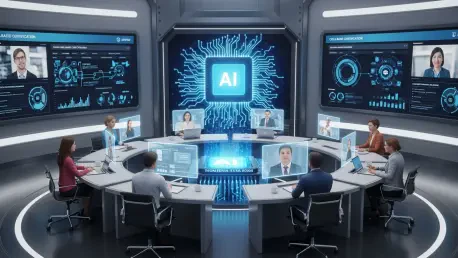
Artificial intelligence has already become a staple of campus life, with the vast majority of students and faculty utilizing these tools for both research and administrative tasks to streamline daily operations. The true value of AI lies in its ability to automate repetitive work, such as grading basic assessments or managing enrollment queries, which helps lower the overhead costs that drive up tuition. By removing these clerical burdens, institutions can reallocate resources toward student support services and advanced research initiatives that require human creativity and intuition. This automation does not replace the need for administrative staff but rather shifts their focus toward more complex problem-solving and strategic planning that AI cannot yet replicate. In this context, the efficiency gained through technological integration becomes a critical tool for institutional survival in an era where every dollar of the budget must be justified through measurable student outcomes.
By using adaptive assessments and early-warning systems, faculty members can transition from being simple dispensers of information to high-level mentors who intervene precisely when a student struggles. This pedagogical shift allows professors to spend more time on one-on-one coaching and small-group discussions, which are far more effective for deep learning than the traditional lecture format. In an AI-enhanced classroom, the professor’s role is to facilitate critical thinking and ethical inquiry, guiding students through the vast amounts of information that are now instantly accessible at their fingertips. This transition requires a significant cultural shift within academia, as faculty must become comfortable with data-informed teaching strategies that challenge long-standing traditions of instructional autonomy. Ultimately, the integration of AI allows for a more human-centric education, where technology handles the routine and educators focus on the transformative aspects of the intellectual journey.
Navigating the Gap: Technology Adoption and Institutional Policy
Despite this widespread adoption, a significant gap remains between daily AI usage and formal institutional policy, leaving many faculty members without clear guidance on ethical implementation or academic integrity. Schools are struggling to keep up with the rapid pace of technological change, even as immersive tools like Virtual and Augmented Reality begin to reshape tactile fields such as healthcare and engineering. Closing this expertise gap is essential for colleges that wish to integrate these advancements safely and effectively into their long-term educational strategies. Without clear frameworks, there is a risk of creating an inconsistent learning experience where some students benefit from advanced tools while others are restricted by outdated rules. Establishing robust governance that balances innovation with academic rigor is now a top priority for administrators who recognize that the “wait and see” approach is no longer a viable strategy for technological adoption.
The introduction of immersive technologies is further complicating the policy landscape, as Virtual Reality simulations provide students with high-stakes training environments that were previously impossible to replicate in a classroom. For example, medical students can now practice complex surgical procedures in a risk-free digital space, while engineering students can visualize structural stresses in real-time through Augmented Reality overlays. These advancements require not only new hardware but also new methods of assessment that can accurately measure a student’s performance within a virtual environment. As these tools become more ubiquitous, the divide between digital and physical learning will continue to blur, necessitating a complete reimagining of what constitutes a “classroom” or a “lab.” Institutions that proactively develop policies to support these technologies will have a significant advantage in attracting top talent and producing graduates who are ready for the high-tech workforce.
Strategic Pathways for the Future of Higher Education
The challenge of maintaining the relevance of the American college required a fundamental shift in how institutions defined success and engaged with the global workforce. Leaders who prioritized the creation of flexible tech hubs found that they could serve a much wider demographic, including working professionals who needed constant upskilling to remain competitive. It became clear that the survival of the traditional campus depended on its ability to offer clear, measurable value that went beyond the awarding of a degree. Successful schools implemented lifelong learning modules that allowed alumni to return periodically, ensuring that the relationship between the learner and the institution lasted for decades rather than just four years. By moving away from centuries-old traditions and solving the riddle of tuition dependence through diversified revenue streams, these colleges secured their place in a new era. The transition proved that while the form of the college changed, the need for guided intellectual growth remained.