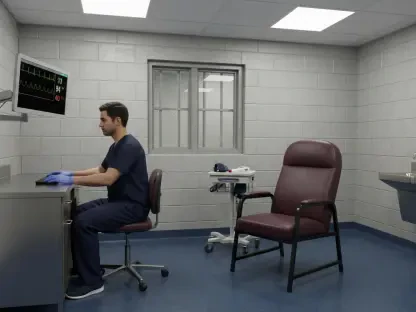

Justice Transcribe functions as an augmentative technology rather than a replacement for the professional accountability and human judgment of probation officers. This sophisticated digital solution represents a major leap forward for the Ministry of Justice as it grapples with an overwhelming volume of administrative duties that often detract from frontline rehabilitative work. In England and Wales, the Probation Service manages nearly 3.7 million supervision meetings every single year, a logistical challenge that has historically required an enormous amount of manual documentation. By automating the recording and summarization of these critical interactions, the department is attempting to modernize a system that has long been bogged down by archaic note-taking methods. The introduction of this AI tool is not merely about efficiency; it is about reclaiming the human element of probation work. When officers are freed from the pressure of clerical tasks, they focus more on building rapport with their clients and addressing the root causes of offending behavior.
Bridging the Gap: Addressing a Strained Workforce
The implementation of this technology comes at a pivotal moment, as the Probation Service faces a severe shortage of qualified personnel. By mid-2026, data from the National Audit Office revealed that only 74 percent of probation officer positions were filled, leaving the remaining staff overwhelmed by both high-risk caseloads and time-consuming paperwork. Historically, officers had to rely on memory or handwritten notes to log case details, a manual-first approach that often hindered their ability to engage deeply with individuals under their supervision. This administrative burden created a significant barrier to effective communication, as staff members were frequently more focused on their notebooks than on the people in front of them. The strain on the workforce necessitated a radical shift in how information is captured and processed within the judicial system. By addressing these operational gaps, the Ministry of Justice seeks to ensure that the service remains sustainable while maintaining its core mission of rehabilitation.
Strategic Targets: Increasing Operational Capacity
To combat these systemic challenges, the “Our Future Probation Service” program established an ambitious target to increase operational capacity by 25 percent by April 2027. Justice Transcribe was identified as a primary catalyst for reaching this goal, specifically designed to strip away the “administrative tax” associated with manual note-taking. This shift allows officers to step away from their keyboards and focus on behavioral cues and non-verbal communication, which are essential components of effective rehabilitative work. The initiative aims to transform the office environment into a space where interpersonal dynamics take precedence over clerical tasks. Beyond simple time savings, the integration of AI tools represents a cultural shift toward prioritizing the quality of human interaction within the legal framework. As the service continues to navigate recruitment difficulties, the ability to maximize the productivity of existing staff becomes a critical survival strategy for the entire organization and the public it serves.
Technical Integration: Tailoring the Minute Application
Rather than building a new application from scratch, the Justice AI Unit repurposed an existing government tool called “Minute” and tailored it to the specific legal and operational needs of probation officers. The tool utilizes specialized templates and refined AI prompts to ensure that summaries capture relevant data points accurately while maintaining strict adherence to judicial standards. A “human-in-the-loop” requirement remains central to the workflow, mandating that officers review, edit, and verify every AI-generated summary before it is finalized in the official case record. This ensures that the professional judgment of the officer remains the final word on any legal documentation, preventing the technology from operating without oversight. The development process involved extensive consultation with frontline practitioners to ensure the interface was intuitive. This collaborative approach helped to refine the tool’s prompts to handle specific linguistic nuances and the complex terminology used in the criminal justice sector.
Pilot Results: Enhancing Engagement Through Efficiency
The technology was first tested during a 2025 pilot program in Wales and southern England, where 40 officers reported a 73 percent reduction in the time spent on documentation. The feedback was overwhelmingly positive, with 83 percent of participants stating they felt more engaged with their clients because they were no longer tethered to their notebooks. Following this success, the tool was rolled out nationally to 11,000 staff members in early 2026, supported by an extensive infrastructure of training videos and regional support teams to ensure a smooth transition. The rapid deployment across the organization demonstrated the scalability of the AI solution and its immediate impact on the daily workflows of thousands of individuals. By providing comprehensive support during the launch phase, the Ministry of Justice minimized the disruption typically associated with new digital rollouts. This wide-scale adoption highlights a growing trust in the ability of artificial intelligence to assist with complex tasks.
National Rollout: Scaling Across the Service
The scale of impact recorded during the first year of national use is substantial, with Justice Transcribe supporting over 1.6 million meetings. This adoption resulted in an estimated 266,667 hours of saved labor, a figure that is projected to grow to 450,000 hours annually as the tool becomes fully embedded in daily operations. Financially, the program represents a £7.9 million investment from 2026 to 2029, a cost that the government views as a high-return expenditure if the reclaimed time is successfully redirected toward core rehabilitative activities. This investment reflects a broader commitment to digital modernization within the public sector, where productivity gains can often offset the rising costs of personnel and infrastructure. The data suggests that for every pound spent on the technology, the return in saved officer hours provides a significant boost to the overall capacity of the justice system. These metrics are being closely monitored to justify continued funding and possible expansion into other public agencies.
Quality Assurance: Managing Technical and Human Risks
Despite high user satisfaction ratings, the transition has highlighted specific technical and behavioral risks that require ongoing management. Quality assurance checks found that roughly 20 percent of records contained minor inaccuracies, such as misspelled names or difficulties distinguishing between speakers with strong regional accents. Furthermore, there is a noted concern regarding “automation bias,” where officers might become overly reliant on the AI and fail to perform the due diligence necessary to ensure the integrity of legal records. To mitigate these risks, the service has implemented more rigorous secondary review processes and ongoing training to remind staff of their ultimate accountability. The challenges posed by diverse dialects and technical glitches serve as a reminder that AI is a tool to be managed rather than a set-and-forget solution. Addressing these inconsistencies remains a top priority for the technical teams as they work to refine the underlying algorithms for better performance in a variety of settings.
Future Trajectory: Strengthening Integrity and Ethics
To address ethical and privacy concerns, the Ministry of Justice integrated strict data retention policies into the tool’s architecture. Audio recordings were purged immediately after a transcript was generated, and draft documents were automatically deleted after 30 days to prevent the indefinite storage of sensitive information. The success of this initiative demonstrated that AI could be scaled effectively across large government organizations to produce tangible productivity gains. Moving forward, the Probation Service focused on refining the AI’s ability to handle diverse linguistic nuances and developed more sophisticated monitoring systems to track accuracy. Stakeholders recommended that future implementations should prioritize the integration of specialized dictionaries to reduce phonetic errors in transcription. These steps ensured that the efficiency provided by the digital tool directly translated into improved outcomes. By maintaining a rigorous oversight model, the department provided a clear roadmap for future growth.