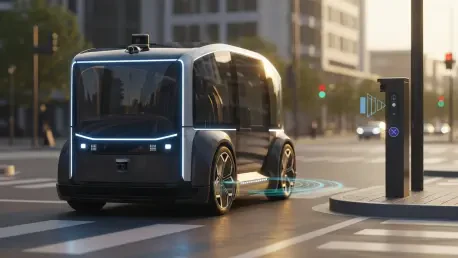

The current Department of Transportation agenda signifies an unprecedented transition in how the American government views the intersection of public safety and automotive innovation. By dismantling decades-old rules designed specifically for human drivers, the administration is effectively clearing the path for a future where steering wheels and brake pedals are relics of a bygone era. This shift is not merely about updating technical specifications but represents a fundamental reimagining of the social contract between the state, the technology providers, and the traveling public. As autonomous driving systems move from experimental curiosities to mainstream transportation solutions, the regulatory environment must evolve to prioritize software logic over mechanical hardware. The current roadmap provides the necessary legal framework to ensure that the United States remains at the forefront of this global race, fostering an environment where innovation can flourish without the constraints of outdated mandates that were written before the advent of modern computing.
Reforming Federal Motor Vehicle Safety Standards
Adapting Hardware for a Driverless World
Central to this reform is the surgical modification of the Federal Motor Vehicle Safety Standards, which historically mandated specific physical components designed for human biological limitations. For instance, regulations like FMVSS No. 111, which required side and rear-view mirrors, are being completely overhauled to recognize the superiority of high-resolution sensor arrays and machine vision. These changes acknowledge that an autonomous system does not suffer from human blind spots or the need to physically turn a head to check surroundings. By allowing manufacturers to omit traditional mirrors, the DOT is enabling more aerodynamic vehicle designs and the integration of 360-degree digital awareness systems that exceed human capabilities. This transition reflects a deeper understanding that the safety of a vehicle now depends more on the fidelity of its data processing than on the placement of glass or plastic components meant for the human eye, ensuring that every automated vehicle maintains a constant, unobstructed view of its environment.
Facilitating Non-traditional Cabin Layouts
The agenda addresses complex challenges surrounding vehicle stability and crash protection, particularly through the adaptation of FMVSS No. 126. Traditional stability control systems rely on specific steering wheel inputs to maintain traction, a requirement that becomes obsolete in a vehicle controlled entirely by a computer. The DOT is now focusing on performance-based outcomes rather than prescriptive hardware mandates, allowing for the deployment of cars with entirely radical cabin layouts that do not include a designated driver’s seat. This flexibility allows for the creation of mobile lounges or delivery pods where the interior space is optimized for passenger comfort or cargo efficiency rather than being anchored to a dashboard. By proving that these new designs can achieve or exceed current safety outcomes, manufacturers can bypass the rigid constraints of the past, marking a significant step toward the mass production of truly driverless fleets that redefine the very concept of personal and commercial transportation in modern society.
The Future of Performance and Compliance
Establishing Behavioral Competencies
The National Highway Traffic Safety Administration is developing a rigorous framework to define and measure the behavioral competencies of autonomous software. This involves the creation of standardized, repeatable tests that simulate a wide variety of complex driving scenarios, ensuring that an automated system can handle everything from sudden lane closures to unpredictable pedestrian movements. These competencies act as a digital driving test, verifying that the software can operate safely within its specific operational design domain before it is allowed on public roads. By establishing these objective metrics, the government is shifting its oversight from mechanical inspections to software audits, treating the artificial intelligence behind the wheel with the same scrutiny previously reserved for braking systems and structural integrity. This ensures a consistent safety baseline across all manufacturers and software versions, promoting a higher degree of predictability in how these vehicles interact with others.
Codifying Real-world Data Tracking
To support this transition toward behavioral oversight, the DOT is formalizing the requirement for continuous, real-world data tracking through a codified version of the Standing General Order. This policy mandates that all manufacturers of autonomous systems report every significant incident involving their technology, providing federal regulators with a granular look at how these systems perform in diverse environments. This data-driven approach moves away from theoretical modeling and places the focus on actual performance, allowing the government to identify potential systemic issues in real-time. By fostering a culture of transparency, the administration ensures that the public remains informed about the safety of self-driving technology while providing developers with the feedback needed to refine their algorithms. This cyclical process of deployment, monitoring, and improvement is essential for building the long-term public trust necessary for the widespread adoption of autonomous mobility across the national infrastructure.
Expanding the Scope of Technological Integration
Innovation in Braking and Exterior Design
Technological integration also extends to active safety systems like Automatic Emergency Braking, which the DOT is now making a universal requirement for both light-duty vehicles and heavy commercial trucks. This move is coupled with an innovative proposal to exempt vehicles with high-level crash avoidance capabilities from traditional, heavy-duty bumper standards. The logic driving this change is that if a vehicle is technologically incapable of striking an object at low speeds, the necessity for a heavy, energy-absorbing bumper is significantly reduced. This allows designers to place sensitive lidar and radar sensors in more optimal positions without worrying about the structural interference of legacy metal components. Moreover, it reduces overall vehicle weight, contributing to better efficiency and range. This integrated approach demonstrates how advanced software can physically transform the exterior of the car, leading to more specialized and efficient vehicle architectures that prioritize preventative safety over passive protection.
Expediting Testing on Public Roads
In a significant shift from previous policies, the current administration is also expanding the pathways for testing experimental autonomous vehicles on public infrastructure. Rather than relying on narrow, site-specific programs, the DOT is moving toward a more expansive system of exemptions specifically designed to help domestic manufacturers iterate their technology at a faster pace. These exemptions allow companies to deploy fleets of research vehicles that do not strictly comply with all current safety standards, provided they operate under strict supervision and within limited parameters. This regulatory breathing room is vital for training neural networks on the nuances of human driving behavior and regional road conditions. By lowering the barriers to entry for large-scale testing, the government is ensuring that American companies have the necessary real-world experience to refine their systems before full commercialization, preventing a bottleneck in the development of sophisticated software that will power the next generation of transport.
A New Regulatory and Economic Philosophy
The Push for Deregulation and Industry Flexibility
Underlying these technical updates is a broader deregulatory philosophy mandated by Executive Order 14192, which seeks to streamline the federal code by eliminating outdated requirements. This policy enforces a strict one-in, ten-out rule, meaning that for every new regulation introduced, ten legacy rules must be repealed to reduce the overall administrative burden on the industry. By characterizing the modernization of autonomous vehicle standards as the repeal of human-centric mandates, the DOT is effectively pruning the regulatory landscape. This leaner environment reduces the financial costs associated with compliance, allowing manufacturers to reinvest those savings into research and development. The goal is to create a regulatory ecosystem that is agile enough to keep pace with the rapid advancements in artificial intelligence and sensor technology. This philosophy signals a departure from the precautionary principle toward a more proactive, innovation-friendly stance that empowers the private sector.
Resetting Efficiency and Fuel Economy Targets
This shift in regulatory strategy is further evidenced by the decision to reset the Corporate Average Fuel Economy program, moving away from the aggressive mandates of previous years. By providing manufacturers with greater flexibility in how they achieve efficiency targets, the DOT is allowing the market to dictate the pace of the transition to electric and autonomous fleets. This approach prioritizes industrial competitiveness and consumer choice, ensuring that the transition to self-driving technology does not come at the expense of economic stability or manufacturing capacity. For stakeholders, this current agenda represents a clear commitment to fostering a sustainable and profitable autonomous vehicle industry. Moving forward, the focus will be on refining these functional requirements to ensure they remain relevant as technology continues to evolve. Industry leaders are now positioned to collaborate with regulators to define the standards that will govern the next century of transportation, ensuring long-term growth and global leadership.
Strategic Directions for the Autonomous Era
The realization of the current Department of Transportation agenda offered a decisive path for stakeholders to navigate the complex intersection of innovation and safety. By prioritizing the removal of structural barriers and embracing a data-driven oversight model, the administration provided the automotive industry with the clarity needed to invest in large-scale autonomous deployments. Manufacturers were encouraged to utilize the new exemption pathways to accelerate their research cycles while maintaining high standards for software reliability. This regulatory shift mandated that companies moved beyond traditional mechanical engineering to embrace a more holistic approach centered on machine learning and sensor fusion. Consequently, the industry found itself in a stronger position to lead global efforts in smart city integration and automated logistics. This framework established the foundation for a transportation network that prioritized efficiency, reduced human error, and promoted a more flexible approach to the future of American mobility for years to come.