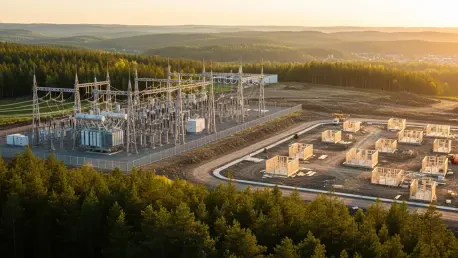

Deep within the dense evergreen forests that line the banks of the Back River in Wiscasset, Maine, a three-hundred-acre parcel of land has become the silent battlefield for a monumental struggle between local housing needs and the insatiable appetite of the global artificial intelligence industry. This quiet town of four thousand residents, long celebrated as the “Prettiest Village in Maine,” recently found itself navigating a five-billion-dollar dilemma that forced a stark choice between the digital future and the immediate necessity of shelter. The situation reached a critical boiling point when local officials decided to walk away from a guaranteed two-hundred-and-forty-thousand-dollar federal housing grant, opting instead to pursue a speculative data center project. This abrupt shift in strategy caught the community off guard, sparking a debate that resonates far beyond the borders of Lincoln County. It highlights a burgeoning tension across rural America where the desperate search for a “white whale” tax base often threatens the stability of the very workforce required to keep these communities functioning.
The decision to abandon a tangible housing initiative for a high-tech “moonshot” represents a significant gamble with the town’s social fabric. By prioritizing a massive industrial campus over the “Great American Neighborhood” project—a planned development of one hundred and ten affordable and market-rate units—Wiscasset leadership signaled a preference for transformative, albeit uncertain, capital investment. This pivot was not merely a local administrative change but a reflection of the pressure felt by small-town governments to solve decades of economic stagnation with a single, massive deal. However, the immediate cost was the loss of American Rescue Plan Act funds that were specifically earmarked to address a regional housing shortage. As these federal dollars were rescinded and reallocated to neighboring towns, Wiscasset was left in a precarious position, possessing neither the new homes nor the guaranteed commitment of the tech developers they sought to attract.
The broader implication of this local conflict lies in the message it sends about municipal priorities in the age of artificial intelligence. When a small town sacrifices a bird in the hand—verified federal funding for essential infrastructure—for the promise of a multi-billion-dollar windfall, it risks alienating the residents who form the backbone of the local economy. Teachers, firefighters, and healthcare workers in the Midcoast region have faced an increasingly hostile housing market where supply is scarce and prices are driven by external demand. The Wiscasset case serves as a nut graph for the national conversation on rural development, illustrating how the allure of digital infrastructure can inadvertently cannibalize the efforts to provide basic human necessities. It raises a fundamental question for local governance: is the primary role of a town to host the servers of the global economy or to ensure its own citizens have a place to live?
Why the Rural Tech Boom Is Reshaping Small-Town Priorities
The intersection of cloud computing requirements and rural geography is a calculated evolution of the modern industrial landscape. Small towns like Wiscasset are increasingly attractive to tech giants not because of their scenic vistas, but because they often sit on “legacy infrastructure” left behind by previous industrial eras. In this specific case, the presence of the former Maine Yankee nuclear plant provides high-capacity electrical grids and substations that are essential for powering the energy-hungry processors used in artificial intelligence. While these communities have spent decades struggling with depleted tax bases following the decommissioning of major plants, the current AI boom has sent developers scouting for massive land parcels far from expensive metropolitan hubs. This search for power and space has turned quiet rural acreage into some of the most sought-after real estate in the country, creating an environment where data centers are viewed as the modern equivalent of the textile mills or power plants of old.
However, this industrial hunger for land coincides with a national affordable housing crisis that has hit rural communities with unprecedented severity. The logic of the market suggests that a five-billion-dollar data center is a more efficient use of land than a residential neighborhood, at least in terms of raw tax revenue per acre. Yet, this narrow economic lens ignores the reality of community sustainability. Rural towns are finding themselves in a zero-sum game where municipal leaders must choose between hosting the physical infrastructure of the internet or housing the families that staff local schools and businesses. The pressure is compounded by the fact that data centers, while massive in scale and value, often create relatively few long-term jobs once construction is complete. This creates a “revenue-rich, resident-poor” dynamic that can fundamentally alter the character and viability of a small town over time.
The reshaping of these priorities often happens behind closed doors, driven by the specialized needs of technology firms that operate at a pace and scale unfamiliar to local planning boards. When a global developer proposes a project that is orders of magnitude larger than the town’s entire existing valuation, the power imbalance is immediate and profound. Local officials, eager to provide tax relief to their constituents, may find themselves overlooking the long-term logistical strains of such developments. This shift toward industrial speculation over residential stability is not just a Maine phenomenon; it is becoming a standard operating procedure for rural areas with access to high-voltage power lines. The challenge for these communities is to determine if they are participating in a new era of prosperity or simply providing the floor space for a digital industry that offers little in the way of true community integration.
The Cost of Speculation: A Case Study in Misaligned Development
The transition in Wiscasset from a planned “Great American Neighborhood” to a speculative tech campus serves as a definitive cautionary tale for contemporary municipal planning. The first casualty of this shift was the vanishing grant: a two-hundred-and-forty-thousand-dollar award from the American Rescue Plan Act that had been secured to jump-start affordable housing on Old Ferry Road. After town officials attempted to pivot these funds toward a feasibility study for a data center—a use entirely outside the scope of the original grant—county commissioners were forced to rescind the award to avoid violating federal treasury rules. This loss was not just financial but symbolic, representing a break in trust between local administration and the regional authorities tasked with managing the housing crisis. The funds did not disappear into a vacuum; they were reallocated to the neighboring towns of Waldoboro and Newcastle, leaving Wiscasset with a hole in its budget and no clear path forward for its residential goals.
The erosion of public trust was further exacerbated by a significant transparency deficit, characterized by the aggressive use of Nondisclosure Agreements (NDAs). For nearly a year, residents remained unaware that their town leaders were negotiating with a California-based site evaluator for a one-point-two-five-million-square-foot facility. While officials argued that such secrecy is a standard requirement for high-stakes corporate recruitment, the lack of public discourse prevented any early assessment of the project’s impact on local resources. When the details finally emerged, the community was shocked to learn that the proposed data center would occupy the very land they had been told would house their future neighbors. This secretive approach turned what could have been a collaborative planning process into a defensive battle, pitting the town administration against a suspicious and frustrated electorate.
Beyond the immediate political fallout, the infrastructure strain posed by such a massive development presents a long-term risk to the community’s standard of living. Data centers of this scale are notorious for their immense electrical loads and their demand for millions of gallons of water for cooling systems. In a town of four thousand people, such a spike in resource consumption can threaten to hike utility rates for residents who are already struggling with the rising cost of living. There is also the matter of opportunity cost; the land on Old Ferry Road, once envisioned as a vibrant, New Urbanism-inspired neighborhood with renewable energy components, now sits in a state of developmental limbo. Wiscasset currently finds itself in the unenviable position of having traded a concrete, funded housing plan for an industrial prospect that has shown little movement in the current year, proving that speculative “moonshots” often come at the expense of tangible progress.
Expert Perspectives on the “Shiny Object” Syndrome in Local Governance
Research into rural economic development frequently points to a phenomenon known as “shiny object” syndrome, where small-town administrations become so dazzled by the prospect of a massive, transformative project that they lose sight of incremental, sustainable wins. Experts in regional planning argue that rural boards are often ill-equipped to negotiate with global tech entities that have more legal resources and technical expertise than the towns they are courting. In the Wiscasset scenario, the allure of a five-billion-dollar project created a significant blind spot for local leaders, leading them to ignore the immediate benefits of the housing grant in favor of a project whose scale was fundamentally at odds with the town’s character. This disconnect is a common pitfall in post-industrial areas where the memory of a single large employer, like a nuclear plant or a paper mill, drives a constant search for a similar “silver bullet” solution to economic woes.
Local advocacy groups, such as the newly formed “Protect Wiscasset,” have provided a necessary counter-perspective to the official narrative of industrial salvation. These residents argue that the social and ecological displacement caused by a facility of over one million square feet is rarely offset by the promised tax revenue. Environmental experts note that the Back River ecosystem is fragile, and the introduction of massive cooling towers and industrial-grade power infrastructure could have irreversible effects on local biodiversity. Furthermore, planners emphasize that when a project’s scale is so disproportionate to its surroundings—in this case, an industrial footprint that would dwarf the town’s historic village—the resulting disruption can discourage other forms of investment, such as tourism and small-scale residential growth, which are often more resilient in the long run.
The role of state-level programs in this conflict also warrants scrutiny, as they often operate with goals that differ from county-level social priorities. While the Maine Community Energy Redevelopment Program (MECERP) was instrumental in identifying Wiscasset as a potential tech hub, it did so without necessarily considering the local housing needs that the county commissioners were trying to address with federal relief funds. This lack of vertical alignment between state industrial goals and local residential needs creates a fragmented development landscape. Analysts suggest that until rural municipalities develop the capacity to perform their own rigorous cumulative impact studies—evaluating how a data center’s resource consumption affects future housing feasibility—they will continue to be vulnerable to speculative developers who prioritize power access over community stability.
Navigating the Intersection of Tech Growth and Community Stability
To avoid the pitfalls of speculative development that have plagued communities like Wiscasset, rural municipalities must adopt a structured and disciplined framework for evaluating large-scale tech proposals. The first step in this process is to establish a “housing first” policy that serves as a protective barrier for residential resources. By mandating that existing housing funds and land-use designations cannot be diverted toward industrial prospecting without a rigorous public review, towns can ensure that the basic needs of the population are not traded away for unproven promises. This approach requires a shift in mindset from viewing housing as a secondary concern to recognizing it as the foundational infrastructure that makes all other economic growth possible. Without a place for workers to live, even the most advanced data center will struggle to find the local support and labor it needs to operate effectively.
Transparency must become a non-negotiable pillar of municipal dealings, particularly when projects involve significant public resources or land. While some level of confidentiality may be necessary in the early stages of corporate negotiations, the use of broad, long-term NDAs in local government is increasingly viewed as a liability rather than an asset. Towns should implement policies that limit the duration and scope of such agreements, ensuring that critical information regarding water usage, power demands, and land-use impacts is debated in open, public forums well before any final decisions are made. This democratic approach not only builds trust but also allows for a more thorough vetting of projects, as residents and local experts can identify potential issues that a small group of town officials might overlook in their enthusiasm for a large tax check.
Finally, the long-term viability of rural communities depends on performing comprehensive cumulative impact studies and aligning regional goals. Municipalities should not evaluate a data center in a vacuum but must instead consider how its presence will affect the feasibility of future housing and infrastructure projects within the same utility zone. This requires a high level of cooperation between town-level economic development offices and county-level social programs to prevent the loss of “use-it-or-lose-it” federal funding. By working in tandem, different levels of government can create a balanced development strategy that accommodates technological growth without sacrificing the community’s core identity. The path forward for rural America is not through the rejection of tech investment, but through a more sophisticated and transparent management of it that puts people and their homes at the center of the equation.
The trajectory of the Wiscasset data center proposal demonstrated the profound risks of prioritizing industrial speculation over established community needs. By the time the federal housing grant was officially reallocated to neighboring municipalities, the town had lost a definitive opportunity to address its local housing shortage. The secretive nature of the negotiations and the use of nondisclosure agreements ultimately served to galvanize public opposition rather than facilitate a smooth development process. When the massive tech project stalled, leaving the site on Old Ferry Road vacant, the community was left to grapple with the consequences of a misaligned development strategy. The experience proved that the promise of a transformed tax base could not replace the immediate, tangible benefits of a funded residential project. In the end, the town’s gamble resulted in the loss of both the high-tech investment and the essential housing infrastructure it originally sought to build.