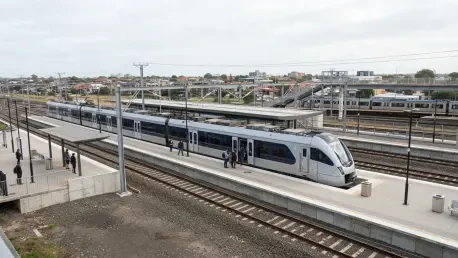

To minimize electricity costs during the current financial crisis, BART has resorted to running shorter trains and freezing management salaries across the organization. This austerity program underscores the precarious state of Northern California’s transit infrastructure as it navigates a post-pandemic landscape. The recent passage of Measure RTM, a transformative $1 billion annual sales tax, serves as a high-stakes rescue mission for a system that was essentially on life support. This voter-backed initiative marks a pivot from emergency bailouts toward a long-term, regional funding model designed to maintain essential services like Muni, Caltrain, and AC Transit. While the influx of capital provides a much-needed reprieve, it also ignites a fierce debate over fiscal responsibility and the changing role of transit in an era defined by remote work. The decision to implement such a massive tax reflects a calculated risk by the electorate, balancing the dread of total system failure against the burden of increased living costs.
Understanding Measure RTM and Its Reach
Funding Mechanisms: Regional Voting and Tax Scales
Measure RTM is designed to inject consistent capital into the Bay Area’s struggling transit systems by applying a localized sales tax across five primary counties. The tax structure is not uniform, reflecting the unique demographic and economic profiles of the service areas involved. For example, San Francisco residents approved a 1% increase, the highest in the region, recognizing the city’s extreme reliance on a dense network of buses and light rail. In contrast, Alameda, Contra Costa, San Mateo, and Santa Clara counties adopted a lower rate of 0.5%. This tiered approach was essential for securing broad electoral support, as it allowed for a more equitable distribution of the financial burden. Projections indicate that this tax will provide approximately $1 billion annually for the next 14 years, creating a dedicated fund that transit agencies can leverage for both daily operations and critical infrastructure upgrades that were previously deferred due to budget constraints.
The voting results for Measure RTM revealed a stark geographic divide that highlights the complexities of regional transit planning in Northern California. While San Francisco voters backed the measure with an overwhelming 79.2% support rate, Santa Clara County showed significantly more hesitation, with only 55.3% of the electorate in favor. This disparity suggests a growing friction between urban centers that view transit as an existential necessity and suburban areas where residents may feel less connected to the central rail hubs. Despite these differences, the aggregate support across the five counties reached 64%, meeting the threshold required to enact the change. This collective mandate reflects a regional consensus that the cost of losing transit services would far outweigh the impact of the tax increase. However, the narrow margins in outlying areas serve as a reminder that transit agencies must work harder to demonstrate tangible benefits to every corner of the community they serve.
System Resilience: Avoiding a Total Collapse
The catalyst for this tax was the avoidance of a catastrophic “fiscal cliff” that threatened to dismantle the transit network by early 2027. BART, the region’s rail backbone, was facing a $375 million budget deficit that would have triggered a 63% reduction in train service hours and massive staff layoffs. Such a drastic cut would have been accompanied by a significant degradation of station safety and cleanliness, potentially entering a cycle of decline. For a region that already struggles with some of the worst highway congestion in the nation, the removal of rail capacity would have led to a permanent state of gridlock, stifling economic growth and increasing carbon emissions. By passing Measure RTM, the electorate has effectively blocked this scenario, ensuring that the trains continue to run and the workforce remains employed. The influx of revenue allows agencies to maintain their current service levels while they look for more sustainable ways to manage their long-term operational costs.
Financial instability in the transit sector is primarily driven by a fundamental and likely permanent shift in commuter behavior across the Silicon Valley corridor. Before the pandemic, BART maintained one of the highest fare-box recovery rates in the country, but with the region leading the nation in remote work adoption, ridership has plateaued at roughly half of its former levels. Fare revenue now accounts for only a fraction of the costs required to run the system, leaving a massive hole that traditional funding sources cannot fill. This transition from a fare-driven model to a tax-subsidized utility model is a direct acknowledgment that the old business logic no longer applies. To thrive in this post-commuter reality, transit agencies are forced to pivot their strategies toward non-traditional riders who require frequent and reliable service outside of the standard morning and evening rush hours, ensuring the system remains relevant to a broader and more diverse demographic of users.
Transit officials recognized that the stability offered by Measure RTM was a unique opportunity to modernize the regional mobility framework. They shifted their focus toward integrating disparate systems, ensuring that transfers between BART, Caltrain, and Muni were seamless and cost-effective for the average rider. Decision-makers prioritized technological upgrades that improved real-time tracking and enhanced station security, aiming to rebuild the ridership base through a better customer experience. Furthermore, they established transparent oversight committees to monitor the allocation of sales tax funds, providing regular reports to the public on efficiency gains. By treating the transit system as a critical public utility rather than a fare-dependent business, the region successfully navigated its immediate financial crisis. These strategic actions ensured that the Bay Area remained a competitive global hub, setting a precedent for how urban centers can adapt their infrastructure to meet the demands of a changing social landscape.