
The Senate Appropriations Committee’s fiscal year 2027 defense bill initiates a fundamental shift by prioritizing a larger F-35 fleet at the direct expense of the Air Force’s F-15EX procurement goals. This legislative roadmap introduces a complex restructuring of procurement plans, favoring the expansion of established stealth technology while dialing back on newer, unproven platforms. As a counter-proposal to both the Air Force’s internal requests and previous House versions, the bill highlights a growing friction between military leadership and lawmakers regarding the ideal composition of the nation’s fighter fleet. The fiscal year 2027 defense spending bill, released by the Senate Appropriations Committee in late 2026, signals a major turning point for the future of American air power. It reflects a cautious stance toward expensive developmental programs while doubling down on proven fifth-generation systems to meet immediate global threats. This decision marks a significant moment in the legislative shaping of the United States Air Force’s future, balancing immediate needs against long-term goals.
Expanding the Fifth-Generation Stealth Fleet
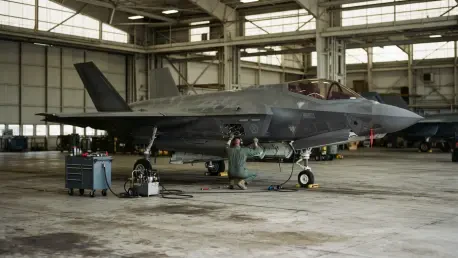
The most immediate takeaway from the Senate bill is the redistribution of funds among primary fighter platforms, where the F-35 program emerged as the primary beneficiary of legislative adjustments. Appropriators proposed adding twenty-five aircraft across all variants of the F-35 program to bolster the nation’s air superiority. Specifically, for the Air Force, the bill adds five F-35A jets to the base request, which brings the total procurement number to twenty-nine for the upcoming fiscal year. The Navy and Marine Corps also see substantial increases, with five F-35Bs and fifteen F-35Cs added to their respective procurement lists. This move signals a strong legislative preference for fifth-generation stealth technology as the cornerstone of American air power. By reinforcing the F-35 fleet, lawmakers are emphasizing that low-observable characteristics and advanced sensor fusion are non-negotiable requirements for surviving in contested environments against sophisticated adversaries.
Reductions in Advanced Fourth-Generation Procurement
Conversely, the F-15EX Eagle II program suffered a significant setback in the current budget cycle despite its role in filling capacity gaps. While the Air Force originally requested twenty-four of these advanced fourth-generation-plus aircraft, the Senate committee proposed cutting the purchase to eighteen jets, representing a twenty-five percent reduction. This decision is particularly striking given the timing; the cut was announced just one day after the first two permanently assigned F-15EXs arrived at Kadena Air Base in Japan to begin replacing the aging F-15C/D models. The reduction suggests a lack of appetite in the Senate for maintaining high-volume production of non-stealth platforms, even those intended to modernize critical overseas bases. This fiscal pivot could slow the transition for units that rely on the Eagle II for long-range engagement and high-payload missions. It highlights a widening rift between the military’s strategic requirements and the fiscal realities imposed by Congress.
Fiscal Restraint on Next-Generation Dominance
Beyond current-generation fighters, the Senate bill imposes notable financial constraints on the development of future air dominance technologies. The F-47, which serves as the Air Force’s sixth-generation fighter under the Next Generation Air Dominance framework, saw its development budget trimmed by approximately twelve percent. While the aircraft remains a top priority for maintaining technological superiority, the funding reduction indicates a more cautious approach to the high costs associated with secret, next-generation developmental programs. Lawmakers appear hesitant to provide unrestricted funding for systems that are still in the early phases of design and testing. This shift suggests that the Senate wants more oversight and demonstrated progress before committing larger sums of taxpayer money. The reduction in research and development funds could potentially delay the rollout of key technologies needed to outpace emerging threats. It forces the Air Force to be more selective in its technological investments.
Delays in Collaborative Autonomous Systems
Even more drastic is the treatment of the Collaborative Combat Aircraft program in the latest legislative proposal. The initiative aims to develop autonomous drone wingmen to fly alongside piloted fighters like the F-35 and F-47, providing a cost-effective way to increase mass. However, the Senate committee funded this program at only about half of the requested amount for the current cycle. The committee justified this steep cut by citing misaligned acquisition phasing in the development timeline, suggesting that the Air Force’s plan for rapid integration of these drones may be ahead of the current technological or industrial reality. This reduction signals that Congress believes the underlying industrial base and software frameworks are not yet ready for the rapid, large-scale implementation the service envisions. As a result, the timeline for operationalizing AI-driven wingmen may be pushed further into the future, requiring the Air Force to rethink its strategy for achieving mass and scale in future aerial combat scenarios.
Challenges in Sustaining Operational Capacity
A recurring and troubling theme identified in the bill is the persistent failure to meet the Air Force’s stated procurement goals for fleet health. Senior Air Force leadership has repeatedly testified that the service needs to purchase at least seventy-two new fighter aircraft annually to prevent the fleet from aging out and to maintain a total of one thousand five hundred and nine combat-coded fighters by 2035. Under the current Senate proposal, the Air Force would only acquire forty-seven new fighters in 2027, which includes twenty-nine F-35As and eighteen F-15EXs. This is fifteen aircraft fewer than the service’s request and falls significantly short of the seventy-two-jet benchmark. This procurement gap suggests a widening rift between military strategy and congressional funding, raising concerns about the long-term readiness and structural integrity of the aging fighter fleet. Without consistent investment at scale, the service faces the risk of a hollowed-out force that lacks the necessary numbers to sustain global operations.
Impacts on Deterrence and Regional Stability
In light of these fiscal shifts, the Air Force began exploring ways to optimize the existing fleet while waiting for more stable funding cycles. Analysts suggested that the service should prioritize life-extension programs for its remaining fourth-generation airframes to mitigate the procurement shortfalls. This approach allowed the military to maintain a baseline of readiness while the F-35 production lines adjusted to the new legislative mandates. Furthermore, the denial of multiyear contracts prompted a renewed focus on industrial base resilience and supply chain transparency to convince lawmakers of the long-term value of these agreements. By addressing the misaligned acquisition phasing identified by the Senate, the service sought to align its drone wingman development more closely with realistic production timelines. These steps were essential to ensure that the strategic pivot toward stealth technology did not compromise immediate mission requirements in the Pacific during 2026 and beyond.