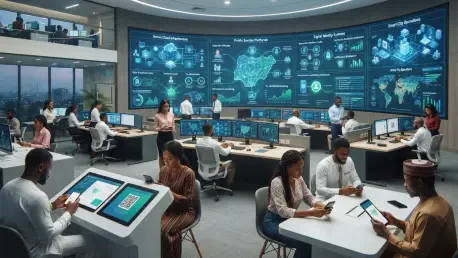

A massive portion of the partnership’s resources has been dedicated to human capital development, including the preparation of 69 specialized instructors for the Nigerian e-Government Training Center. This strategic focus underscores the federal government’s commitment to ensuring that its e-Government Master Plan 2.0 (e-GMP 2.0) is not merely a collection of software updates but a profound cultural shift in how public services operate. Developed in tandem with the Korea International Cooperation Agency, the master plan covers the period from 2026 to 2030, marking the formal end of a five-year bilateral journey that sought to overhaul Nigeria’s digital landscape. By moving away from a disjointed framework where various agencies worked in isolation, the administration is now prioritizing a seamless, citizen-centric model. This evolution aims to resolve long-standing administrative bottlenecks by integrating service delivery into a cohesive digital structure that enhances both accessibility and governmental accountability.
Implementing a Unified Service Access Point
The centerpiece of this ambitious modernization effort is the upcoming Government Service Portal, which remains on track for a pivotal soft launch in July 2026. This portal represents a fundamental departure from the legacy system where citizens had to navigate a complex labyrinth of individual websites and physical offices to complete even the most basic administrative tasks. By functioning as a “single-window” access point, the portal centralizes varied public functions, thereby reducing the time-intensive paperwork and physical travel typically required to obtain permits, licenses, or social benefits. This initiative does not just simplify the user experience but also introduces a level of transparency that was previously difficult to achieve in a paper-heavy environment. As the portal becomes the primary face of the state, the focus remains on ensuring that every interaction is intuitive and secure, allowing the average Nigerian to manage their official affairs with greater speed and efficiency than ever before.
To provide the technological backbone for this unified portal, the government has implemented specialized Enterprise Architecture frameworks across key institutions, including the Nigeria Customs Service and the National Identity Management Commission. By March 2026, a dedicated Enterprise Architecture Portal will be formally transitioned to the National Information Technology Development Agency to act as a central hub for standardizing digital systems nationwide. This structural integration is designed to dismantle the operational silos that have historically hindered data sharing between different government branches. When a citizen provides information to one agency, the new framework allows that data to be securely verified by another agency through regulated protocols, removing the need for redundant data entry. This synchronized approach ensures that the federal government functions as a single, coherent entity rather than a collection of disconnected offices, paving the way for a more reliable and responsive public administration.
Bolstering National Identity and Physical Infrastructure
A reliable digital government cannot exist without a robust national identity system that ensures secure user verification for every transaction. To address this necessity, the partnership with the Korea International Cooperation Agency facilitated the donation of 572 mobile National Identification Number registration devices to the National Identity Management Commission and the Nigerian Postal Service. This hardware injection is strategically deployed to expand registration capacity into rural and underserved regions, ensuring that the digital divide does not prevent marginalized citizens from accessing unified government services. By strengthening the identity infrastructure at the foundational level, the government creates a secure environment for electronic payments, document verification, and personalized service delivery. This emphasis on inclusivity ensures that the benefits of digital transformation reach all segments of the population, regardless of their geographical location or previous lack of access to traditional government infrastructure.
Beyond the deployment of hardware, the e-Government Master Plan 2.0 places an unprecedented emphasis on institutionalizing technical expertise within the Nigerian civil service. The human capital development aspect of the program has already successfully trained 1,646 public-sector IT professionals through specialized sessions known as “DevsinGov,” which focus on the practical execution of digital services. Additionally, over 600 state government officials from various regions have been equipped with the skills necessary to draft and implement localized e-government strategies that align with national goals. This strategy ensures that the digital transformation is not a fleeting external project but a sustainable internal capability. By building a pipeline of local experts who understand the nuances of the domestic administrative landscape, Nigeria is securing the future of its digital systems. This investment in people guarantees that the technical infrastructure will be maintained, updated, and improved by a workforce that is deeply invested in the long-term success of the nation.
Sustaining Growth Through Collaborative Innovation
The collaborative effort between Nigeria and South Korea highlights a modern shift toward long-term institutional partnerships that go beyond traditional aid models. Since the inception of this bilateral relationship in 2008, the focus has been on leveraging the expertise of a global leader in digital governance to create a tailored Nigerian solution. By adopting frameworks from the South Korean model, which is frequently cited as one of the most efficient in the world, Nigeria has been able to bypass many of the common pitfalls associated with rapid technological adoption. This exchange of knowledge involves not just technical blueprints but also cultural and professional training, with thousands of officials participating in cross-cultural workshops. This approach ensures that the Nigerian government is not just buying a product but is instead learning a methodology for continuous improvement. The success of this partnership demonstrates how international cooperation can effectively bridge the gap between emerging economies and advanced digital standards.
As the planning phase concludes and the implementation roadmap moves into its active stage, the responsibility for the master plan’s success has transitioned firmly into Nigerian hands. The handover of these strategic documents signifies that the federal government now possesses the tools, frameworks, and trained personnel required to lead its own digital destiny. Moving forward, the focus must shift to ensuring that all ministries, departments, and agencies embrace this unified vision by overcoming traditional bureaucratic territorialism. The integration of digital systems requires a high level of inter-agency cooperation and a willingness to share data across previously closed boundaries. By fostering a culture of transparency and collaboration, the government can maximize the impact of the investments made over the past five years. This internal shift is essential for creating a government that is not only digital in name but also modern in its organizational philosophy, ensuring that the technology actually serves the broader goals of national development.
Building a Resilient Digital Future
The formal adoption of the e-Government Master Plan 2.0 marked a significant milestone in Nigeria’s quest to modernize its public services and enhance administrative efficiency. The collaborative framework established a solid foundation for a unified digital ecosystem, yet the true test of this transition resided in the post-launch phase where domestic ownership became paramount. Moving forward, stakeholders recognized that the government should prioritize the establishment of a rigorous cybersecurity framework to protect the sensitive data centralized within the new portal. Furthermore, implementing a continuous feedback loop for citizens allowed for iterative improvements to the user interface, ensuring the system remained responsive to public needs. These steps were essential to maintain the momentum gained during the partnership and to ensure that the digital tools remained resilient against evolving technological threats. By focusing on these actionable measures, Nigeria successfully bridged the gap between policy planning and real-world service delivery, setting a new standard for governance.
To ensure the long-term viability of the e-GMP 2.0, the administration focused on securing sustainable funding models that reduced reliance on international grants. By integrating digital service fees and efficiency savings into the national budget, the government created a self-sustaining cycle for technological upgrades. Furthermore, the establishment of a multi-agency digital governance committee helped to resolve disputes over data ownership and standardized protocols across the federal bureaucracy. This institutional framework proved vital in maintaining consistency during political transitions, ensuring that the digital progress was not stalled by leadership changes. Ultimately, the successful implementation of the unified portal demonstrated that technological reform must be paired with bureaucratic restructuring to yield meaningful results for the citizenry. Nigeria’s approach served as a blueprint for other African nations looking to modernize their public sectors, showing that a balanced focus on infrastructure, human capital, and legislative reform was the most effective path toward achieving a fully integrated and responsive digital government.