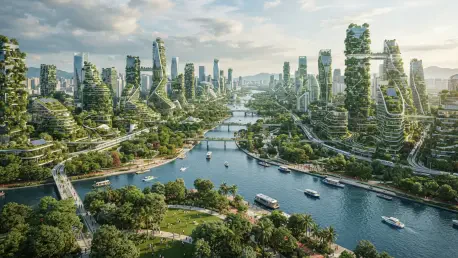

A lack of reliable ecological data often prevents municipalities from identifying where to intervene or which restoration approaches will yield the most effective environmental results. As the global population shifts toward metropolitan centers, with over 55 percent of people now residing in cities, the pressure on urban infrastructure has reached a critical breaking point. These densely populated zones frequently suffer from the urban heat island effect, where concrete and asphalt trap heat, leading to temperatures significantly higher than surrounding rural areas. Moreover, the loss of natural sponges like wetlands has made cities more prone to devastating floods. To address these vulnerabilities, urban planners are pivoting away from traditional, rigid gray infrastructure—such as concrete sea walls and storm drains—in favor of nature-based solutions. These methods involve the strategic restoration of ecosystems like mangroves and urban forests to provide natural protection. By working in tandem with natural processes, cities are beginning to create resilient buffers that improve the quality of life for all inhabitants.
Frameworks for Urban Resilience and Restoration
Institutional Support and Policy Integration
The Generation Restoration Cities initiative, spearheaded by the United Nations Environment Programme, acts as a pivotal bridge connecting international environmental mandates with specific local municipal actions. Currently operating across 24 cities in 19 different countries, this initiative provides the necessary technical expertise and financial support to ensure that ecosystem restoration becomes a permanent fixture of urban governance. Instead of treating green spaces as aesthetic luxuries, the program integrates nature directly into the city’s operational core. This shift represents a fundamental change in how urban centers are managed, moving toward a model where ecological health is seen as a prerequisite for economic and social stability. By fostering collaboration between local officials and global experts, the project helps cities navigate the complexities of restoration, ensuring that every tree planted or wetland restored contributes to a broader, more resilient urban landscape.
Building on this foundational support, the initiative emphasizes that the most effective way to secure a city’s future is by treating biodiversity as a form of critical infrastructure. This approach naturally leads to more robust urban planning strategies that account for long-term environmental variability rather than just immediate crises. One of the most significant achievements of this movement is the successful transition from isolated, small-scale pilot projects to comprehensive, systemic policy changes. In Curitiba, Brazil, for instance, the city has moved beyond simple tree-planting campaigns to develop a sophisticated climate law that incorporates a municipal carbon market. This market specifically incentivizes community-led restoration and urban agroecology, turning green spaces into recognized economic assets. By codifying these environmental goals into law, Curitiba ensures that nature-based solutions are funded and protected regardless of which political party holds power.
Technical Data and Waterway Rehabilitation
A major hurdle for many cities is the lack of reliable information to guide restoration efforts, but the development of nearly 90 unique tools and assessments has started to change this reality. In Barranquilla, Colombia, technical teams conducted extensive hydrological and topographic studies around León Creek. This research resulted in a practical guide for nature-based interventions, identifying more than 20 specific actions—such as slope stabilization and vegetation corridors—to improve the creek’s health and reduce flooding. These data-driven approaches ensure that nature-based interventions are both scientifically sound and practically effective, allowing for the precise placement of green infrastructure where it will have the greatest impact. By utilizing high-tech biodiversity mapping and financial strategy guides, municipalities are now able to make informed decisions that maximize the ecological and social return on their investments.
Technical studies have also paved the way for the restoration of critical water systems and the expansion of urban agriculture in regions facing severe water-related risks. In South Asian cities such as Kochi and Sirajganj, the focus has shifted toward rehabilitating canals and natural drainage systems to mitigate the impact of heavy monsoon rains. Meanwhile, in Manaus, Brazil, participatory mapping tools have allowed residents to take an active role in identifying greening opportunities within their own neighborhoods. These efforts prove that restoring natural water flow and local food systems is a primary measure for building long-term urban resilience. When communities are involved in the data collection and planning process, the resulting restoration projects are more likely to be maintained and respected over time. This collaborative model transforms technical data into a community asset, fostering a sense of shared responsibility for the city’s natural health.
Financial Scaling and Community Engagement
While many restoration projects begin on a small scale, they possess a massive potential for expansion, with participating cities already identifying nearly 200,000 hectares of land for future recovery. The initial grants provided by global initiatives often act as a vital catalyst, helping cities unlock much larger pools of external capital and municipal co-funding. This “multiplier effect” has been essential for scaling restoration from single neighborhoods to city-wide networks, making large-scale green infrastructure financially viable for the long term. In the Municipality of Overstrand, South Africa, a modest initial grant was leveraged to secure significantly more funding for removing invasive species and rehabilitating riverbanks. This financial strategy demonstrates that small, well-targeted investments can trigger a wave of larger contributions from both the public and private sectors, providing the resources needed for truly transformative environmental change.
The success of urban restoration ultimately depended on the people involved and the sharing of knowledge across borders during this transformative period. By training thousands of individuals and reaching millions through awareness campaigns, the movement fostered a new generation of environmental stewards who viewed their cities as living ecosystems. Global networks allowed city leaders to exchange lessons on governance and financing, which transformed isolated local successes into a cohesive international movement. This connectivity ensured that urban centers were no longer seen as the antithesis of nature, but as thriving habitats capable of sustaining life in a changing climate. Moving forward, the focus shifted toward maintaining these restored areas through continued community participation and the integration of ecological education into local school systems. These actions solidified the role of nature as a cornerstone of urban design, ensuring that the progress made during these years provided a lasting foundation for future resilience.