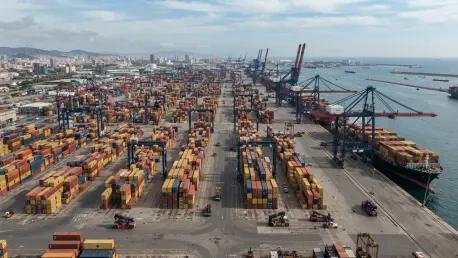

The planned industrial action is set to involve over one hundred ports worldwide, marking a significant evolution in how labor unions address international geopolitical issues. This movement, widely referred to as the “Friday Freeze,” is scheduled for October 30, 2026, and represents a massive, synchronized cessation of work across several continents. Unlike traditional strikes that typically focus on local wage disputes or workplace safety, this coordinated effort is a direct response to the ongoing conflict in Palestine. By targeting the world’s most critical maritime choke points, dockworkers aim to disrupt military supply chains and exert immense economic pressure on national governments and defense contractors. This event signals a fundamental shift in labor strategy, moving toward an ideologically driven deployment of economic power that challenges the status quo of global trade. Laborers are now acting as moral agents who prioritize global ethical considerations over business as usual.
International Coordination and the Moral Stand
The organizational complexity of the upcoming strike is a testament to the power of modern labor solidarity when bolstered by digital communication tools. This is not a series of isolated protests but a highly synchronized operation led by a coalition of independent maritime unions, transport associations, and anti-war organizations. Key participants include Italy’s Unione Sindacale di Base, as well as major labor forces in Piraeus, Greece; Barcelona, Spain; and Genoa. These groups have successfully bypassed traditional bureaucratic hurdles by utilizing decentralized communication platforms to ensure that the work stoppage happens simultaneously across more than one hundred ports. This level of cross-border cooperation demonstrates that the logistics workforce has developed the infrastructure necessary to exert influence on a global scale. The ability to coordinate such a vast network ensures that the impact will be felt in every major shipping lane simultaneously, forcing a standstill.
The strike centers on a philosophy of “ethical logistics,” where the individuals responsible for the physical movement of goods demand transparency regarding the cargo they handle. Workers are increasingly adopting a stance of “moral refusal,” explicitly stating their unwillingness to function as cogwheels in the machinery of war. This involves a specific refusal to handle any cargo linked to arms manufacturing or military replenishment destined for conflict zones. By leveraging their position as the ultimate gatekeepers of international commerce, these dockworkers are forcing a public conversation about the ethics of the global logistics industry. This trend suggests that the workforce is no longer willing to separate their professional duties from their personal convictions. The movement effectively transforms the cargo deck into a platform for political dissent, requiring companies to reconsider the transparency of their manifests to avoid operational paralysis and total loss of labor consent.
Historical Roots and Modern Evolution
To fully grasp the significance of the “Friday Freeze,” one must look at the historical trajectory of maritime labor as a tool for political change. While rare, transnational strikes have occurred during periods of intense global tension, providing a blueprint for the current action. Notable historical parallels include the anti-apartheid movement of the late 20th century, when dockworkers in Australia, North America, and Northern Europe refused to handle South African cargo. Similarly, during the Vietnam War, maritime unions utilized trade disruptions to protest state military policies. These events proved that labor could successfully intervene in geopolitical matters by interrupting the flow of capital. However, the 2026 action is distinguished by its sheer geographic breadth and its focus on a Middle Eastern conflict, marking an evolution in how labor unions address international crises rather than just local economic grievances or standard national politics that dominated previous decades.
The current movement reflects a broader shift in the 2026 labor landscape, where digital connectivity has erased the boundaries that once limited union effectiveness. In previous decades, coordination was hampered by slow communication and differing national legal frameworks. Today, however, the “Friday Freeze” illustrates how a unified digital strategy can bypass traditional media and government oversight to organize a global event. This evolution means that a strike in a single port in the Mediterranean can be instantly supported by sympathetic actions in Asia or South America. The result is a more resilient and versatile labor movement that can adapt to changing political climates in real time. By linking local labor power to a global cause, these organizations are redefining the role of the worker in the 21st century. The focus has moved from simple collective bargaining for pay to a proactive stance on how the products of human labor are physically utilized in global conflicts.
Financial Fallout and Supply Chain Turmoil
The financial consequences of the October 30 strike are projected to be staggering, primarily due to the global economy’s reliance on “just-in-time” delivery models. Modern supply chains are designed for maximum efficiency with minimal inventory buffers, meaning even a short-term interruption can have compounding effects. Analysts predict that over 40% of cargo movement in the Mediterranean corridor could be completely disrupted during the strike. Shipping companies are preparing for massive “demurrage” costs, which are fees charged for delayed ships, along with increased fuel expenditures as vessels are forced to idle at sea. Furthermore, insurance premiums for cargo transit through volatile regions are expected to spike as the industry attempts to mitigate the unpredictability of the labor landscape. This economic pressure is intended to make the continuation of business-as-usual and military support financially untenable for major corporations and national governments alike.
Logistical recovery from a total port blockage is notoriously slow, with experts suggesting that a single day of shutdown requires a full week of operation to clear the resulting backlog. This creates a ripple effect that extends far beyond the strike date, leading to secondary congestion in smaller regional ports that lack the infrastructure to handle diverted traffic. As large hubs like Genoa or Piraeus close, ships are rerouted, leading to increased transit times and higher operational costs. These expenses are eventually passed down the supply chain, which could lead to significant price hikes for industrial inputs and consumer goods. The strike highlights the fragility of a global trade system that prioritizes speed and cost over resilience. For the dockworkers, this vulnerability is precisely the leverage they need to ensure their demands are taken seriously. The message is clear: without the consent of the workforce, the physical flow of global capital will eventually grind to a halt.
Future Considerations: Integrating Ethical Accountability into Trade
The global logistics industry moved toward a new reality where ethical considerations were inextricably linked to operational success after the major strikes. National governments and shipping conglomerates were forced to acknowledge that labor stability depended on more than just competitive wages; it required an alignment with the values of the workforce. Shipping companies began implementing more transparent cargo tracking systems to provide dockworkers with the assurances they demanded regarding the nature of the goods being moved. This shift resulted in a more scrutinized supply chain, where the origin and destination of materials became a matter of public record and labor consent. The “Friday Freeze” served as a foundational moment that transformed the relationship between trade and geopolitics, proving that the individuals who power the global economy held the keys to its continuity. Moving forward, the industry prioritized diplomatic engagement and ethical transparency.
Stakeholders in the maritime sector established new protocols for conflict-resolution that included labor representatives in discussions regarding high-risk cargo. This proactive approach minimized the risk of future wildcat strikes by addressing ethical concerns before shipments reached the docks. Furthermore, investors shifted their focus toward companies that demonstrated strong environmental, social, and governance (ESG) standards, recognizing that social unrest posed a significant threat to long-term profitability. The strike encouraged a diversification of supply routes, reducing the over-reliance on a few major choke points that were susceptible to political labor actions. By integrating these actionable insights into their core business models, logistics firms improved their overall resilience against geopolitical volatility. The event ultimately taught the world that human labor remained the most critical variable in the machinery of global commerce, requiring a far more inclusive approach.