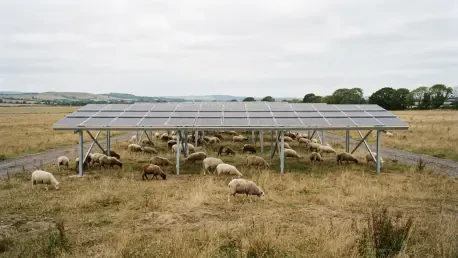

Beneath the vast photovoltaic arrays of Gonghe County, the practice of agrivoltaics is being tested as a method to mitigate soil erosion while maintaining livestock grazing. This initiative represents a tiny fraction of a massive industrial shift currently sweeping across the Tibetan Plateau. As of 2026, the region has become a focal point for an aggressive renewable energy expansion program that aims to capitalize on a solar potential estimated at a staggering 10,000 GW. While Beijing frames this rapid installation of solar parks as a purely environmental endeavor aimed at achieving carbon neutrality, the scale and location of these projects suggest a much more complex agenda. The plateau is being systematically reimagined as a central pillar of China’s national power grid, providing a foundation for resource dominance that extends far beyond simple electricity generation. This transformation reflects a multifaceted effort to leverage unique high-altitude geography for strategic geopolitical advantages.
Bridging the Gap: Narrative Versus Reality
The Chinese government continues to promote a narrative of ecological modernization, asserting that solar farms like the Talatan facility in Qinghai provide valuable employment and protect fragile high-altitude soil. State media frequently highlight programs where livestock graze beneath solar panels, portraying these installations as a harmonious blend of traditional pastoral livelihoods and cutting-edge high-tech development. This carefully constructed framing aims to secure both international and domestic support for large-scale land-use changes that are fundamentally altering the Tibetan landscape. By presenting these projects as a “win-win” for the environment and the economy, authorities seek to justify the rapid conversion of vast grazing lands into industrial energy hubs. These official claims emphasize the role of solar infrastructure in poverty alleviation, suggesting that the transition to green energy directly benefits the local population through infrastructure improvements.
Despite these official claims of mutual benefit, many independent observers and local residents express deep concern over the persistent lack of transparency and genuine consultation regarding these projects. These massive industrial installations often displace traditional pastoralists from their ancestral grazing lands, disrupting a way of life that has existed for centuries on the plateau. Because these renewable energy projects are implemented through a top-down administrative approach, there is very little evidence that the Tibetan people possess the agency to protect culturally significant sites or receive a fair share of the massive economic windfall generated by their land. The rapid rollout of solar infrastructure frequently bypasses meaningful dialogue with local communities, leading to a sense of alienation among those whose lives are most directly impacted by the changes. Without adequate compensation or linguistic access to project details, the social cost of this energy boom remains largely unaddressed by state planners.
Strategic Infrastructure: Security and National Data Goals
Strategic geography plays a defining role in the placement of new energy infrastructure across the plateau, with a noticeable correlation between massive solar farms and critical military installations. Recent satellite imagery analysis has revealed a significant surge in solar facilities located in the immediate vicinity of sensitive areas, such as the Shigatse Peace Airport and various high-altitude outposts along the frontier. By establishing localized and independent power sources, the state significantly enhances the operational readiness of its military assets in a region defined by long-standing geopolitical tensions and unresolved border disputes. This dual-use strategy ensures that defense hubs are not solely dependent on a centralized and potentially vulnerable national grid. The integration of renewable energy into the logistics of the People’s Liberation Army allows for sustained operations in remote environments where traditional fuel supply lines are difficult to maintain or easily disrupted.
Tibet is also being rapidly integrated into the “Eastern Data and Western Computing” project, a national initiative designed to balance digital workloads across the entire country. By strategically placing massive data centers and supercomputing hubs like the Yajiang-1 in the region, the state takes full advantage of the naturally cold climate to significantly reduce the cooling costs associated with high-performance hardware. The abundance of solar and hydroelectric power provides a stable and renewable source of electricity to run energy-intensive artificial intelligence processing and big-data analytics. This strategy ensures that the natural resources of the plateau are directly contributing to national ambitions for global technological and digital sovereignty. The transition of the region into a digital powerhouse from 2026 onward represents a shift in how remote territories are valued, moving from traditional agricultural zones to critical nodes in the national information infrastructure.
Resource Dominance: Exporting Power and Extracting Minerals
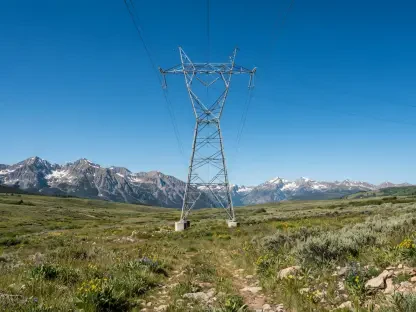
A primary function of the current energy boom is to serve as a high-capacity “battery” for China’s wealthy coastal provinces rather than meeting local consumption needs on the plateau. The ongoing construction of ultra-high-voltage transmission lines, such as the massive project currently linking the Tibet Autonomous Region directly to Guangdong, facilitates the transfer of billions of kilowatt-hours to the eastern seaboard. This sophisticated infrastructure supports the heavy energy demands of manufacturing giants in Shenzhen and the Greater Bay Area, reinforcing a classic economic dynamic where the periphery is exploited to fuel the growth of the metropolitan center. By 2028, these lines are expected to carry an annual output roughly equivalent to half that of the Three Gorges Dam, illustrating the sheer scale of the resource extraction. This massive transfer of wealth effectively prioritizes the industrial stability of coastal regions over the economic autonomy of the Tibetan people.
The expansion of solar power provides the necessary energy to fuel massive mining operations throughout the plateau, which holds some of the world’s largest reserves of critical minerals. Tibet is a primary source for materials such as copper, lithium, gold, and antimony, all of which are essential for the global transition to green technology. In a self-reinforcing cycle, the renewable energy infrastructure powers the extraction of the very materials needed to build more solar panels, wind turbines, and high-capacity batteries. This allows the state to tighten its grip on these strategic resources while maintaining a “green” public image. Projects like the mining operations at Gyama and Qulong are massive consumers of electricity, and the proximity of new solar farms makes these extractive industries more economically viable. The synergy between renewable energy and mining highlights the industrial reality behind the environmental rhetoric, where “green” power serves as a catalyst for mining.
Future Considerations: Balancing Development and Local Sovereignty
Throughout this period of intense industrial expansion, the voices of the Tibetan people have remained largely excluded from the primary decision-making processes that shape their future. Projects are frequently approved and constructed without providing comprehensive information in the Tibetan language or seeking meaningful, prior, and informed consent from the impacted communities. The relentless focus on state-level strategic goals overrides the social and cultural rights of the local population, leading to legitimate concerns about the long-term sustainability of the social fabric on the plateau. As pastoralists are pushed into resettlements to make way for solar arrays and transmission lines, the traditional relationship between the people and the land is being fundamentally severed. This marginalization is not merely a byproduct of development but a systematic feature of a top-down model that prioritizes national integration and resource security over local self-determination.
In conclusion, the strategic pivot toward renewable energy on the plateau functioned as a sophisticated method of resource management that prioritized national power over local autonomy. By framing industrial, military, and digital expansion under the guise of environmentalism, the state advanced its agenda with significantly reduced international scrutiny. This transition served as a clear example of how green labels were utilized to facilitate a broader geopolitical strategy, integrating a remote region into a centralized framework of control. Future considerations required a fundamental shift toward inclusive development models that recognized the land rights and cultural sovereignty of the Tibetan people. Addressing these disparities involved implementing transparent consultation mechanisms and ensuring that the economic benefits of energy production stayed within the local communities. Only through a genuine partnership with the indigenous population could a truly sustainable energy transition have been achieved.