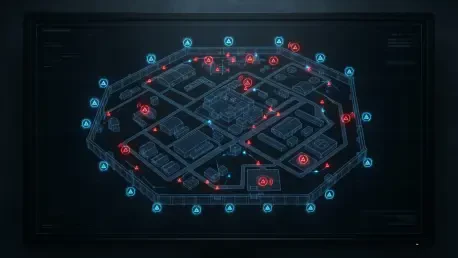

Hostile operators often bypass electronic interference by cycling through different frequencies, making physical interceptors like the Bumblebee V2 a preferred defensive tool. This reality marks a fundamental change in how the United States military approaches domestic and international security installations. As of 2026, the Department of Defense has recognized that the rapid evolution of unmanned aerial systems necessitates a massive financial and technological overhaul. According to a recent Congressional Budget Office report, the initial cost to secure a single typical military installation against these threats has reached a staggering $74 million. This investment is not merely about hardware but represents a comprehensive shift toward an era where traditional air defenses are augmented by specialized, autonomous counter-drones. The military is now prioritizing the creation of defensive perimeters that can effectively identify, track, and neutralize hostile aircraft before they cause human casualties or inflict damage on critical assets. By moving away from older, rigid defensive models, the Pentagon is embracing a more fluid and responsive approach that accounts for the diverse ways adversaries now deploy inexpensive, low-flying surveillance and attack platforms across various global theaters of operation.
The Tactical Necessity of Integrated Defense Systems
The fundamental subject of analysis here is the transition into an era where drone-on-drone combat is a daily reality rather than a futuristic concept. Observations from global hotspots, particularly the ongoing conflicts in Eastern Europe, have demonstrated that standard anti-aircraft systems are often ill-equipped to handle small quadcopters that cost a fraction of a traditional missile. Industry experts suggest that the United States requires a highly adaptable lineup of interceptors capable of autonomous flight to counter these asymmetric threats effectively. The goal is to build a resilient network where sensors and interceptors work in tandem to eliminate targets with surgical precision. This transition reflects a broader understanding that air superiority now depends on the ability to control the low-altitude environment. Command structures are increasingly focused on the speed of response, ensuring that defense systems can react to sudden swarms that might otherwise overwhelm conventional radar and artillery units.
Central to this initiative is the consensus that no single technology can serve as a silver bullet for every drone-related threat. Instead, the federal government has advocated for a layered defense strategy that integrates four critical technological pillars to ensure maximum redundancy. The first pillar involves advanced radar and radio frequency detection to provide foundational tracking data for all subsequent actions. Kinetic interceptors, the second pillar, provide physical solutions designed to destroy drones in mid-air through direct impact or fragmentation. Third, electronic warfare systems focus on disrupting the command links between a drone and its operator, which is often the preferred method when the military wishes to capture a craft for intelligence gathering. Finally, directed energy systems, such as high-powered microwaves or lasers, offer a cost-effective way to neutralize multiple targets simultaneously by frying their internal electronics. This diverse array of tools ensures that even if one defensive layer is bypassed, others remain active to protect the facility.
Advanced Interception Technologies and Mission Profiles
The deployment of specialized systems like the Indirect Fire Protection Capability High-Powered Microwave System has already begun to redefine defensive capabilities at the tactical level. This specific Army system emits electromagnetic pulses that are particularly effective against swarms, where dozens of small aircraft might attempt to saturate a target. Similarly, the Navy’s Optical Dazzling Interdictor, known as ODIN, uses high-intensity lasers to blind the optical sensors of incoming drones, rendering them unable to navigate or identify their objectives. On the kinetic side, radar-guided Coyote interceptors function much like traditional missiles but are optimized for the high-speed engagement of smaller, more agile targets. Additionally, the BLADE system mounts machine guns on mobile vehicles and utilizes automated targeting software to provide a conventional yet highly effective response. These technologies represent the cutting edge of current defense, offering a blend of traditional and experimental methods to maintain a secure and sovereign airspace.
Commanders must carefully weigh mission-specific parameters when choosing the appropriate counter-drone response for any given scenario. These factors include the payload capacity of the interceptor, its loitering time, and its ability to operate effectively during night missions or at extremely low altitudes to avoid detection by hostile sensors. There is also a significant strategic divide between the decision to totally destroy a target or merely disable it through non-kinetic means. While physical interceptors like the Bumblebee V2 are designed for high-stakes kinetic kills to ensure total destruction, electronic jamming remains vital for commandeering technology. However, as adversaries improve their frequency-hopping capabilities, the reliability of physical collision has become increasingly valuable. This decision-making process is further complicated by the need to operate in contested environments where GPS and radio signals are frequently jammed by the very enemies being targeted, requiring a high degree of autonomous operation.
Financial Realities and Global Combat Lessons
While the technological advancements are impressive, the economic reality of maintaining such a robust defense is a sobering consideration for policy makers. The Congressional Budget Office report suggests that outfitting the necessary military infrastructure across the globe will require a total projected investment of approximately $7.4 billion. This massive figure covers the initial setup of sensors, interceptors, and command centers at key installations. Furthermore, these systems are not static assets; they require constant upkeep to remain effective against evolving threats. Annual maintenance and operational costs are estimated at roughly $5 million per base, which covers essential software updates and hardware repairs. This funding is critical for ensuring that automated systems like BLADE or ODIN can recognize the latest drone signatures and frequencies. Despite the high price tag, there is a broad consensus that the cost of leaving American bases vulnerable to low-cost attacks is far higher in the long term.
The development of these counter-drone programs has been heavily informed by the real-world laboratory of modern conflict, where drone endurance and battery life have become pivotal. The Army is currently prioritizing the engineering of hardware that can survive in highly contested environments where electronic interference is the norm. Lessons learned from the front lines have shown that drones must be capable of operating without reliable GPS signals or constant communication with a ground station. This has led to an increased focus on onboard artificial intelligence, allowing interceptors to make autonomous decisions once they are launched toward a target. By analyzing the cat-and-mouse game played between drone operators and electronic warfare units, American engineers have managed to improve the resilience of their own systems. These insights ensure that the next generation of defensive technology is not just powerful, but capable of functioning under extreme pressure without direct human intervention.
Strategic Integration for Future Air Superiority
The military’s approach to counter-drone defense was defined by a sense of urgency and a commitment to technological diversity across all branches of service. By combining kinetic strikes with directed energy and electronic warfare, the Department of Defense successfully established a framework that addressed a wide spectrum of aerial threats. This synthesis of financial planning and engineering expertise allowed the nation to adapt to the realities of modern warfare before vulnerabilities could be exploited on a large scale. Moving forward, the focus should shift toward the miniaturization of these defensive systems to allow for greater mobility and deployment in remote areas. Ensuring that mobile units can carry the same level of protection as a fixed base will be the next significant milestone in maintaining air sovereignty. The investment made today served as a necessary foundation for a more secure future where autonomous threats no longer hold the tactical advantage over established and prepared military forces.