
The bustling vitality of a modern metropolitan center can grind to a devastating halt in mere seconds when an unforeseen crisis disrupts the delicate equilibrium of transit, commerce, and public safety. For decades, the standard operating procedure for municipal leaders faced with such disruptions involved a “brute force” approach, physically saturating an affected area with police, fire, and emergency medical personnel. However, the sheer scale of the modern urban environment, combined with tightening municipal budgets and chronic staffing shortages seen from 2026 through 2028, has rendered this labor-heavy strategy increasingly obsolete. Today, the efficacy of a city’s safety net is measured not by the volume of boots on the ground, but by the speed and precision of the information flowing into command centers.
The transition away from human-centric saturation toward data-driven agility represents a fundamental shift in how cities manage resilience. When a single suspicious package or an unmanaged crowd can ripple through an entire region’s logistics, the traditional manual response often arrives too late to mitigate the second-order effects. Instead of reactive deployment, modern emergency management now prioritizes the “force multiplier” effect of technology. By leveraging networked intelligence, agencies can identify the exact scope of a threat, allowing them to deploy precise resources rather than overwhelming a zone with unnecessary personnel who might be needed elsewhere. This evolution ensures that protection is not a matter of muscle, but of cognitive superiority.
The End of “Flooding the Zone”: Why Brute Force No Longer Secures Modern Cities
As urban landscapes become more densely packed and interconnected, the physical limitations of emergency personnel have become a primary bottleneck in public safety. Relying on a massive presence of personnel to solve every problem creates a rigid response that is slow to adapt to changing conditions. In the current environment, where budget constraints dictate leaner departments, the old model of “flooding the zone” often leaves other parts of a city vulnerable. When a major incident draws all available units to a single point, the resulting “safety vacuum” in surrounding neighborhoods creates a secondary crisis that is often harder to manage than the initial event.
Furthermore, the complexity of modern threats requires a level of specialized knowledge that a general patrol officer might not possess in the moment. The focus has shifted from mere presence to informed action, where the quality of situational awareness dictates the outcome. By moving away from brute force, cities can preserve their human capital for tasks that truly require a physical presence, such as direct rescue operations or high-level de-escalation. This strategic withdrawal of unnecessary personnel, replaced by high-fidelity surveillance and sensor networks, allows for a more surgical and sustainable approach to urban security that respects both the budget and the well-being of the workforce.
Navigating the Dual Priority Challenge in Modern Urban Hubs
Urban centers face a persistent paradox that defines the daily lives of emergency coordinators: the absolute necessity of neutralizing a threat without paralyzing the city’s lifeblood. A major incident, whether it is a structural failure or a large-scale celebratory parade, often creates a vacuum of resources that can stall transit systems and delay essential public services far beyond the immediate scene. As residents and business owners demand higher levels of transparency and lower levels of disruption, the pressure to maintain “business as usual” has never been higher, even during peak moments of chaos. Achieving this balance requires a level of coordination that transcends traditional emergency protocols.
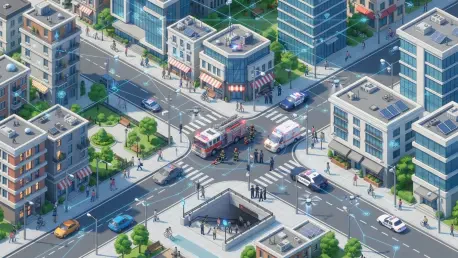
This dual-priority environment necessitates a move away from the rigid, siloed operations of the past. When a fire department, law enforcement agency, and public works department operate in total isolation, their individual responses often conflict, leading to unintended consequences like traffic gridlock on emergency evacuation routes. To solve this, agile cities have adopted frameworks that emphasize operational flexibility. By integrating technology into the very fabric of urban planning, leaders can now monitor the health of the entire city in real-time. This oversight ensures that an emergency response in one neighborhood does not inadvertently cripple the infrastructure of another, maintaining the flow of the city while the crisis is contained.
The Technological Ecosystem: Turning Data into Operational Awareness
The modern technological ecosystem serves as the backbone of urban agility, providing a layer of situational awareness that was previously impossible to achieve. Aerial and visual intelligence platforms, specifically drones and mobile camera units, have revolutionized the initial stages of incident response. These tools offer a pivotal perspective, allowing commanders to spot growing bottlenecks or hidden hazards before the first ground unit even arrives on the scene. This immediate visual feedback loop ensures that the response is tailored to the actual conditions on the ground rather than being based on speculative or outdated radio reports, providing a clear window into the unfolding reality.
Furthermore, the massive volume of data generated by modern cities would be overwhelming without the intervention of AI-driven filtration. Video analytics and artificial intelligence act as a sophisticated clearinghouse, automatically flagging anomalies—such as a person walking against the flow of a crowd or a vehicle stopped in a high-traffic lane—and prioritizing that data for human dispatchers. This prevents the “information overload” that often plagues emergency centers during high-stress events. By automating the detection of baseline activity, the system allows the human element to focus exclusively on the outliers that indicate a potential threat or a developing emergency.
When this filtered data is integrated with Geographic Information Systems (GIS), decision-makers can visualize the spatial context of an incident with unprecedented clarity. Understanding the relationship between a localized fire and its proximity to underground utilities, transit hubs, or hospital routes allows for a holistic response. Transitioning to a common operational picture breaks down the data silos that once hampered interagency communication. When every department—from public works to law enforcement—shares a unified view of the city’s digital twin, the response becomes cohesive. This shared awareness ensures that every action taken is part of a larger, synchronized strategy aimed at total urban recovery.
Expert Perspectives on the Human-in-the-Loop Philosophy
Industry experts, including Dean Cunningham of Axis Communications, argue that while technology provides the “eyes and ears” of the city, it must never replace human intuition and judgment. The “human-in-the-loop” philosophy suggests that technology is most effective when it serves as a decision-support tool, empowering experienced commanders with superior data. Research into urban resilience has shown that the most successful municipal responses occurred when AI handled the mundane task of data sorting, leaving the complex, empathetic, and strategic decisions to human leaders who understood the cultural and social nuances of their communities. This synergy ensures that the city’s response remains proportionate and humane.
Treating technology as a collaborator rather than a replacement fostered a more resilient environment where technical precision met situational intuition. For instance, while an algorithm might detect a significant surge in crowd density during a festival, it is the human commander who decides whether to deploy more officers or simply reroute pedestrian traffic to ease the tension. This partnership prevented the pitfalls of “black box” decision-making, ensuring that every technological alert was validated and acted upon by a professional who could account for the unpredictable nature of human behavior. By keeping humans at the center of the technological loop, cities maintained the trust of their citizens while maximizing their operational efficiency.
Strategies for Building a Flexible Emergency Framework
Transitioning to a truly agile management model required a strategic pivot from static, paper-based playbooks to flexible operational foundations. Successful cities moved away from “one-size-fits-all” responses, instead building plans that served as dynamic baselines capable of rapid adjustment. This flexibility allowed agencies to pivot their strategies in real-time based on fluid variables such as sudden weather shifts or unexpected changes in crowd dynamics. By establishing pre-emptive interagency lines of communication long before a crisis occurred, departments like transportation and public works ensured that their actions were synchronized from the moment an alert was triggered.
The implementation of iterative learning cycles turned every city event into a laboratory for future improvement. Agencies used historical data, such as crowd patterns and evacuation timelines recorded during previous years, to refine their deployment strategies for the next incident. Scalability also became a central pillar of fiscal sustainability, as cities invested in networked tools that were easily ramped up for major summits and scaled back for daily monitoring. These integrated strategies ensured that the infrastructure for safety was not a dormant expense, but a living system that strengthened the long-term resilience of the urban landscape. Ultimately, the ability to be agile acted as the ultimate measure of preparedness, allowing communities to navigate complexity with confidence.