
Millions of daily commuters in the Seoul metropolitan area are currently grappling with the exhausting realities of chronic traffic congestion and dangerously overcrowded subway platforms that complicate every morning routine. To address these systemic issues, the Seoul Metropolitan Government has unveiled a strategic express public transit operation plan designed to optimize existing urban infrastructure rather than relying on the slow progress of massive new construction projects. This initiative marks a shift toward immediate efficiency, focusing on the tactical reallocation of resources to provide faster routes for those living in the city’s residential outskirts. By prioritizing high-traffic corridors and reducing the frequency of stops on critical lines, the city aims to restore lost hours to its citizens. This pragmatic approach recognizes that while long-term underground expansions are valuable, the modern workforce requires a more agile solution that can be implemented and scaled within the current fiscal year.
Streamlining Surface Travel Through Express Bus Corridors
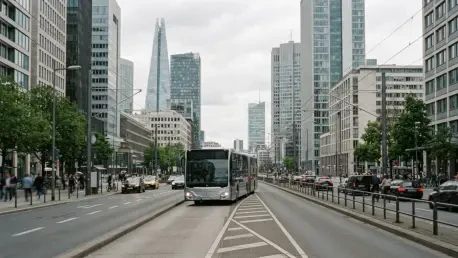
The revitalization of the surface transit network begins with the strategic deployment of four primary express trunk bus routes designated as Express No. 150, 370, 470, and 605. These specific lines are engineered to bridge the gap between peripheral residential districts like Dobong, Gangdong, Sangam, and Gangseo and the high-density commercial hubs located in the central business district. Unlike traditional local buses that pause at every residential block, these express variants follow established paths but stop exclusively at nodes with the highest passenger volume. Data indicates that this modification reduces the total number of stops by approximately 46%, allowing commuters to save roughly 10% on their total travel time during the most critical morning windows. Currently operating on a trial basis, these services run three times during peak rush hours, providing a specialized alternative for long-distance travelers who previously lacked a direct and rapid connection to their offices.
Implementing these express bus routes reflects a broader shift in metropolitan management where data-driven optimization takes precedence over the disruptive nature of heavy civil engineering. By utilizing the existing network of dedicated bus lanes and signal priority systems, the city avoids the multibillion-dollar costs and decade-long timelines associated with digging new tunnels or laying fresh track. This method allows for a rapid response to shifting demographic trends within the capital, as routes can be adjusted or expanded based on real-time ridership analytics collected from smart transit cards. The immediate relief provided to the Dobong and Sangam corridors demonstrates that refining the current logistical framework can yield substantial improvements in the daily quality of life without the environmental footprint of new construction. Furthermore, these buses serve as a vital interim solution for neighborhoods currently underserved by high-speed rail, ensuring that no district is left behind as the city moves toward a more integrated transportation future.
Optimizing Subway Line 9 for Enhanced Passenger Capacity
Beyond the surface streets, the Seoul Metropolitan Government is tackling the intense density issues on subway Line 9, a critical artery often nicknamed the “hell train” due to its legendary peak-hour overcrowding. The city has authorized a significant restructuring of the train schedule, shifting to a two-to-one ratio of express trains to regular local trains during the most congested morning periods. This operational recalibration effectively increases the capacity of the express service by 12.5% without needing to manufacture or deploy new rolling stock in the immediate term. By adding eight total weekday runs specifically aimed at the busiest travel windows, transit officials project a reduction in passenger crowding by more than 20 percentage points. This strategy acknowledges that most commuters on Line 9 are traveling long distances across the city, making the speed and frequency of express trains the most valuable commodity in the transit system. Such targeted interventions represent a sophisticated use of scheduling algorithms to maximize the throughput of existing rail assets.
The city’s decision to prioritize express services in areas lacking immediate access to the Great Train Express network demonstrates a clear commitment to equitable urban development. Officials closely monitored the pilot phases of these initiatives and utilized ridership metrics to refine future schedule adjustments across the broader metropolitan map. To sustain these gains, transit planners recommended the permanent adoption of flexible scheduling that responds to seasonal fluctuations in commuter behavior rather than adhering to rigid, year-round schedules. Moving forward, the integration of autonomous dispatching technology could further reduce intervals between express trains, providing a pathway toward a fully automated and hyper-efficient transit grid. Citizens are encouraged to utilize updated mobile transit applications to track real-time occupancy and choose routes that minimize their exposure to heavy crowds. By focusing on these high-impact, low-cost modifications, the administration has established a blueprint for other global megacities facing similar infrastructure constraints. This pragmatic evolution ensures that Seoul remains a competitive and livable urban center.