
A new six-month intensive support phase starting in November 2026 will provide high-potential startups with direct access to New York City’s most influential climate technology stakeholders. Spearheaded by the NYU Tandon School of Engineering’s Urban Future Lab, this initiative marks the beginning of a strategic partnership designed to bridge the gap between British ingenuity and American market scale. By facilitating this cross-Atlantic exchange, the program enables founders to navigate the notoriously complex procurement cycles and regulatory frameworks inherent to the United States energy sector. The timing is particularly critical as federal policies favor localized renewable infrastructure and grid modernization efforts. This 2026 cohort arrives at a moment when the demand for decarbonization solutions in high-rise environments and urban transit networks has reached an unprecedented peak, requiring sophisticated technology that can be integrated into existing aging infrastructure without disrupting daily operations. This structured approach helps transform initial interest into concrete contracts and long-term partnerships.
Strategic Integration in the New York Ecosystem
Navigating Regulatory and Financial Landscapes
Navigating the American clean energy market requires far more than just a superior technical prototype; it demands a deep immersion into the local policy environment and financial networks. The Urban Future Lab provides this essential context by connecting UK entrepreneurs with high-level decision-makers at the New York City Economic Development Corporation and NYSERDA. These interactions allow startups to align their growth strategies with local mandates, such as specific building emissions limits and renewable energy targets. Furthermore, engagement with venture capital investors and legal experts from NYU Law helps these firms refine their business models to suit the competitive landscape of the Northeast. This structured mentorship is vital for overcoming the “valley of death,” a stage where many promising technologies fail due to a lack of industrial-scale capital or an inability to navigate the labyrinthine requirements of utility-scale contracts. By providing a clear roadmap for commercialization, the program ensures that these companies are not merely visitors but active participants in the regional economy.
Bridging Academic Research and Commercial Reality
The success of any climate-focused enterprise hinges on its ability to translate sophisticated academic research into practical, market-ready applications that solve immediate consumer problems. NYU Tandon emphasizes this transition by fostering a culture where engineering excellence is tempered by a realistic understanding of customer needs and logistical barriers. In the current 2026 cycle, the focus is on “deep tech” solutions that offer national benefits while maintaining a competitive edge on the global stage. This philosophy acknowledges that even the most efficient energy storage system or carbon capture device will remain on the shelf if it cannot meet the rigorous maintenance and safety standards of the modern city. The collaboration between Innovate UK and the Urban Future Lab serves as a vital pathway for businesses to validate their claims through real-world pilot projects. This methodical approach to innovation allows for the refinement of hardware and software based on actual performance data, ensuring that the technology is robust enough to handle the unique stresses of New York’s high-density environment.
Innovative Technologies Driving Decarbonization
Enhancing Building Efficiency through Intelligent Monitoring
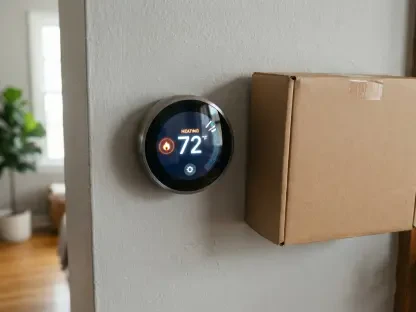
Building efficiency remains a cornerstone of urban sustainability, particularly in a city where older structures account for a significant portion of total energy consumption. Among the 2026 cohort, Eyesea Green is introducing low-cost, wireless building controls specifically designed for multi-room structures, allowing for granular management of heating and cooling systems without invasive renovations. Complementing this approach, Verv utilizes high-frequency AI monitoring to detect equipment faults before they lead to catastrophic failure or excessive energy waste. These types of digital interventions are essential for owners who need to comply with tightening environmental regulations while maintaining operational margins. Furthermore, Integrated System Technologies (IST) is advancing centralized low-voltage DC lighting systems. This technology significantly reduces the complexity of wiring and maintenance, offering a more streamlined way to illuminate large commercial spaces. By targeting the fundamental ways that energy is distributed and consumed within units, these firms provide the tools for a comprehensive digital transformation of the built environment.
Revolutionizing Energy Storage and Renewable Capture
As the reliance on intermittent renewable sources grew, the need for advanced energy storage and novel power generation methods became paramount for grid stability. The selection of startups included Allye Energy, which offered modular battery storage coupled with intelligent management software to optimize local consumption. Meanwhile, Treeva explored the untapped potential of transportation networks by capturing airflow from road and rail traffic to generate renewable power. For larger-scale needs, Sherwood Power developed long-duration storage solutions using compressed air and heat, addressing the limitations of traditional lithium-ion batteries. Additionally, RheEnergise utilized a high-density fluid to enable efficient pumped-hydro systems on terrains where traditional water-based systems were geographically impossible. Specialized electrical safety tech from Matt:e also addressed critical gaps in EV charging infrastructure. To maximize this momentum, city planners should prioritize the immediate integration of these modular systems into upcoming retrofits. Establishing local manufacturing hubs for these components would further accelerate the transition toward a fully decarbonized metropolitan grid.