
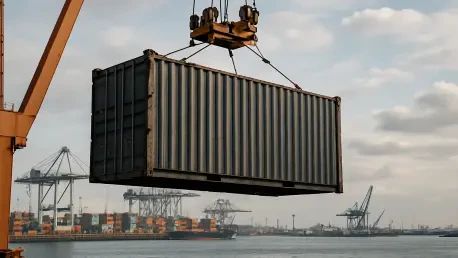
The contemporary global trade environment is witnessing an unprecedented shift where traditional economic metrics like trade balances are being sidelined in favor of aggressive geopolitical posturing. This transformation is particularly evident in the current friction between the United States and

The financial architecture that has traditionally underpinned the United Nations is currently undergoing its most significant stress test since the organization was founded in the middle of the twentieth century. This shift is not merely a budgetary adjustment but a fundamental re-evaluation of the

The global struggle for computational dominance has reached a fever pitch as Washington and Beijing treat algorithmic supremacy as the ultimate guarantor of twenty-first-century sovereignty and economic survival. Artificial Intelligence has transitioned from a niche academic pursuit into a

A simple fuel nozzle at a remote airport in Dubai or a ticketing kiosk in the heart of Paris might soon become the front lines of an economic conflict that threatens to erase Iranian commercial aviation from the global map. This is not a traditional blockade enforced by fighter jets, but a

Donald Gainsborough is a distinguished political strategist and a leading voice in national policy, currently serving as the head of Government Curated. With a career defined by navigating complex legislative landscapes, he has become a go-to authority on the long-term socio-economic trends shaping

Donald Gainsborough is a heavyweight in the policy world, currently at the helm of Government Curated, where he navigates the intersection of global energy security and legislative strategy. With decades spent dissecting the political shifts of the Sahel, he has become a go-to authority for